 Save to Pinterest
 My sourdough starter had been quietly bubbling away on the counter for weeks, and I kept tossing the discard like it was going to waste. Then one bleary Saturday morning, staring at a jar of that tangy, slightly neglected liquid, I wondered what would happen if I used it in scones instead of the usual buttermilk. The result was magic—tender, buttery, with this subtle sour note that made the blueberries pop even brighter. Now I bake these whenever I need a reminder that the best ideas often come from trying to solve a small problem.
I made these for my neighbor last spring when she dropped off homemade jam, and watching her face light up when she bit into one—that moment when someone's eyes get a little wider—reminded me why home baking matters. She asked for the recipe immediately, and I realized these scones hit that sweet spot between impressive and approachable, fancy enough for company but easy enough to make on a Tuesday.
Ingredients
- All-purpose flour (2 cups / 240 g): The foundation that keeps these scones tender rather than tough; don't sift unless your flour is truly clumpy, as extra air-working can overdevelop gluten.
- Granulated sugar (1/4 cup / 50 g): Just enough sweetness to complement the tangy discard without drowning out those blueberries.
- Baking powder and baking soda (2 tsp and 1/2 tsp): The discard adds acidity, so the baking soda helps neutralize it while baking powder gives lift; this combo is non-negotiable.
- Fine sea salt (1/2 tsp): A small amount that makes every flavor in the dough taste more like itself.
- Cold unsalted butter (1/2 cup / 115 g cubed): Keep it cold so it stays in distinct little pieces; warm butter makes dense, greasy scones instead of flaky ones.
- Sourdough discard (1 cup / 240 g): Use unfed, cold discard straight from the jar; this is where the soul of the recipe lives, adding tanginess and moisture without extra liquid.
- Heavy cream (1/3 cup / 80 ml): Brings richness and helps bind the dough together; brush more on top for a golden, craggy crust.
- Large egg (1): The glue that holds everything together and adds tenderness to the crumb.
- Vanilla extract (1.5 tsp): A quiet background note that enhances the subtle sour flavor without announcing itself.
- Fresh blueberries (1 cup / 150 g): Add these last and fold gently; crushing them releases juice that can toughen the dough and bleed color into the crumb.
- Coarse sugar for topping (2 tbsp optional): Creates a subtle crunch and catches the light when baked, making these look bakery-worthy.
Tired of Takeout? 🥡
Get 10 meals you can make faster than delivery arrives. Seriously.
One email. No spam. Unsubscribe anytime.
Instructions
- Get your oven ready and set up your stage:
- Preheat to 400°F (200°C) and line a baking sheet with parchment paper so your scones won't stick and you'll have easy cleanup. This moment matters because a hot oven is what gives you those golden, slightly crusty edges.
- Combine your dry components:
- Whisk together the flour, sugar, baking powder, baking soda, and salt in a large bowl. You're creating a balanced foundation that will react perfectly with the acidic discard.
- Work the butter in with your hands:
- Add cold cubed butter and use a pastry cutter, fork, or your fingertips to break it into the flour until it looks like coarse breadcrumbs. You want distinct butter pieces still visible, not a smooth paste.
- Prepare your wet mixture:
- In a separate bowl, whisk together the sourdough discard, heavy cream, egg, and vanilla extract until smooth. This is where the tanginess begins to reveal itself.
- Bring wet and dry together with restraint:
- Pour the wet ingredients into the dry mixture and stir gently with a spatula until just combined. Stop as soon as you don't see dry flour streaks; overmixing toughens the dough and ruins the tender crumb you're after.
- Fold in the blueberries with care:
- Gently fold the fresh blueberries into the dough, using as few strokes as possible to keep them whole and juicy. If you're using frozen blueberries, add them straight from the freezer without thawing.
- Shape your dough into a circle:
- Turn the dough onto a lightly floured surface and pat it gently into a 7-inch (18 cm) circle about 1 inch (2.5 cm) thick. Don't knead or overwork; let it be a little rustic and unrefined.
- Cut into wedges and arrange on the sheet:
- Use a sharp knife or bench scraper to cut the circle into 8 equal wedges like a pizza, then arrange them on your parchment-lined sheet with a little space between each. This lets heat circulate and creates those coveted crispy edges.
- Add the finishing touches:
- Brush the tops lightly with heavy cream and sprinkle with coarse sugar if you want that bakery-style sparkle. This step is optional but transforms the presentation.
- Bake until golden and fragrant:
- Bake for 20 to 22 minutes, watching until the tops are golden brown and a toothpick inserted into the center comes out clean. Your kitchen will smell like a dream.
- Cool with patience before serving:
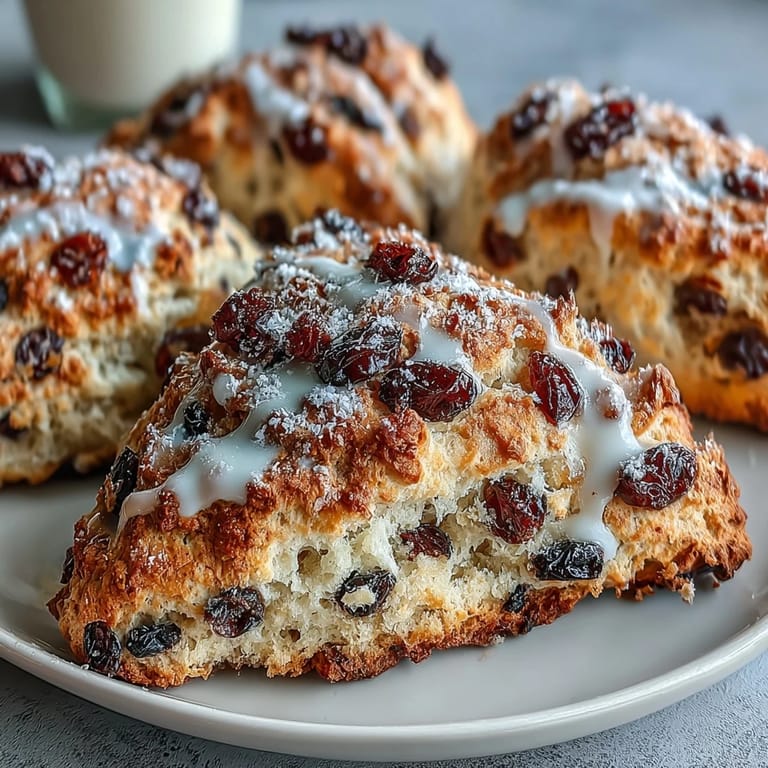
- Let the scones cool on the baking sheet for about 10 minutes—this sets the structure without making them cold—then transfer to a wire rack. They're perfect warm or at room temperature, with clotted cream or lemon curd if you're feeling indulgent.
 Save to Pinterest
 There's something quietly satisfying about using what you'd normally throw away and turning it into something people actually crave. My starter felt less like a chore after that—more like a partner in the kitchen, always ready to transform scraps into something worth sharing.
The Sourdough Discard Advantage
Using sourdough discard in baking is one of those small shifts that opens up a whole new relationship with your starter. The tangy, acidic quality of discard doesn't just add flavor—it also impacts how your baked goods rise and brown. The acid helps activate the baking soda more efficiently, creating a subtle, complex taste that straightforward scones can't match. It's like discovering a shortcut you didn't know existed.
Blueberry Texture Matters
Fresh blueberries release juice when crushed, and that juice can seep into your dough and create unexpected texture issues. I learned this the hard way after a batch where the dough turned slightly purple and tasted vaguely fruity instead of letting the berries shine as distinct bursts. Now I fold them in at the very last moment, using barely any pressure, and sometimes I even toss them lightly in a tiny bit of flour first to help them stay suspended and whole.
Serving and Storage Wisdom
These scones taste best the day they're baked, when they still have warmth and that subtle crispness on the outside. If you're making them ahead, cool them completely on a wire rack, then store them in an airtight container at room temperature for up to 2 days—they'll keep their structure better than you'd expect. You can also freeze baked scones for up to a month and warm them gently before serving.
- Pair these with clotted cream and jam for a proper British tea, or serve alongside lemon curd for a bright, citrusy twist.
- If you want extra flavor, stir 1 teaspoon of lemon zest into the dough before folding in the blueberries.
- Frozen blueberries work just as well as fresh; add them straight from the freezer without thawing to prevent them from breaking apart.
 Save to Pinterest
 These scones remind me that sometimes the best recipes come from respecting what you already have rather than always reaching for something new. They're proof that your sourdough starter is worth keeping around, even on the mornings when it feels like a burden.
Recipe FAQs
- → Can I use frozen blueberries instead of fresh?
Yes, frozen blueberries can be used directly without thawing to prevent the dough from becoming too wet.
- → What is sourdough discard and why is it used here?
Sourdough discard is leftover starter not used for feeding. It adds a subtle tang and moist texture to the scones.
- → How can I add a citrus note to these scones?
Adding a teaspoon of lemon zest to the dough enhances brightness and complements the blueberries nicely.
- → What is the best way to shape the dough?
Pat the dough into a 7-inch circle about 1 inch thick, then cut into 8 wedges for even baking.
- → How should I store leftover scones?
Store in an airtight container at room temperature for up to 2 days to maintain freshness.
- → Can these scones be served with other accompaniments?
They pair wonderfully with clotted cream, lemon curd, or a light spread of butter.