 Save to Pinterest
 I'll never forget the summer I discovered that the secret to happy road trips isn't the destination—it's what you pack in that little compartmented box on the passenger seat. Years ago, my family would stop at every rest stop, buying overpriced, sad convenience store snacks that left us sticky and unsatisfied. Then one spring, my mom spent twenty minutes before a twelve-hour drive arranging fresh grapes, cheese cubes, and dark chocolate into a divided container. That single box transformed everything. We arrived at our destination not cranky and hungry, but genuinely nourished and ready to explore. Now, I make these snack boxes for every adventure, and they've become as essential to our travels as the road maps.
The first time I packed these boxes for my kids' road trip to the mountains, I watched them actually choose the fresh grapes and almonds over asking for fast food. That moment—seeing them reach for the apple slices instead of demanding candy—reminded me that when you put care into what you offer, people truly notice and appreciate it.
Ingredients
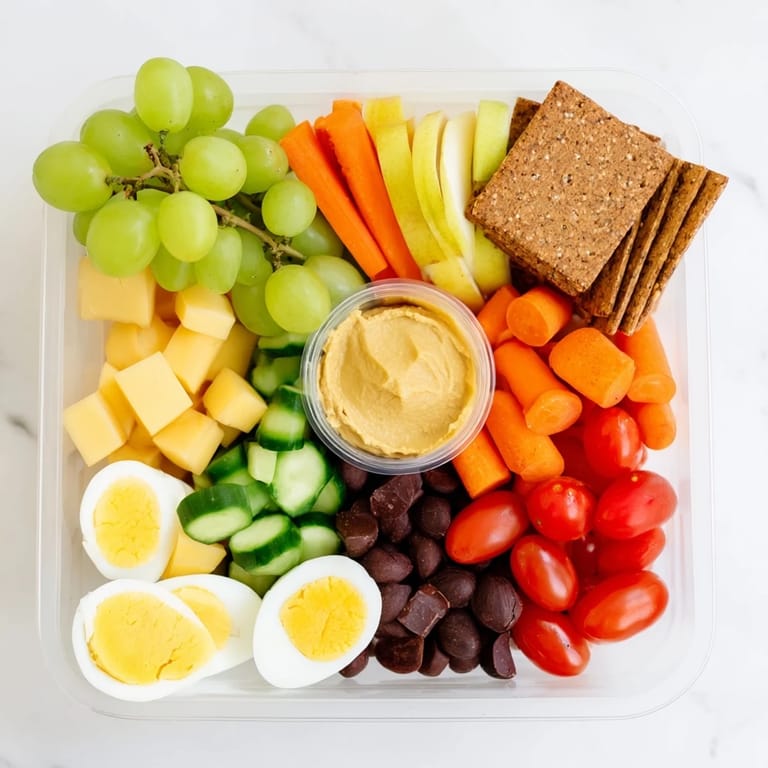
- Seedless grapes, 1 cup, washed and dried: These stay fresh for hours and give you that burst of natural sweetness and hydration when your energy dips at mile marker fifty. Always wash and dry them thoroughly—moisture invites mold, and nobody wants that surprise mid-journey.
- Medium apple, sliced with lemon juice: The lemon juice prevents browning and adds a subtle brightness. I learned this the hard way after packing sad brown apple slices that nobody touched.
- Baby carrots, 1 cup: These are crunchy, naturally sweet, and they don't require peeling or chopping. They're the reliable friend you can count on.
- Cheese cubes, 1 cup (cheddar, Swiss, or your preference): Cheese is the anchor of this box—it satisfies, travels well, and tastes better than anything you'll find at a rest stop. Cut them into bite-sized pieces so you can grab one-handed while driving.
- Whole grain crackers, 1 cup (gluten-free if needed): These pair beautifully with cheese and hummus. They won't get soggy in a few hours, and they feel substantial in a way that gas station snacks never do.
- Mixed nuts, 1/2 cup (unsalted almonds, cashews, walnuts): Nuts are nature's perfect road trip snack—they stabilize your blood sugar so you don't hit that three-hour energy crash. Choose unsalted so they pair with the sweet and savory items without overwhelming everything else.
- Hummus, 1/2 cup, in small leak-proof containers: This is your secret weapon for adding protein and creaminess without the mess. Transfer it to tiny containers so it stays fresh and doesn't seep into the crackers.
- Dried fruit, 1/2 cup (apricots, cranberries, or raisins): Dried fruit brings natural sweetness and chewy texture. It satisfies the afternoon sweet tooth without the crash that comes from candy.
- Dark chocolate pieces or chocolate-covered pretzels, 1/2 cup: This is the joy in the box. Dark chocolate won't melt as quickly as milk chocolate, and the antioxidants make it feel like a treat that's actually good for you.
- Cherry tomatoes, 1/2 cup: These little gems add juiciness and brightness. They're easy to pop in your mouth and genuinely refresh your palate between the savory and sweet.
- Cucumber slices, 1/2 cup: Cucumber brings hydration and crunch. The cool, clean flavor is especially welcome on a hot driving day.
- Hard-boiled eggs, 4, peeled: Protein-packed eggs keep you fuller longer. Peel them the night before and they're ready to grab. They're the quiet hero that makes the difference between arriving energized versus exhausted.
Tired of Takeout? 🥡
Get 10 meals you can make faster than delivery arrives. Seriously.
One email. No spam. Unsubscribe anytime.
Instructions
- Prep your ingredients with intention:
- Start the night before if you can. Wash your grapes and let them dry completely on a clean kitchen towel—this matters more than you'd think. Slice your apple and immediately toss it with fresh lemon juice, coating each piece. Hard-boil your eggs, cool them in ice water, and peel them gently. Cut your cheese into cubes about the size of dice. You're setting yourself up for success here.
- Gather your containers and visualize the layout:
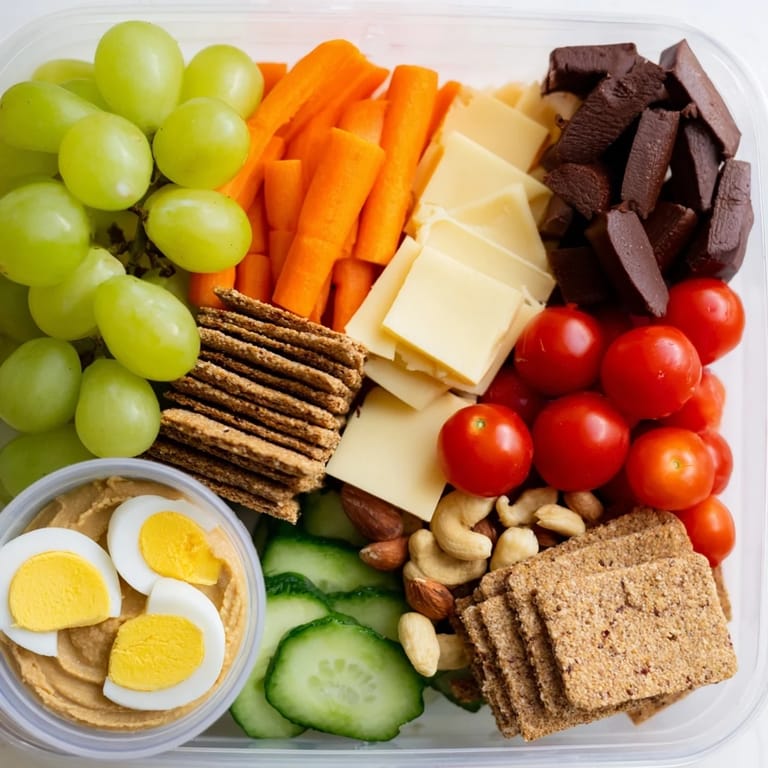
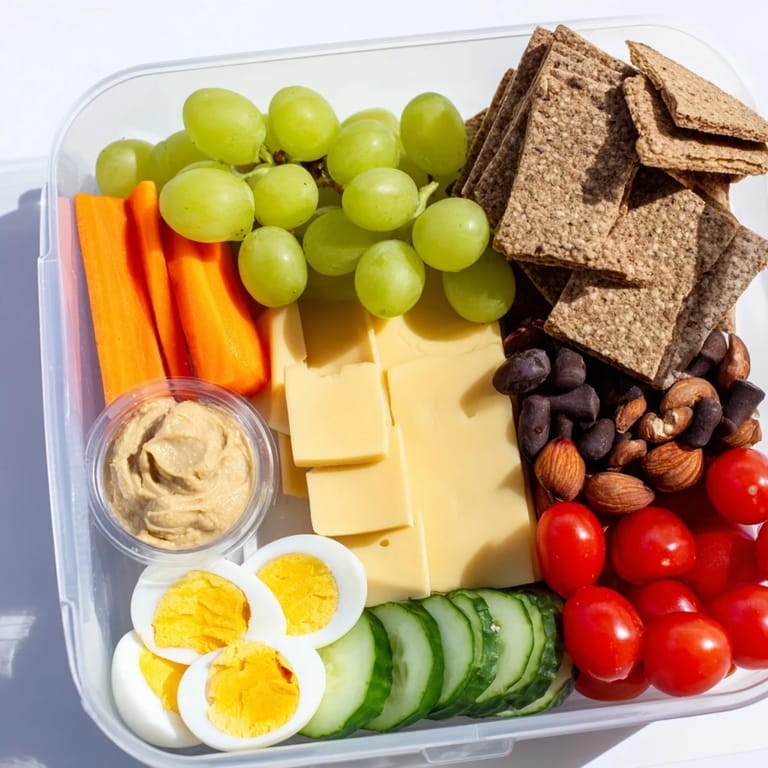
- Pull out your divided snack box and lay it in front of you. Take a moment to imagine how you want everything arranged. The goal is visual appeal and practical grabbing—you want to reach in and find something delicious without overthinking it. I usually put the wet items (grapes, tomatoes, cucumber) on one side, the proteins (cheese, nuts, eggs) in the center, and the sweet treats on the other.
- Arrange with compartments in mind:
- Start placing items in separate compartments, working strategically. Put grapes in one section, apple slices in another, carrots in their own spot. The beauty of this step is that nothing touches, so flavors stay pure. Each item maintains its integrity—the crackers stay crispy, the hummus doesn't get mixed with chocolate.
- Portion your dips carefully into leak-proof containers:
- Pour your hummus into small airtight containers—the kind that seal completely. This is where you'll notice the difference between a box that stays fresh and one that becomes a soggy mess. Test the seal by turning the container upside down over your sink before packing it into the box.
- Layer strategically and seal with purpose:
- Now place your compartmented items into the main box. Dips go on the bottom or in a secure side pocket. Heavier items like nuts and cheese go where they won't crush anything delicate. Once everything is arranged, place the lid on firmly and seal it tight. Add an ice pack next to the box if you're traveling more than two hours, but make sure it's not touching the food directly.
- Embrace the ritual of departure:
- Pack this box into your vehicle as the last thing before you leave. There's something about knowing you have thoughtful, fresh food waiting that settles the nervous energy before a long drive. As you pull onto the highway, you'll feel it—the peace that comes from being prepared.
 Save to Pinterest
 I remember my nephew asking for his road trip snack box before he'd even ask for the actual trip. That's when I knew I'd stumbled onto something real—when the preparation becomes as cherished as the journey itself. It's taught me that care expressed through food is love in its most practical, nourishing form.
The Art of Thoughtful Packing
There's a philosophy to building a good road trip snack box that goes beyond just throwing food together. It's about understanding rhythm and energy. In the first hour, you want bright, hydrating foods like grapes and cucumber to keep you alert. By hour three, you want the protein—cheese, nuts, eggs—to sustain you through the afternoon slump. The chocolate and dried fruit come when morale needs lifting, usually around hour five when the landscape stops being novelty and becomes just miles. This isn't just snacking; it's fueling a journey with intention.
Customizing for Your Crew and Dietary Needs
The beauty of this box is its flexibility. I've made them for friends with nut allergies by swapping almonds and cashews for roasted chickpeas and sunflower seeds—they were just as satisfying. For my vegetarian sister, I skip any deli meats and load up on extra cheese and hummus. For friends avoiding gluten, I use proper gluten-free crackers from a brand I trust. There's no judgment here, no complicated substitutions. You're simply choosing items that celebrate what people actually eat and enjoy. The box doesn't change its soul; it just adapts to honor the people traveling with you.
Making This Box Your Own Every Time
Some travelers swear by assembling the box the morning of departure for absolute maximum freshness. Others, like me, prep everything the night before and trust the ice pack to do its job—I find that advance prep reduces pre-trip stress and lets me focus on the actual adventure. If you're traveling in winter or spring, you might skip the ice pack altogether. If it's summer and the car will be sitting in a parking lot, you'll want two. You'll develop your own intuitions as you make these boxes again and again. Pay attention to what works, what people actually eat, what sits untouched. Your perfect version will emerge naturally.
- Keep your divided container in the car so it's always ready for the next trip—one less thing to think about
- Assemble your shopping list by season, choosing fruits that are at their peak: strawberries in spring, stone fruits in summer, grapes in fall
- The night before, do a final check that your containers seal properly and your ice pack is frozen solid
 Save to Pinterest
 Every road trip is a story, and now every one of yours can start with a box that proves someone cares enough to pack thoughtfully. That's the real travel essential.
Recipe FAQs
- → How can I keep the snacks fresh during travel?
Use an ice pack inside the container if traveling longer than two hours and keep the box refrigerated before departure.
- → What are good alternatives for nuts in this snack box?
Roasted chickpeas or seeds can replace nuts to accommodate nut-free preferences.
- → Can the cheese be substituted for a plant-based option?
Yes, plant-based cheese can be used to create a vegan-friendly version of the snack box.
- → How should dips be packed within the snack box?
Dips like hummus should be portioned into small leak-proof containers to avoid spills and maintain freshness.
- → What container is ideal for assembling this snack box?
A divided snack box or bento-style container works best to keep ingredients separated and flavors distinct.