 Save to Pinterest
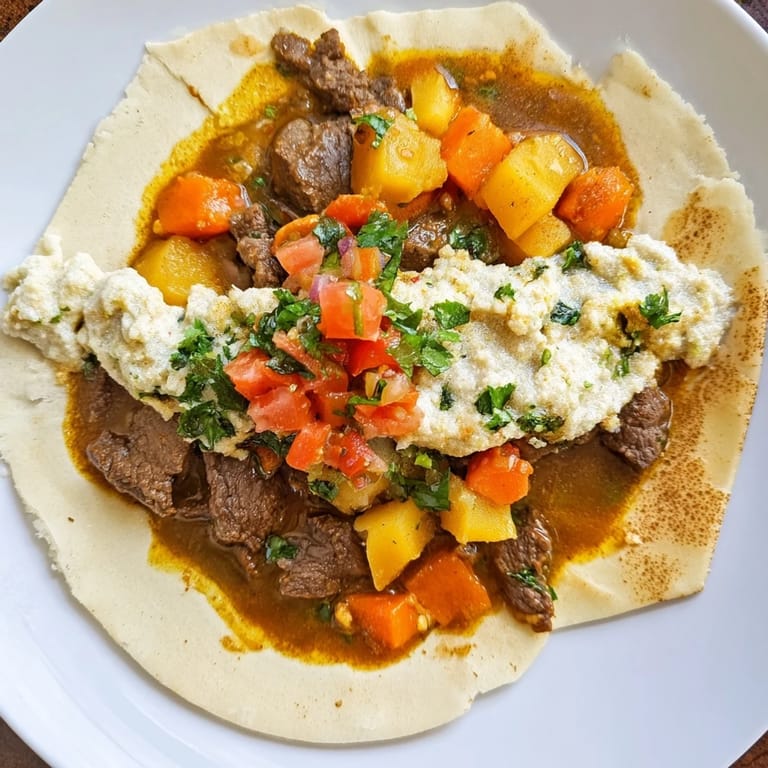
 The first time I tasted Saltah was in a small restaurant in Sana'a, watching the server layer everything directly at the table—bread, steaming stew, then that cloud of fenugreek foam that smelled like burnt honey and earth. I couldn't look away. Years later, I finally understood why that dish stuck with me: it's not just food, it's theater, texture, and the kind of comfort that makes you sit longer at the table than you planned.
I made this for friends on a cold Tuesday, nervous about whether the hulbah would whip right, whether anyone would actually like something so unfamiliar. When the first person took that spoonful and closed their eyes, I knew I'd nailed it—that's when food stops being a recipe and becomes a story everyone remembers.
Ingredients
- Beef or lamb, cubed: Two-centimeter pieces cook evenly and stay tender; don't skip browning them for that caramelized flavor foundation.
- Vegetable oil: Just enough to let the onions turn golden without burning—this is where your stew's depth begins.
- Onion: Finely chopped so it melts into the broth and sweetens everything as it cooks.
- Garlic and green chili: These two wake up the stew; mince them small so they distribute evenly.
- Tomatoes: Fresh chopped tomatoes add acidity that balances the richness of the meat and spices.
- Potato and carrot: They soften as they cook and thicken the broth naturally, no cream needed.
- Water or beef broth: Four cups lets everything simmer gently; broth adds more depth if you have it.
- Cumin, coriander, black pepper, turmeric: This quartet of spices is the signature—warm, slightly smoky, never harsh.
- Ground fenugreek: Half a teaspoon goes in the stew itself; the real magic happens in the hulbah topping.
- Ground fenugreek seeds for hulbah: Two tablespoons soaked and whipped create that iconic texture—it's the soul of Saltah.
- Flatbread: Yemeni malawah or lahoh are traditional, but pita works when they're hard to find.
Tired of Takeout? 🥡
Get 10 meals you can make faster than delivery arrives. Seriously.
One email. No spam. Unsubscribe anytime.
Instructions
- Brown the foundation:
- Heat oil in your pot, let onions turn golden and fragrant, then add the meat and let it sear on all sides until the edges caramelize. This takes patience but it's worth it—you're building layers of flavor that make the whole dish sing.
- Build the stew:
- Stir in tomatoes, vegetables, and all the spices, let them toast together for five minutes, then pour in your liquid and bring everything to a boil. Once it bubbles, turn the heat low, cover it, and let time do the work for the next hour and a half.
- Whip the hulbah:
- Soak the fenugreek seeds in cold water for a full hour—this softens them and makes them whippable. After draining, whisk or fork them hard until they transform into a light foam that looks almost cloud-like, then fold in the fresh tomato, cilantro, chili, lemon juice, and salt.
- Assemble and serve:
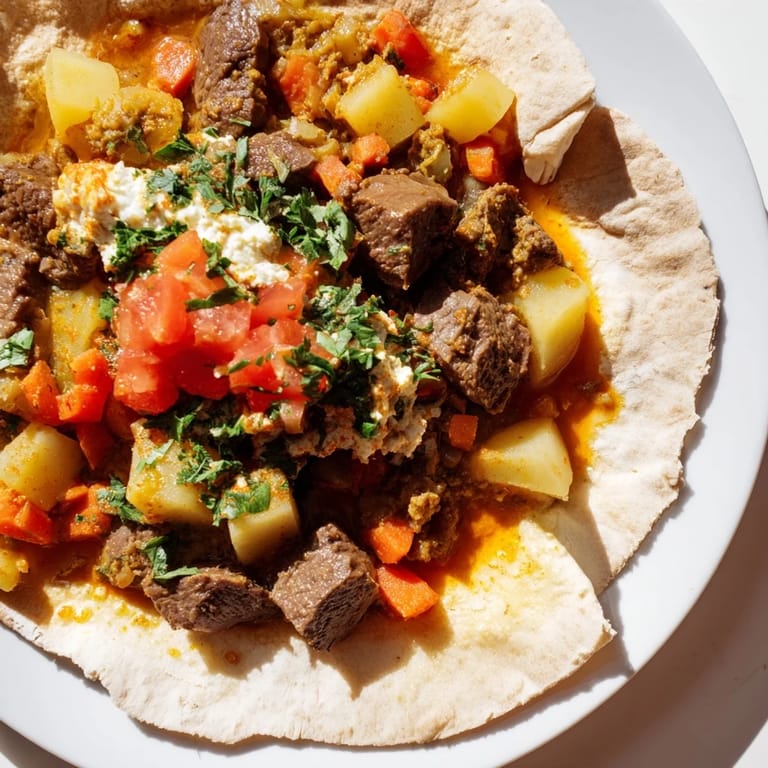
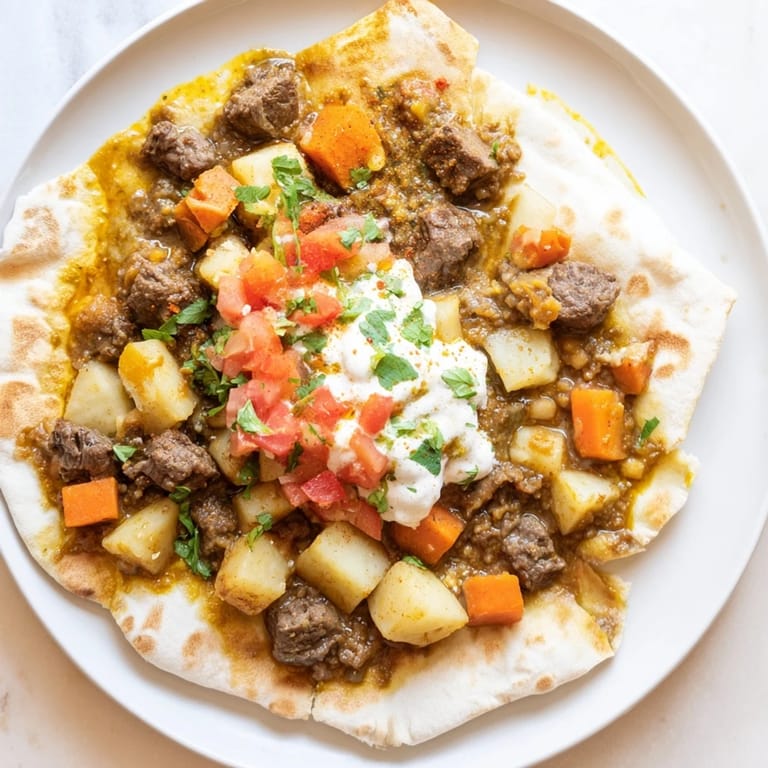
- Tear flatbread into pieces and layer it in serving bowls, pour the hot stew over until the bread is soft but not swimming, then crown it with a generous spoonful of hulbah foam. Bring everything to the table while it's steaming and let everyone mix it their own way.
 Save to Pinterest
 The moment someone asked for seconds, I realized that Saltah isn't trying to impress—it's trying to comfort. That's harder to master, and somehow more satisfying.
The Hulbah is Everything
That fenugreek foam isn't just a topping; it's the texture that makes your mouth light up. When you whip it, you're not making something complicated—you're coaxing it into what it's meant to become. The bitterness of fenugreek gets softened by the lemon and tomato, and suddenly you have something that tastes bright and earthy at the same time.
Why This Stew Gets Better as It Cooks
Saltah is a dish that rewards patience. The longer the meat simmers, the more tender it becomes, and the spices have time to find their voice together instead of fighting for attention. The potato breaks down just enough to thicken the broth, and the carrot sweetens everything around it. You're not rushing—you're letting time be your ingredient.
Making It Your Own
The beauty of Saltah is that it welcomes adjustment. Some families make it with more bread, some with less; some add zhug sauce for extra heat, some keep it mild. The structure stays the same, but the soul shifts based on what you're feeding into it.
- If you can't find malawah, any flatbread works as long as it has enough structure to hold the stew without dissolving immediately.
- For extra richness, brown the meat in larger batches and don't crowd the pot—this takes a few minutes longer but deepens everything.
- Taste the stew near the end and adjust salt and spices; the flavors intensify as liquid reduces, so go easy early.
 Save to Pinterest
 This is the kind of dish that quietly teaches you about food—how layers matter, how patience pays off, how something unfamiliar becomes beloved the moment you understand it. Make it, share it, and watch it become a story your table keeps telling.
Recipe FAQs
- → What cut of meat works best for this dish?
Use beef or lamb cut into small cubes, ideal for slow simmering to tenderize and absorb spices.
- → How is the fenugreek foam prepared?
Fenugreek seeds are soaked in water for an hour, then whisked vigorously until light and frothy before mixing with tomato and herbs.
- → Can I use a substitute for Yemeni flatbread?
Pita or naan can be used if traditional flatbreads like malawah or lahoh are unavailable.
- → Is this dish spicy?
The base stew has moderate warmth from chili, but you can adjust heat or add traditional zhug sauce for extra spice.
- → How long should the stew simmer?
Simmer the stew for 1 to 1.5 hours until the meat is tender and vegetables are soft.