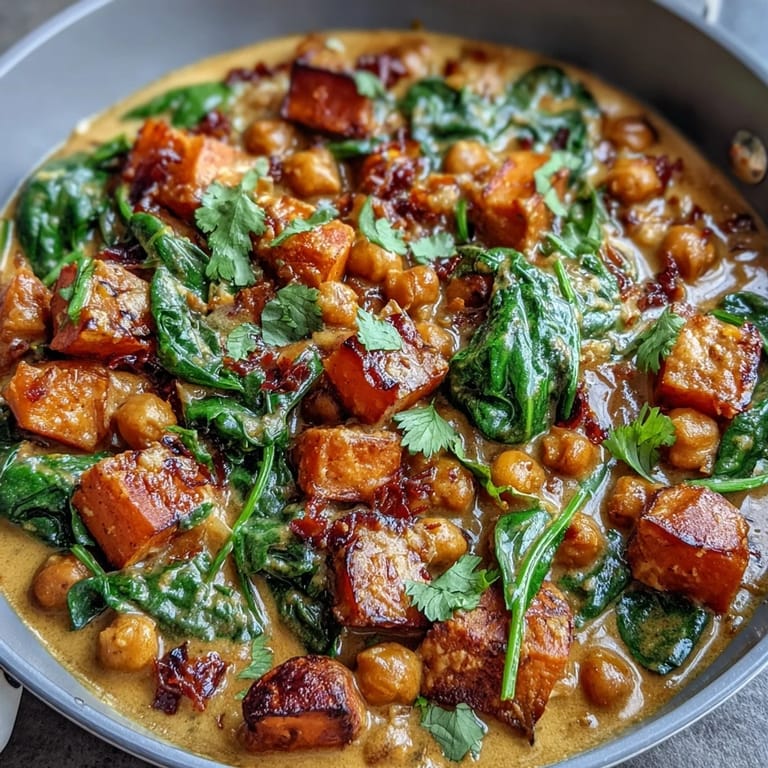
 Save to Pinterest
 There's something magical about the moment when coconut milk hits a hot skillet full of aromatics—the kitchen fills with this warm, golden haze that makes you want to cook for everyone you know. I discovered this curry on a rainy Tuesday evening when I was stuck between craving something exotic and needing dinner on the table in under an hour. One can of coconut milk, a handful of spices, and whatever vegetables were lingering in my crisper drawer became this unexpectedly comforting meal that's now my go-to when I want to feel like I'm traveling without leaving my kitchen.
I made this for my sister last winter when she was going through a rough patch, and she sat at my kitchen counter watching the spinach wilt into the coconut sauce, visibly relaxing with each bite. There's something about the warmth of the spices and the creaminess that just settles into your bones, especially when you're sharing it with someone who needs a little comfort. That night, the recipe became less about feeding her and more about showing up.
Ingredients
- Sweet potato: Cut into small cubes so they cook evenly in about 15 minutes—I learned this after once trying to use thick chunks that stayed hard while everything else was done.
- Yellow onion: Chopping it finely helps it melt into the sauce and distribute its sweetness throughout.
- Fresh spinach: Buy it roughly chopped or do it yourself; the fresher it is, the brighter the final dish tastes.
- Garlic and ginger: These two are non-negotiable—they're what make this smell like actual curry and not just coconut soup.
- Chickpeas: Draining and rinsing removes excess sodium and prevents your sauce from becoming murky.
- Coconut milk: Full-fat is essential here; light coconut milk will give you a thin, watery sauce that's disappointing.
- Vegetable broth: Water works fine if you don't have broth, but broth adds a subtle depth that makes people ask if you added something secret.
- Lime juice: Fresh lime juice at the end is the difference between a good curry and one that makes you close your eyes and smile.
- Curry powder: Mild varieties are more forgiving than hot blends, especially if you're introducing people to this flavor profile.
- Cumin, turmeric, and cayenne: These three are the supporting cast that rounds out the curry powder and lets you control the heat level precisely.
- Coconut oil: It has a slightly higher smoke point than vegetable oil and adds a subtle flavor that pairs beautifully with the curry spices.
Tired of Takeout? 🥡
Get 10 meals you can make faster than delivery arrives. Seriously.
One email. No spam. Unsubscribe anytime.
Instructions
- Heat your skillet and start with aromatics:
- Warm the coconut oil over medium heat until it shimmers, then add the chopped onion and let it sit undisturbed for about two minutes before stirring—this helps it develop a subtle sweetness instead of just turning translucent and bland. Keep stirring every minute or so until it's soft and starting to turn slightly golden at the edges.
- Wake up the garlic and ginger:
- Add the minced garlic and grated ginger, stirring constantly for exactly one minute so they release their fragrance but don't burn and turn bitter. Your kitchen should smell incredible at this point.
- Toast the spices with the sweet potato:
- Add the cubed sweet potato and all your dry spices at once, stirring until every piece of potato is coated in that fragrant spice mixture. This step takes just two minutes but makes a surprising difference in flavor.
- Add the liquid and simmer:
- Pour in the coconut milk and vegetable broth, give everything a good stir, and bring it to a gentle simmer—you want small bubbles breaking the surface, not a rolling boil that will break apart your sweet potatoes. Cover and let it cook for 12 to 15 minutes, stirring occasionally, until the sweet potatoes are fork-tender but not falling apart.
- Bring in the chickpeas:
- Add the drained chickpeas and cook uncovered for five more minutes, which gives them time to warm through and absorb some of the curry flavor. Don't skip this step even though five minutes seems short—it matters.
- Wilt the spinach and finish:
- Remove the lid, stir in the chopped spinach, and watch it transform from a pile of green into a silky part of the sauce in just two or three minutes. Once it's wilted, remove from heat and squeeze in your fresh lime juice, then taste and adjust the salt and pepper.
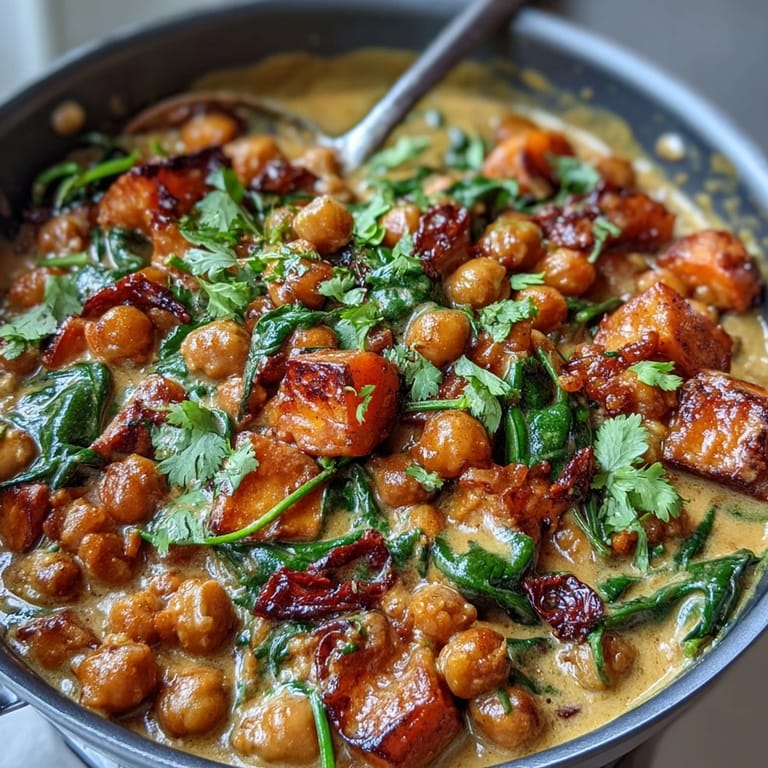 Save to Pinterest
 My neighbor tasted this once when the smell drifted over during a backyard conversation, and she asked if I was making it for a dinner party. The answer was just Tuesday night for myself, but her question made me realize that some of the best meals don't need an occasion to matter.
Serving Suggestions That Actually Work
I've learned through trial and error what transforms this from a good curry into something memorable. Basmati rice is the obvious choice, but it's the way it soaks up the sauce that makes it essential—fluffy quinoa works too if you're after something lighter. Naan bread isn't just for dipping; it's for wrapping around bites and creating little pockets of comfort.
Variations I Keep Coming Back To
The first time I made this with cubed tofu instead of just chickpeas, I was skeptical about the protein swap, but the tofu absorbed the curry flavor so completely that it became my preferred version for a few weeks. Then someone brought me fresh kale from their garden, and I realized it actually stands up better to the heat and spice than spinach does, creating a slightly more complex texture. Sometimes I add a diced bell pepper because I have one sitting around, and it adds sweetness that plays beautifully with the ginger.
Kitchen Lessons This Recipe Taught Me
Making this curry repeatedly taught me that one-pan meals aren't actually shortcuts—they're exercises in timing and understanding how ingredients behave when they're all cooking together. The order matters enormously because each step builds flavor rather than just assembling components. You learn to listen for the sizzle when spices hit hot oil, to watch the steam rise from the coconut milk, and to recognize the exact moment spinach goes from wilted to overdone.
- Start with medium heat rather than high; rushing the onions means they never develop that subtle sweetness that's the foundation of everything that follows.
- Taste continuously as you go, especially once you add the lime juice, because the final balance is deeply personal and what one person finds perfectly spiced, another might find too mild.
- Save yourself cleanup headaches by assembling all your ingredients and chopping everything before you turn on the heat—this recipe moves quickly once you start.
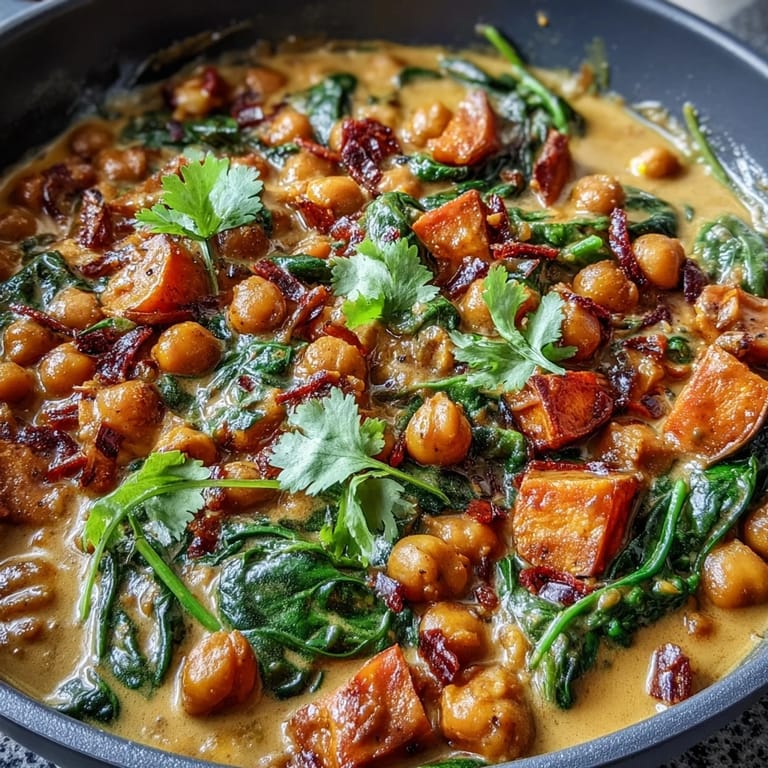 Save to Pinterest
 This curry became one of those meals that exists in the overlap between practical and comforting, which is where I've learned the best recipes live. It's proof that you don't need complicated techniques or exotic ingredients to cook something that feeds both your body and your sense of wellbeing.
Recipe FAQs
- → Can I use frozen spinach instead of fresh?
Yes, frozen spinach works well. Thaw and drain excess water before adding to avoid watering down the curry.
- → How can I adjust the spice level?
Modify the amount of cayenne pepper or curry powder to suit your preferred heat level. Omit cayenne for a milder dish.
- → What can I substitute for coconut milk?
For a lighter option, use almond milk with a tablespoon of coconut oil for richness, though flavor will be less creamy.
- → Is there a way to add more protein?
Adding cubed tofu or tempeh during cooking boosts protein without altering the dish’s texture much.
- → Can I prepare this curry ahead of time?
Yes, it stores well in the fridge for up to 3 days and the flavors deepen after resting. Reheat gently before serving.