 Save to Pinterest
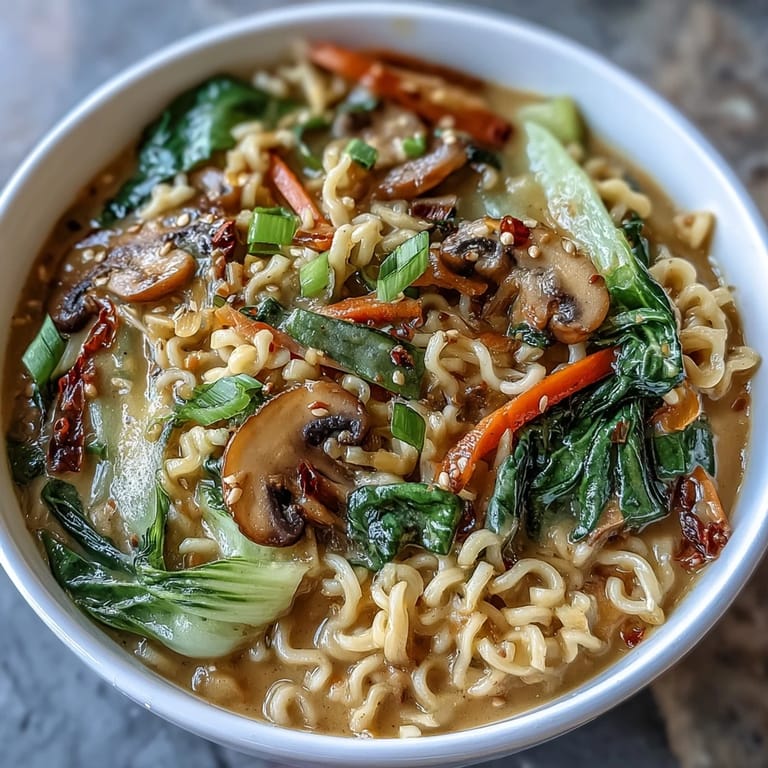
 There's a moment every winter when I crave something that warms you from the inside out, and that's when this curry ramen finds its way into my kitchen. I discovered it during a particularly dreary Tuesday night when my usual go-to comfort foods felt too heavy, and I realized I wanted something fragrant, creamy, and alive with spice all at once. The coconut milk transforms into this silky broth that somehow feels both indulgent and nourishing, while the curry paste does the real magic, filling your kitchen with aromas that make everyone pause and ask what's cooking. It's become my answer to those nights when you need comfort but also something that actually tastes exciting.
I made this for my roommate on a night when she'd been stressed about work, and watching her face light up when she tasted that first spoonful of broth reminded me why I cook for people. There's something about handing someone a bowl of steaming ramen that feels like saying I made something good, just for you without needing to say it out loud.
Ingredients
- Coconut oil: This is your foundation for building flavor without any heaviness, and it carries the spices beautifully as they bloom.
- Yellow onion, garlic, and fresh ginger: Together they create the aromatic base that makes people ask for your recipe before they even taste it.
- Red curry paste: The soul of this dish, and I learned the hard way that toasting it briefly unlocks so much more depth than just stirring it in cold.
- Ground turmeric: This isn't just for color, it adds an earthy warmth that balances the coconut and curry beautifully.
- Vegetable broth and full-fat coconut milk: Don't skimp on the full-fat version or you'll lose the creamy quality that makes this special.
- Soy sauce or tamari, maple syrup, and sesame oil: These three work together to add depth, subtle sweetness, and that toasted finish that makes your taste buds sit up and pay attention.
- Cremini or shiitake mushrooms: They become meaty and tender in the broth, adding umami that you can actually feel satisfying.
- Baby bok choy: The key is adding it near the end so it stays bright green and slightly crisp rather than becoming mushy.
- Ramen noodles: Check the package to make sure they're vegan, as some brands include egg without much fanfare.
- Carrot, scallions, sesame seeds, and fresh cilantro: These garnishes aren't extras, they're what take the bowl from good to memorable with their freshness and texture.
Tired of Takeout? 🥡
Get 10 meals you can make faster than delivery arrives. Seriously.
One email. No spam. Unsubscribe anytime.
Instructions
- Build Your Aromatics:
- Heat the coconut oil over medium heat and let the chopped onion sit for a few minutes before stirring, so it gets soft and starts to turn golden at the edges. Once it's translucent and smells sweet, add the garlic and ginger and let them sizzle for just a minute, until your entire kitchen smells like an Asian fusion restaurant.
- Toast the Spices:
- This is the step that changes everything, so don't rush it. Add the curry paste and turmeric and stir constantly for a full minute, letting them coat the oil and bloom into something far more complex than they started.
- Create the Broth:
- Pour in the vegetable broth and coconut milk, then add the soy sauce, maple syrup, and sesame oil. Stir it all together and bring it to a gentle simmer, resisting the urge to boil it hard.
- Simmer the Mushrooms:
- Add the sliced mushrooms and let them cook in the broth for 8 to 10 minutes, until they've softened and absorbed all the flavors. They'll go from raw and firm to tender and rich, almost meaty.
- Cook the Noodles Separately:
- While the mushrooms are cooking, boil water in a separate pot and cook your ramen according to the package directions, then drain them immediately. Keeping them separate prevents them from absorbing too much broth and becoming mushy.
- Finish with Fresh Vegetables:
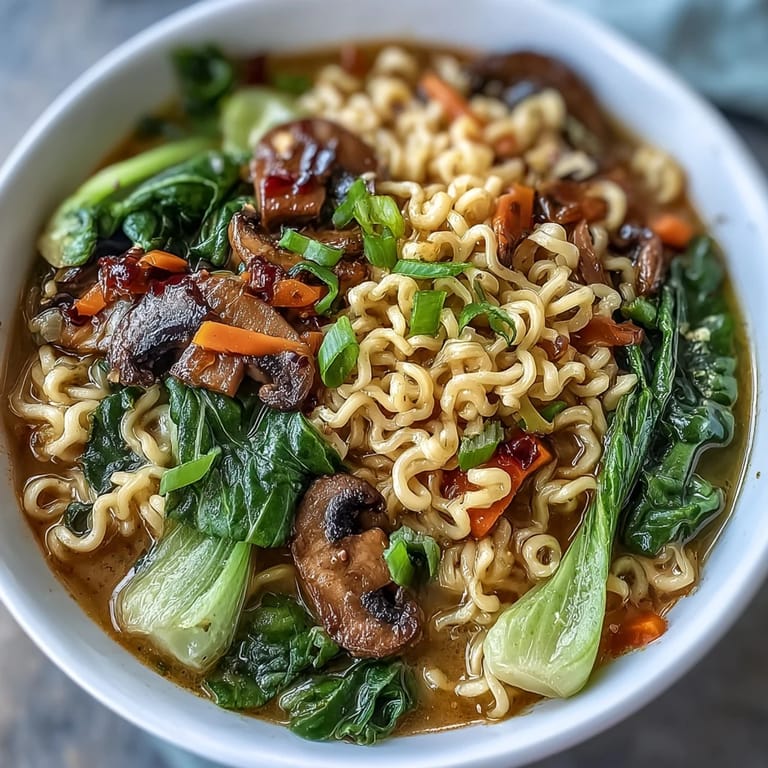
- Add the bok choy and carrots to the simmering broth and cook for just 2 to 3 minutes, until the bok choy wilts but still has a slight snap and the carrots are tender but not soft. Taste the broth and adjust the seasoning with salt and pepper.
- Assemble Your Bowls:
- Divide the drained noodles among four bowls, then ladle the hot broth, mushrooms, bok choy, and carrots over the top. This matters because the heat of the broth slightly softens the noodles while they're still in the bowl.
- Garnish with Purpose:
- Scatter the scallions, sesame seeds, and cilantro over each bowl, add a few slices of fresh red chili if you want heat, and finish with a squeeze of lime juice that brings everything into focus.
 Save to Pinterest
 Last month a friend who'd recently gone vegan made a comment about missing the complexity of curries, and I made this for her immediately. She texted me the next day to say she'd made it three more times because it proved to her that vegan cooking doesn't mean giving up on richness or satisfaction.
Customizing Your Bowl
The beauty of this ramen is that it invites you to adapt it without losing its identity. I've added cubed crispy tofu when I wanted extra protein, swapped the bok choy for spinach on nights when I couldn't find the baby kind, and once threw in edamame because they were sitting in my freezer and needed a home. The curry base is strong enough to welcome these additions without getting confused about who it is, which is the mark of a truly good recipe.
Adjusting the Heat and Depth
I discovered early on that red curry paste can vary wildly in heat depending on the brand, so I started adding it in increments and tasting before committing to the full amount. Some batches need more curry paste to shine, others need less, and this flexibility is something to appreciate rather than fight. If you want deeper spice, add a few more slices of fresh chili or keep the red curry paste at the maximum, but if you're cooking for people who prefer milder flavors, start conservative and adjust as you go.
Make It Your Own
The first time I made this for a dinner party, I panicked about whether it would be impressive enough, and then I realized that's the wrong question entirely. This recipe is impressive because it tastes like care and attention, because the flavors are balanced and alive, and because it nourishes both body and spirit on a cold night. Your guests will remember how it made them feel more than they'll remember checking off some culinary achievement box.
- Add a splash of lime juice directly to the broth if you want extra brightness and acid to balance the richness.
- Toasted sesame seeds are worth seeking out because they add a depth that raw ones simply can't match.
- Keep lime wedges on the table so people can adjust the brightness to their own taste, which is more generous than you might think.
 Save to Pinterest
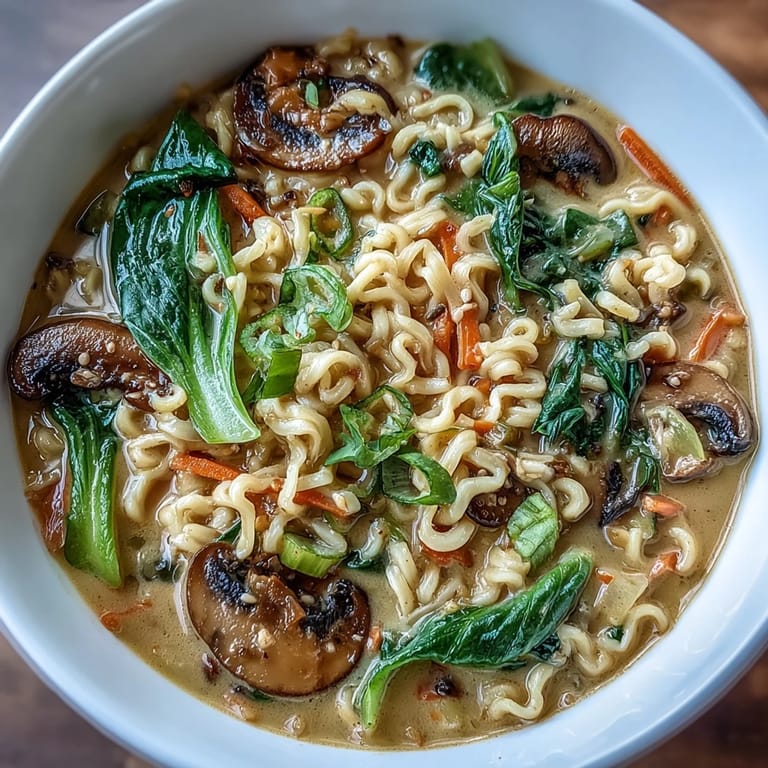
 This ramen has become one of those recipes I return to again and again, not because it's fancy or difficult, but because it reliably delivers comfort and excitement in the same bowl. It reminds me that vegan cooking isn't about restriction, it's about creativity and intention, and that's something worth celebrating every single time you make it.
Recipe FAQs
- → Can I substitute the mushrooms with another vegetable?
Yes, shiitake or cremini mushrooms can be swapped for other hearty vegetables like eggplant or zucchini, which also add a savory depth.
- → How can I make the broth spicier?
Increase the amount of red curry paste or add sliced fresh chili peppers during cooking to enhance the heat level to your preference.
- → Is it possible to use different greens instead of bok choy?
Spinach or kale work well as alternatives, though cooking times may vary slightly to maintain a tender texture.
- → What noodle types work best in this dish?
Traditional ramen noodles are ideal for texture and absorbency, but soba or udon noodles can also be delicious substitutes.
- → Can I add protein to this dish?
For extra protein, cubed tofu or edamame are excellent plant-based options that complement the flavors and textures.