 Save to Pinterest
 My cousin's daughter was turning seven, and her mother asked if I could make something special for her First Communion celebration. Standing in the kitchen that morning, I realized I'd never actually piped flowers before—just watched videos and hoped muscle memory would somehow kick in. The vanilla cake came together so easily, and watching that golden dome rise in the oven felt like the cake was already doing half the work. When it cooled and I spread that first layer of buttercream, something clicked: this wasn't about perfection, it was about showing up for someone and making them feel seen.
I'll never forget my hands shaking slightly as I held that piping bag, creating wobbly pink roses along the edges. Her grandmother leaned over my shoulder and whispered, 'The imperfect ones always look more real,' and suddenly my mistakes became part of the charm. When they cut into that cake at the party, people actually stopped talking to taste it—that's when I knew the simplicity was the whole point.
Ingredients
- All-purpose flour (2 ½ cups): The foundation that keeps this cake tender rather than dense; make sure you're measuring by spooning and leveling, not scooping straight from the bag.
- Baking powder (2 ½ tsp): This is your leavening agent, so don't skip it or halve it thinking you're being clever—it's why the cake rises so beautifully.
- Salt (½ tsp): A pinch that makes everything taste more vanilla-forward and prevents the sweetness from feeling one-dimensional.
- Unsalted butter (1 cup for cake, 1 ½ cups for buttercream): Room temperature butter creams properly and won't leave little grainy bits in your batter or frosting.
- Granulated sugar (2 cups): The structure and sweetness; creaming it with butter for a full three minutes makes an actual difference in the cake's crumb.
- Large eggs (4): Room temperature eggs mix in more smoothly and create a richer, more stable batter.
- Pure vanilla extract (1 tbsp plus 2 tsp): The soul of this cake—don't use imitation, it tastes noticeably thinner and less warm.
- Whole milk (1 cup plus ¼ cup): Room temperature milk incorporates evenly without shocking the batter, and whole milk adds a slight richness that matters.
- Powdered sugar (6 cups, sifted): Sifting removes lumps that would make your buttercream grainy; it takes an extra minute but changes everything.
- Food coloring: Gel colors won't thin out your buttercream the way liquid colors do, and they're more forgiving if you're heavy-handed.
Tired of Takeout? 🥡
Get 10 meals you can make faster than delivery arrives. Seriously.
One email. No spam. Unsubscribe anytime.
Instructions
- Set your stage:
- Preheat the oven to 350°F, grease that 9x13-inch pan, and line it with parchment paper—this small act of preparation means you won't be scrambling when the batter's ready. Having everything in its place takes maybe three minutes and changes your whole energy.
- Combine your dry ingredients:
- Whisk flour, baking powder, and salt in a medium bowl until they're evenly distributed. This step prevents pockets of baking powder from creating little bitter surprises in your finished cake.
- Cream butter and sugar until light:
- Beat them together for three full minutes with an electric mixer—you're looking for something pale, fluffy, and almost cloud-like. This isn't a rush job; the air you're incorporating is what makes the cake tender.
- Add eggs one at a time:
- Drop each egg in individually and mix well after each addition, scraping the sides of the bowl so everything incorporates evenly. If you dump all four eggs in at once, you risk lumps of raw egg white hiding in the batter.
- Fold in the flavor:
- Mix in your vanilla extract until it disappears into the batter, which takes about thirty seconds. This is when your kitchen starts smelling like something special.
- Alternate flour and milk in thirds:
- Start with flour, then milk, then flour again, mixing until just combined after each addition—this prevents overmixing, which would make the cake tough and dense. Think of it as being gentle; you're building structure, not kneading dough.
- Pour and smooth:
- Spread the batter evenly in your prepared pan and use a spatula to level the top so it bakes uniformly. A slightly domed top is fine; that's just the cake doing its thing.
- Bake until golden:
- Check at twenty-eight minutes by inserting a toothpick in the center—it should come out clean or with just a few crumbs clinging to it. The kitchen will smell toasted and vanilla-forward when it's done.
- Cool with patience:
- Let the cake sit in the pan for ten minutes so it firms up, then turn it out onto a wire rack to cool completely before frosting. Frosting a warm cake is tempting but leads to melted, uneven frosting.
- Build your buttercream:
- Beat softened butter until it's creamy, then gradually add sifted powdered sugar while alternating with milk, beating until you have something fluffy and spreadable. The gradual approach prevents sugar clouds and lumps.
- Tint and divide:
- Split your buttercream into small bowls and add food coloring drop by drop until you have the colors you want—gel colors are forgiving and won't thin the frosting. Pink for flowers, yellow for centers, green for leaves: it's that simple.
- Spread the base:
- Apply a generous layer of plain buttercream all over the cooled cake as your canvas. This base layer is your blank slate for piping.
- Pipe your flowers:
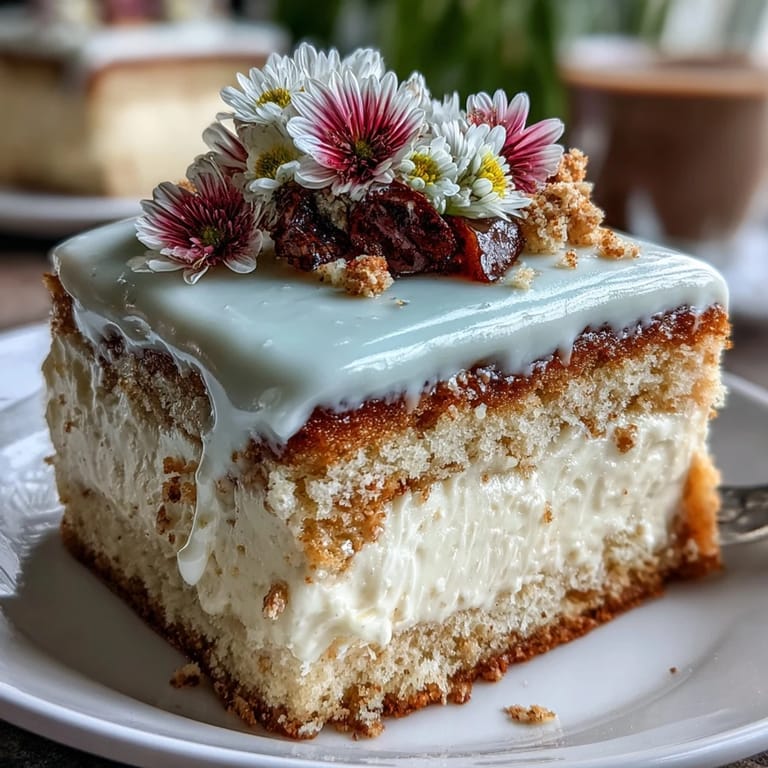
- Fill piping bags with colored buttercream and flower tips, then pipe roses, daisies, or simple blooms wherever feels right—along the edges, clustered in corners, scattered across the top. There's no wrong way to do this; confidence matters more than precision.
- Optional final touch:
- If you want to add a small cross or First Communion text, switch to a round tip and pipe carefully in a visible spot. This personal touch makes the cake unmistakably celebratory.
 Save to Pinterest
 That cake got cut into neat squares and everyone at the party took a piece, but the real moment came when her grandmother pulled me aside and said it was the most beautiful cake she'd seen made for a grandchild. I realized then that this cake wasn't special because it was technically perfect—it was special because it was made with actual care and served at a moment that mattered.
Why This Cake Wins Every Time
There's something about vanilla sheet cake that feels timeless, especially when it's meant for a celebration. It's not trying to be trendy or complicated; it's just genuinely good, moist, and forgiving enough that small imperfections in technique or decoration actually add character. People remember how a cake made them feel, not whether the piped flowers were symmetrical, and this one does exactly that.
The Buttercream That Changed My Mind
I used to think buttercream frosting was finicky and temperamental, but this one taught me otherwise. It's forgiving when you're learning to pipe, it holds its shape beautifully even in a warm kitchen, and it tastes genuinely good without being overly sweet or greasy. Once I realized I could make it an hour or even a day ahead, buttercream went from stressful to something I actually look forward to working with.
Timing and Make-Ahead Wisdom
The beauty of this cake is that you can build it across multiple days without losing quality. Bake it one day, frost it the next morning, and pipe your flowers a few hours before the party—this approach takes the pressure off and lets you actually enjoy the decoration process instead of rushing. The cake stays moist and tender for days, so you're never eating stale cake at a celebration.
- Bake the cake up to two days ahead and store it wrapped at room temperature or in a cake box.
- Make the buttercream the morning of the party and keep it covered so it stays fresh and smooth.
- Pipe your flowers one to three hours before serving so they look freshly made without you being stressed right before guests arrive.
 Save to Pinterest
 Make this cake when you want to celebrate something genuinely meaningful and show up for someone with something real. It's the kind of dessert that becomes part of the memory.
Recipe FAQs
- → What type of flour is best for this cake?
All-purpose flour is ideal as it provides the right balance of structure and tenderness for a soft crumb.
- → How can I ensure the cake stays moist?
Be careful not to overmix the batter and bake just until a toothpick comes out clean to maintain moisture.
- → Can I use different colors for the buttercream flowers?
Yes, gel food coloring works best for vibrant hues without affecting the buttercream’s texture.
- → Is it necessary to cool the cake before decorating?
Allowing the cake to cool completely prevents the buttercream from melting and ensures a smooth decoration.
- → What tools are needed for decorating the flowers?
Piping bags fitted with flower and leaf tips help create delicate buttercream floral designs.