 Save to Pinterest
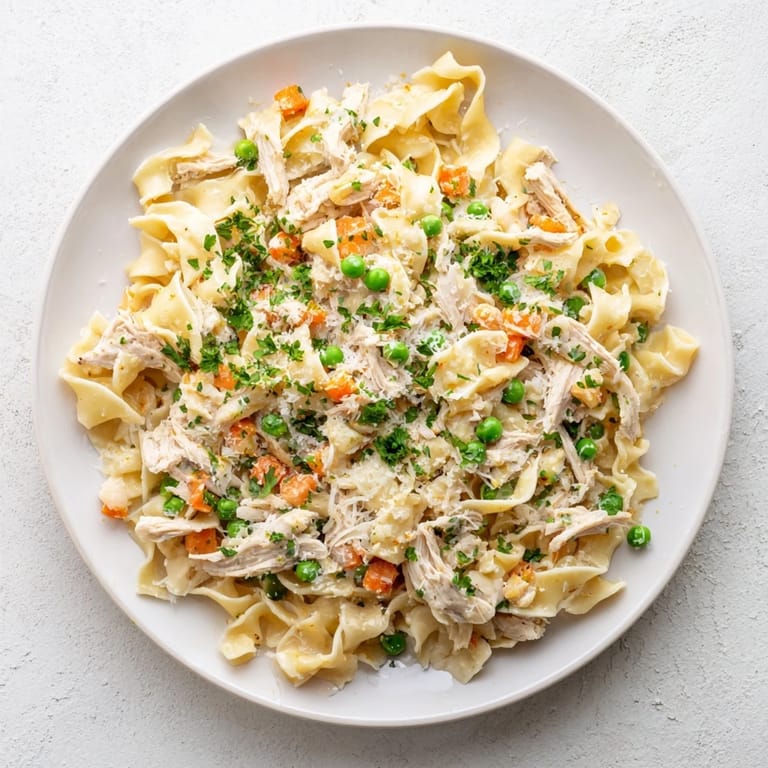
 The first time I made this skillet, it was one of those Tuesdays where everything felt overwhelming. My daughter had just come home from school grumpy about a math test, and I needed something warm and reassuring but fast. The way the Parmesan melts into the creamy sauce, coating each noodle perfectly, changed the entire mood at our dinner table. Now whenever spring vegetables start appearing at the market, I know exactly what were having.
Last month my neighbor Sarah dropped by unexpectedly while I was simmering the sauce. She kept hovering around the kitchen island, asking what smelled so good. I ended up doubling the recipe and sent her home with a container, which she later told me she ate straight from the container while standing in her kitchen. Thats the kind of dinner this is, the kind you dont want to share but somehow makes you feel better when you do.
Ingredients
- 2 cups cooked shredded chicken: Rotisserie chicken works perfectly here, but leftover poached chicken feels more homemade
- 8 oz wide egg noodles: The wider surface area grabs more of that creamy sauce
- 1 cup frozen peas: They add bright pops of sweetness without any prep work
- 1 cup diced carrots: Fresh carrots bring crunch that frozen ones never achieve
- 1 small yellow onion: Finely chopped so it melts into the sauce instead of staying in distinct pieces
- 2 cloves garlic: Minced finely because nobody wants surprise chunks of raw garlic
- 2 tablespoons unsalted butter: The foundation of everything good
- 2 tablespoons all-purpose flour: This creates that velvety texture that makes a sauce feel complete
- 2 cups low-sodium chicken broth: Control your salt by starting with low-sodium broth
- 1/2 cup whole milk or half-and-half: Half-and-half gives you richness without being too heavy
- 1/4 cup grated Parmesan cheese: Use the stuff you grate yourself, not the shaker can
- 1/2 teaspoon dried thyme: This herb somehow makes everything taste like spring
- 1/4 teaspoon black pepper: Freshly cracked makes a real difference
- 1/2 teaspoon salt: Start here and adjust after tasting
- 2 tablespoons fresh parsley: Chopped at the end for color that makes people think you tried harder than you did
Tired of Takeout? 🥡
Get 10 meals you can make faster than delivery arrives. Seriously.
One email. No spam. Unsubscribe anytime.
Instructions
- Get your noodles going first:
- Cook those egg noodles until theyre just al dente, drain them, and set them aside. Do not rinse them with water, that starch helps everything stick together later.
- Build your flavor base:
- Melt the butter in your largest skillet over medium heat. Toss in the onion and carrots, letting them soften for about 4 or 5 minutes. You want the onions translucent and carrots starting to yield.
- Add the aromatic:
- Stir in your garlic and let it cook for just 30 seconds until you can smell it. Do not walk away, burned garlic ruins everything.
- Make your roux:
- Sprinkle the flour over your vegetables and stir constantly for one full minute. It might look pasty and weird, just keep going, this is how you get a smooth sauce.
- Create the creamy magic:
- Slowly whisk in the chicken broth and milk, then add your thyme, salt, and pepper. Let everything come to a gentle simmer and cook for 3 or 4 minutes, stirring often, until the sauce coats the back of a spoon.
- Bring it all together:
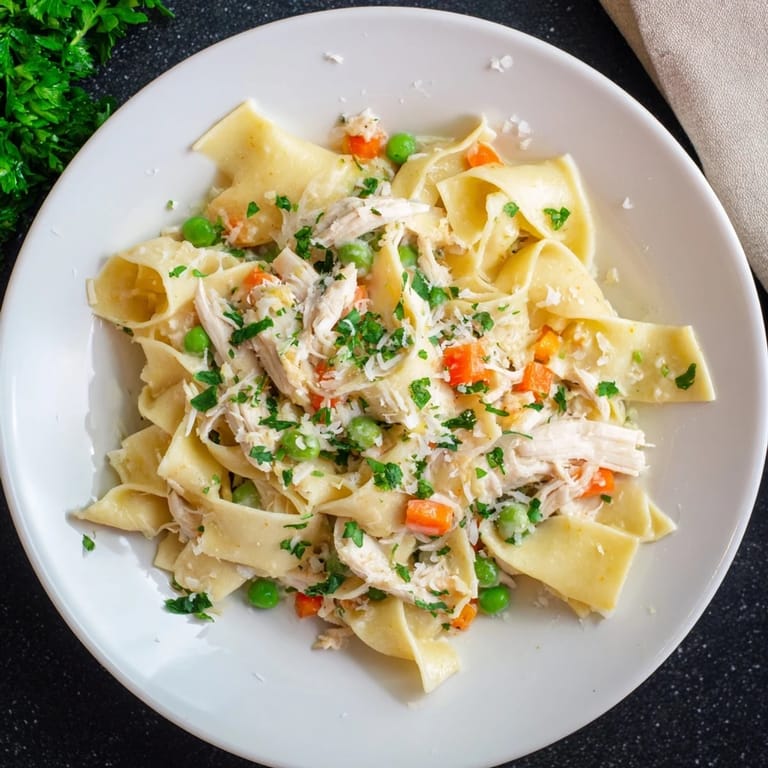
- Add the peas, shredded chicken, and Parmesan cheese. Stir until the cheese melts and everything is heated through, about 2 minutes. The sauce should be glossy and thick.
- The grand finale:
- Gently fold in those cooked noodles until everything is evenly coated. Let it cook for 1 or 2 minutes more so the noodles absorb some of that sauce, then remove from heat immediately.
- Serve it up:
- Sprinkle with fresh parsley if you remembered, and serve warm while the sauce is still silky. The longer it sits, the more the noodles soak up that sauce.
 Save to Pinterest
 My grandmother used to say that a good skillet meal brings people together. Whenever I make this now, I think about her standing over her stove, probably making something twice as good with half the ingredients. Some dishes are just meant to be shared.
Making It Your Own
Last week I added a handful of baby spinach at the very end, letting it wilt slightly in the residual heat. The bright green against the creamy sauce was beautiful, and nobody complained about eating something healthy. I have also tried swapping the peas for blanched asparagus pieces when they are in season. The sauce is forgiving enough that most vegetables work beautifully.
Timing Your Skillet
The trickiest part is getting your noodles done at roughly the same time as your sauce. I usually start the water boiling before I even chop my vegetables. If the noodles finish first, a quick toss with a little olive oil keeps them from sticking while you finish the sauce. Better yet, prep all your vegetables the night before so everything comes together even faster on busy weeknights.
Leftovers And Storage
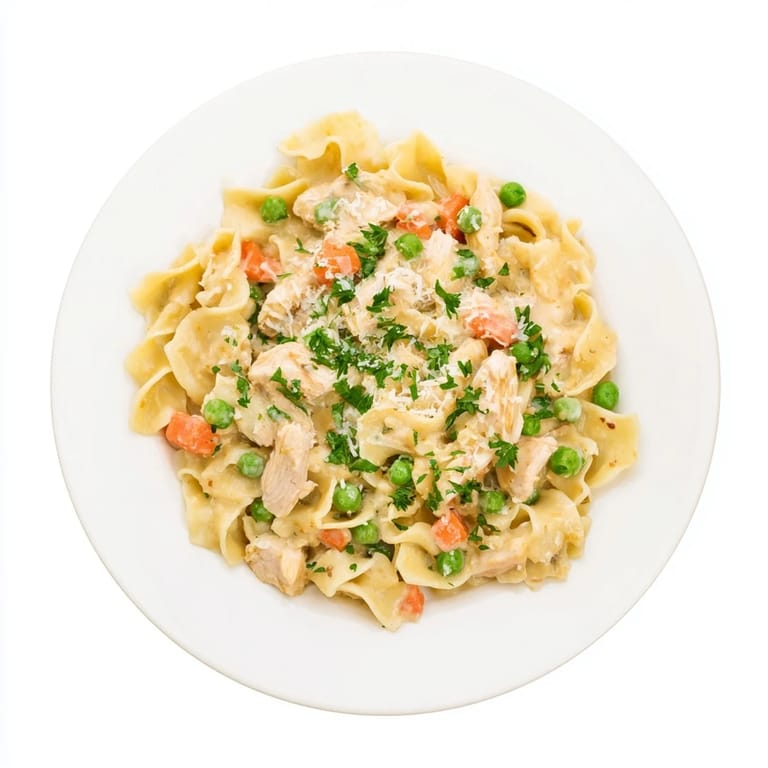
This reheats surprisingly well, though the noodles will drink up some of that beautiful sauce. A splash of milk or broth brings it right back to life when warming it up the next day. Do not be surprised if your family requests it for lunch the next afternoon.
- Store in an airtight container for up to three days
- Add a splash of milk when reheating to loosen the sauce
- The flavors actually develop overnight, so leftovers might taste even better
 Save to Pinterest
 Theres something so satisfying about a one-pan meal that still feels special. Hope this becomes a spring staple at your table too.
Recipe FAQs
- → Can I use fresh vegetables instead of frozen peas?
Yes, fresh peas work wonderfully. Add them during the last 2-3 minutes of cooking to maintain their bright color and tender texture. Fresh vegetables may require slightly less cooking time than frozen varieties.
- → What type of chicken works best for this dish?
Rotisserie chicken offers excellent convenience and flavor, requiring no additional cooking. Poached or grilled chicken also works well. Shred the meat into bite-sized pieces for even distribution throughout the skillet.
- → How can I make the sauce thicker or thinner?
For a thicker sauce, increase the flour to 3 tablespoons or simmer longer to reduce liquid. For a thinner sauce, add extra broth or milk gradually while stirring. Adjust gradually to reach your preferred consistency.
- → Can I prepare this dish ahead of time?
Assemble ingredients in advance, but cook just before serving for best texture. The noodles can become oversoft if stored in the sauce. Refrigerate components separately and combine when reheating over medium heat with a splash of broth.
- → What vegetables can I substitute or add?
Asparagus, baby spinach, green beans, mushrooms, and diced bell peppers all complement this dish beautifully. Add heartier vegetables like broccoli earlier in cooking, while tender greens should be folded in near the end.
- → Is this dish freezer-friendly?
While the prepared skillet can be frozen, the noodle texture may soften upon thawing. For best results, freeze components separately and assemble fresh, or freeze up to one month and reheat gently on the stovetop with additional broth.