 Save to Pinterest
 The first time I tasted majboos, I was sitting in a sun-warmed courtyard in Doha, watching my friend's mother work the spices with the ease of someone who'd done it a thousand times. She moved through the kitchen like she was conducting an orchestra—the cinnamon and cardamom hitting the hot ghee just so, the black limes releasing their tart, almost floral notes into the air. That moment, with the aroma wrapping around me and the anticipation building as the rice began to steam, I understood why this dish is woven into Qatari culture. It's not just food; it's tradition, family, and the kind of comfort that comes from knowing exactly where you belong.
I made this for a dinner party once, and I'll never forget the sound of my guests getting quiet mid-conversation—that hush that happens when food is so good it demands your full attention. Someone asked for seconds before finishing their first plate, and another guest actually closed their eyes after the first bite. That's when I knew majboos wasn't just a recipe I'd learned; it was something I could share that felt meaningful, something that carried a little piece of somewhere else into their homes.
Ingredients
- Lamb (bone-in), 1.5 kg: Bone-in cuts release gelatin and flavor that plain meat can't match; ask your butcher to cut pieces about the size of your fist for even cooking.
- Basmati rice, 2 cups: Soaking it beforehand prevents mushiness and helps each grain stay separate and proud on the plate.
- Ghee, 4 tbsp: This is non-negotiable if you want authentic depth; it's worth seeking out or making your own.
- Ground coriander, cumin, turmeric, cinnamon, cardamom, 1 tsp each: These spices are the soul of the dish, so buy them from places with real turnover—old spices taste like cardboard.
- Black limes (loomi), 2 whole: They provide a subtle bitterness and earthiness that's almost impossible to replicate; pierce them so their flavor bleeds into the broth.
- Saffron threads, ½ tsp: Soak them in warm water first so they release their golden color and delicate flavor throughout the rice.
- Onions, 2 large: Slice them thin so they caramelize properly and almost disappear into the sauce.
- Garlic and green chilies: Fresh and aromatic, these brighten the dish without overpowering the spice blend.
- Tomatoes, 2 medium: Chopped fresh tomatoes add acidity that balances the richness of the meat and ghee.
- Water or stock, 4 cups: Stock adds a subtle depth, but quality water works fine if that's what you have.
- Toasted slivered almonds and cilantro: The almonds add crunch, cilantro adds a fresh burst at the very end.
Tired of Takeout? 🥡
Get 10 meals you can make faster than delivery arrives. Seriously.
One email. No spam. Unsubscribe anytime.
Instructions
- Season your meat thoughtfully:
- Rub the lamb with salt and pepper, letting it sit for a few minutes so the seasoning actually penetrates the surface rather than just sitting on top.
- Caramelize the onions with patience:
- Heat your ghee over medium heat and add the sliced onions, stirring occasionally until they turn a deep golden brown—this takes about 10 minutes and is absolutely worth the time. You're building the foundation of flavor here.
- Awaken the aromatics:
- Add minced garlic and slit green chilies, stirring just for about a minute until they release their fragrance and the kitchen smells alive.
- Brown the meat on all sides:
- Place the lamb in the pot and let it develop a golden crust without moving it around constantly; this usually takes about 8 minutes total. You want those Maillard flavors.
- Add tomatoes and let them soften:
- Stir in chopped tomatoes and cook until they begin to break down and integrate into the ghee and onions, about 5 minutes.
- Introduce the spice melody:
- Add all your ground spices, the pierced black limes, and bay leaves, stirring constantly for just a moment so the spices bloom and coat every piece of meat. The aroma at this point is almost overwhelming in the best way.
- Braise the meat low and slow:
- Pour in your water or stock, bring everything to a boil, then lower the heat, cover the pot, and let it simmer gently for 45 to 50 minutes until the meat is fall-apart tender. Peek occasionally but don't fuss.
- Prepare the rice bed:
- Remove the cooked meat pieces with a slotted spoon and set them aside, then add your soaked and drained rice to the fragrant broth, stirring gently to coat each grain.
- Reassemble and infuse:
- Arrange the lamb pieces back on top of the rice, then drizzle the saffron-soaked water over everything so its golden color filters down.
- Finish with gentle heat:
- Cover the pot tightly—use foil under the lid if needed to trap steam—and cook on low heat for 25 to 30 minutes until the rice is fluffy and has absorbed all the liquid.
- Rest and reveal:
- Remove from heat and let everything sit, still covered, for 10 minutes so the flavors settle and the rice continues to cook from residual heat.
- Present with pride:
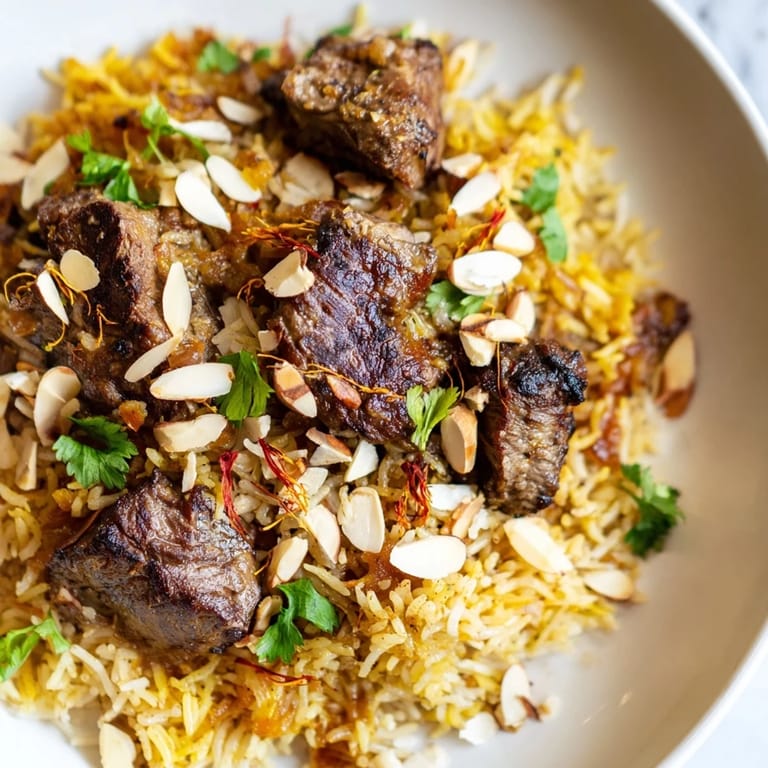
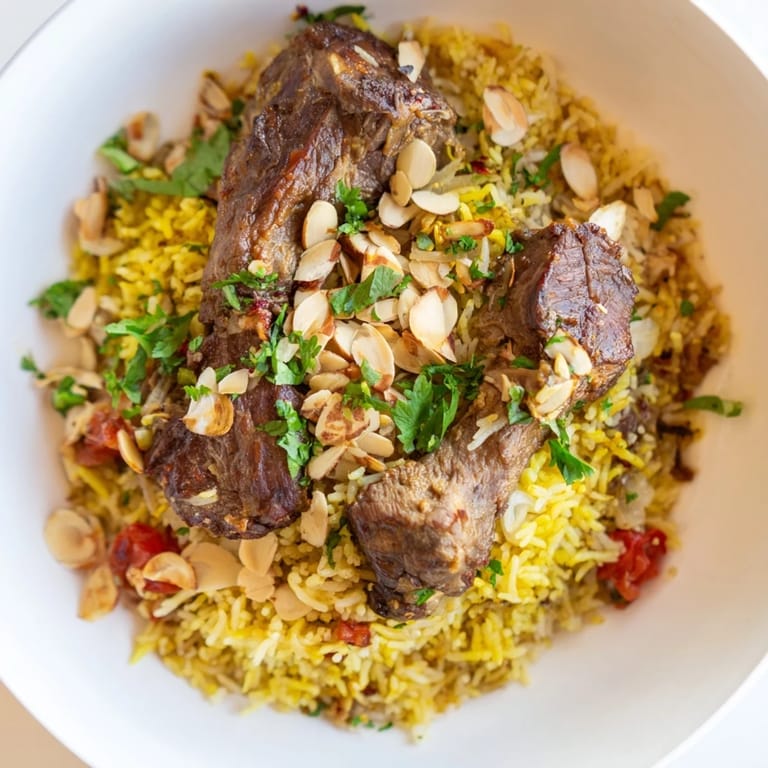
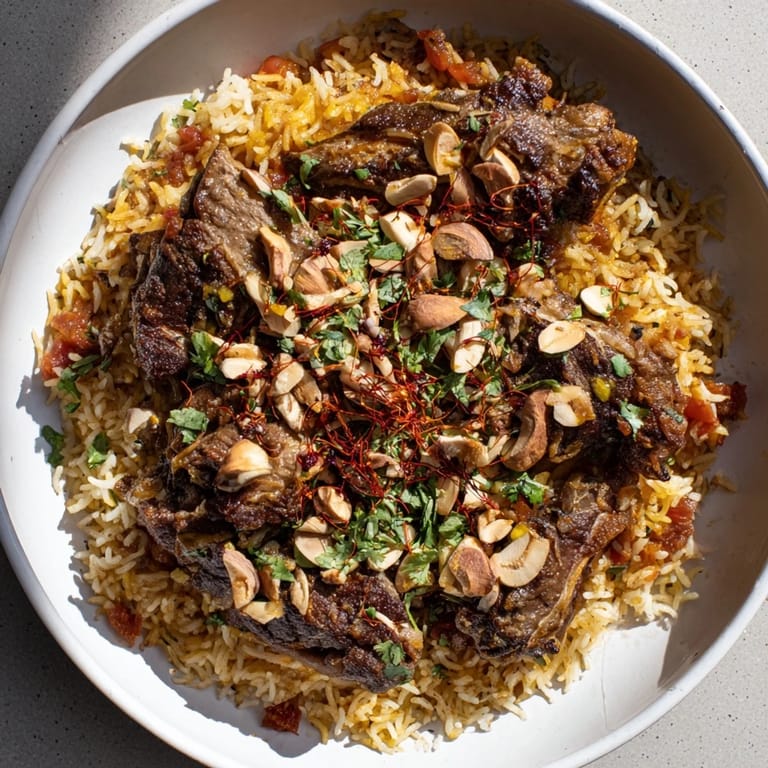
- Gently fluff the rice with a fork, arrange the lamb on a serving platter, and scatter toasted almonds and fresh cilantro over the top like you're setting a small jewel on velvet.
 Save to Pinterest
 There's a moment in cooking majboos that always moves me—it's when you first lift the lid after the rice has cooked and the steam rises up, carrying with it the full complexity of every spice and the earthiness of the black limes. That transformation from separate ingredients to something unified and whole is where the magic lives, and it's why people gather around this dish.
The Story of Black Limes
Black limes, or loomi, are dried limes that have been aged until they turn almost black and develop a flavor that's hard to describe—slightly bitter, deeply aromatic, almost smoky. They're used throughout the Gulf region, and once you understand them, you start seeing them as the backbone of Middle Eastern cooking. The first time I used them, I thought they looked strange, like little dark stones sitting in the pot, but then I tasted the finished dish and understood why they're worth seeking out. Pierce them with a knife before adding so their concentrated flavor can leach into the broth.
Building Layers of Flavor
Majboos teaches you that good food is built in layers, not thrown together at the last minute. The ghee comes first, golden and warm. Then the onions caramelize until they're nearly sweet. Garlic joins in, then comes the meat, browning and developing depth. Finally, the spices bloom, each one adding its own note to the composition. By the time you pour in the liquid, you've already built a flavor foundation so rich that the rice just absorbs it like a sponge. This layering approach—taking time with each step—is something that translates to almost every savory dish you'll ever make.
Serving and Variations
This dish is traditional enough to feel special but flexible enough to adapt to what you have. Chicken works beautifully if lamb isn't available; beef brisket becomes incredibly tender after the long braise. Some families add fresh mint or a pinch of black cardamom for deeper complexity. The best part is that majboos actually tastes better the next day, when the flavors have had time to settle and marry together, making it perfect for cooking ahead.
- Serve alongside cooling yogurt, a crisp salad, or a spicy tomato sauce to cut through the richness.
- Leftovers can be gently reheated with a splash of water, covered, over low heat.
- For a special touch, warm your serving platter in a low oven so the dish stays hot longer.
 Save to Pinterest
 Majboos is the kind of dish that makes you feel like a proper cook the moment it's finished, and more importantly, it's the kind of dish that brings people together around the table with genuine warmth. Once you've made it, you'll understand why it's beloved across the Gulf.
Recipe FAQs
- → What cut of meat is best for Majboos?
Bone-in lamb is preferred for its rich flavor and tenderness, but chicken can be used as an alternative.
- → Why soak basmati rice before cooking?
Soaking rinses excess starch and helps the rice grains cook evenly and remain separate.
- → What role do the dried black limes (loomi) play?
Dried black limes add a distinctive tangy, slightly smoky depth that enhances the overall aroma.
- → Can I adjust the spice level in this dish?
Yes, green chilies are optional and can be added or omitted to match your preferred heat tolerance.
- → How is saffron used in this dish?
Saffron threads are soaked in warm water and drizzled over the rice before the final cooking to impart aroma and color.
- → What dishes pair well with this meal?
It pairs nicely with cooling yogurt, fresh salad, or a spicy tomato sauce to balance flavors.