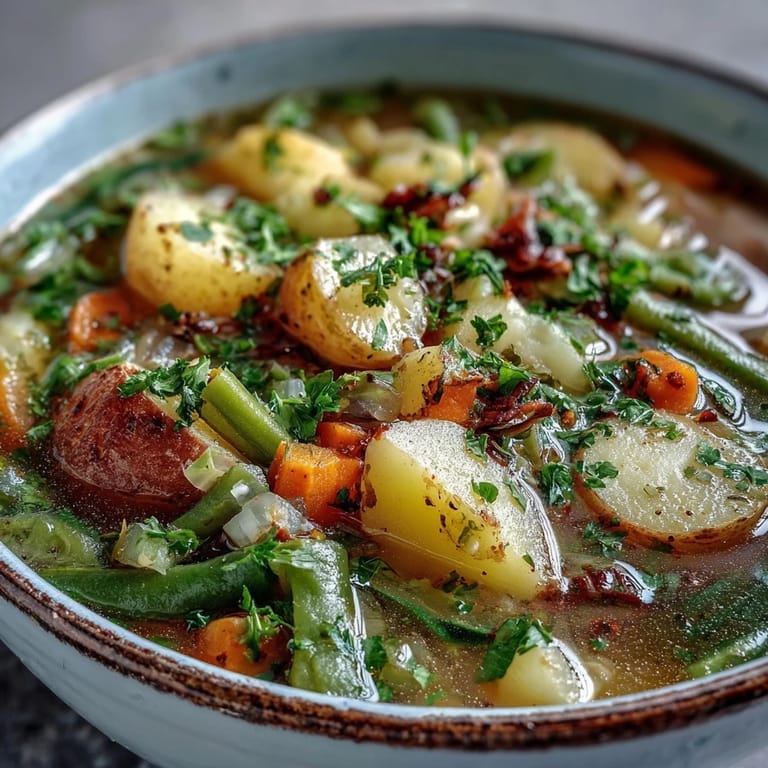
 Save to Pinterest
 There's something about chopping vegetables on a quiet afternoon that settles the mind, and this soup emerged from exactly that kind of moment. My grandmother used to say a good vegetable soup was like a conversation—every ingredient bringing its own voice to the pot. I'd watched her work countless times, but it wasn't until I stood in my own kitchen, surrounded by the smell of sautéing onions and carrots, that I understood what she meant. This isn't a fussy recipe; it's a forgiving one, the kind that welcomes whatever vegetables you have on hand and turns them into something warm and deeply satisfying.
I made this for my neighbor last winter when she was recovering from the flu, and I'll never forget how she wrapped both hands around the warm bowl, closing her eyes with the first spoonful. There's something about vegetable soup that feels less like cooking and more like kindness—especially when steam rises from the pot and fills a kitchen with the promise of feeling better. That morning, while the soup simmered, the whole house smelled like home and healing. She asked for the recipe the next day, and now it's something we make together when the season turns cold.
Ingredients
- Potatoes (3 medium, peeled and diced): These are the backbone, turning creamy as they cook and thickening the broth naturally without any cream.
- Carrots (2 medium, peeled and sliced): They add a subtle sweetness and beautiful color; I've learned to slice them thinner than the potatoes so they soften at the same pace.
- Celery stalks (2, diced): The unsung hero that builds depth—never skip this, even though it's easy to overlook.
- Onion (1 medium, chopped): Start with this and the carrots together; they're the flavor foundation that everything else builds on.
- Zucchini (1, diced): It vanishes into the broth, adding body without overpowering; frozen zucchini works just as well if fresh isn't available.
- Green beans (1 cup, cut into 1-inch pieces): These stay slightly firm even when cooked, giving the soup a pleasant texture contrast.
- Garlic (2 cloves, minced): Just a minute of cooking after the onion softens, or it turns bitter—this small timing matters more than you'd think.
- Vegetable stock (6 cups): Use something with real flavor; watery stock makes watery soup, and the quality of this one ingredient changes everything.
- Bay leaf (1): One is perfect, two is too much—I learned this the hard way one evening when my soup tasted like a medicine cabinet.
- Dried thyme and parsley (1 teaspoon each): They infuse quietly without shouting, perfect for a soup that should taste like itself, not like a spice jar.
- Olive oil (2 tablespoons): Enough to soften the first vegetables without making the soup feel slick.
- Frozen peas (1 cup): Added at the very end so they stay bright green and keep their sweetness intact.
- Fresh parsley for garnish: Optional, but it catches the light and reminds you that you made something real.
Tired of Takeout? 🥡
Get 10 meals you can make faster than delivery arrives. Seriously.
One email. No spam. Unsubscribe anytime.
Instructions
- Start the flavor base:
- Pour olive oil into a large pot and let it warm over medium heat until it shimmers slightly. Add your chopped onion, carrots, and celery, and let them soften for about 5 minutes, stirring occasionally—you're listening for the quiet sizzle to steady out, a sign they're surrendering to the heat.
- Wake up the garlic:
- Stir in your minced garlic and count to 60 in your head; this is the magic window where it becomes fragrant and sweet instead of sharp. Any longer and it begins to regret its life choices.
- Build the body:
- Add the diced potatoes, green beans, and zucchini to the pot, stirring for just a couple of minutes so each piece gets coated in the oil and heated through. You're not cooking them yet, just introducing them to the warmth.
- Pour in the soul:
- This is the moment where scattered vegetables become soup—add your vegetable stock, bay leaf, thyme, parsley, salt, and pepper all at once. Stir everything together and watch how the flavors start to blend before the heat even kicks in.
- Let it become:
- Bring the pot to a boil, then lower the heat and cover it, letting the whole thing simmer for 20 to 25 minutes until the potatoes are tender enough to break with a spoon. You'll know it's ready when the kitchen fills with steam and the vegetables have softened into each other.
- Finish bright:
- Stir in your frozen peas and let them warm through for 2 to 3 minutes—this brief moment preserves their color and sweetness. Fish out the bay leaf, take a taste, and adjust your salt if needed.
- Serve with warmth:
- Ladle the soup into bowls, scatter fresh parsley across the top if you have it, and serve while it's still steaming. The best moment is always the first spoonful, when everything is still hot and your spoon slides through vegetables that have become part of something bigger than themselves.
 Save to Pinterest
 My daughter, who claims to dislike vegetables in almost every other form, asked for a second bowl one evening, then looked surprised by her own choice. In that moment, I realized this soup isn't really about nutrition or health claims—it's about the quiet act of feeding yourself and others something that tastes like care. That's when food becomes memory.
When Vegetables Matter Most
The vegetables you choose shape the entire personality of this soup. I've made it with summer zucchini when my garden was out of control, with autumn squash when the farmers market turned golden, and with whatever was left in my crisper drawer on Wednesday afternoons. Each version tells a different story, but they're all honest. The ratio matters less than your willingness to work with what's available—this is a soup that rewards flexibility, not perfectionism.
The Art of Gentle Simmering
There's a difference between boiling and simmering, and it's the difference between soup and vegetable water. Once you bring the pot to a boil, turn the heat down so that only occasional bubbles break the surface—this gentle approach keeps the vegetables from breaking apart and makes the broth clearer and more flavorful. I've learned to cover the pot loosely rather than tightly, which lets just enough steam escape that the vegetables don't turn to mush. It's a small adjustment that makes all the difference between soup that's rough and soup that's refined.
How to Make It Your Own
This recipe is a foundation waiting for your signature. Swap seasonal vegetables, add a splash of cream for richness, or stir in fresh greens at the end if you want brightness. Some people add diced tomatoes, others finish with crispy croutons or a handful of white beans for extra protein. The bay leaf and thyme are constants I wouldn't alter, but everything else is an invitation to experiment and make it feel like yours.
- Seasonal swaps: corn in summer, kale or spinach in fall, squash when it's cold outside.
- For cream lovers: stir in a quarter cup of heavy cream or coconut milk just before serving, avoiding any boiling afterward.
- To stretch four servings into six: add another cup of broth and a handful more vegetables, adjusting seasonings at the end.
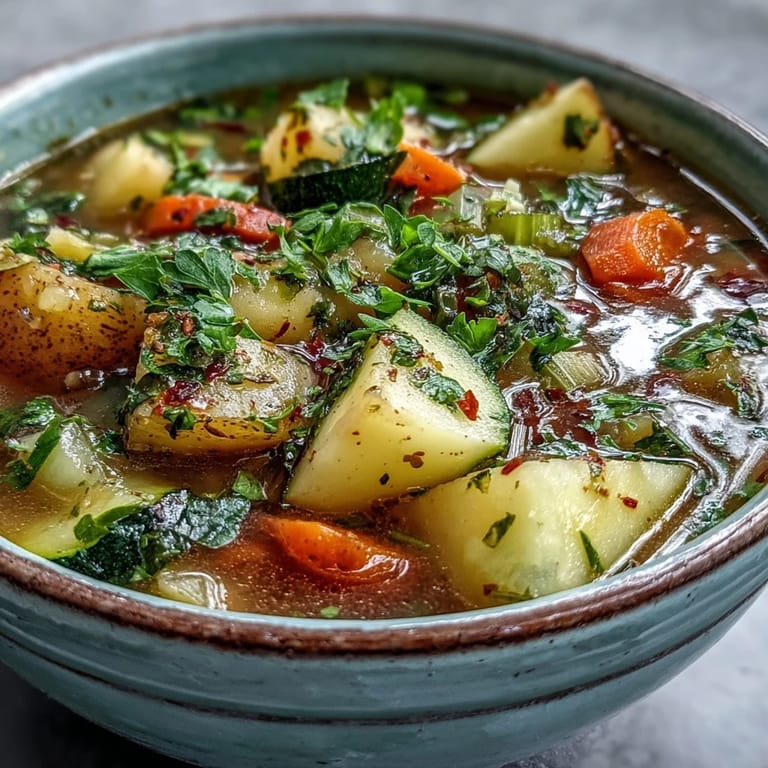 Save to Pinterest
 This soup has become my answer to so many questions—what to cook when you're out of ideas, what to bring when someone needs comfort, what to make when the house feels cold and you need warmth from the inside out. It's never fancy, but it's always honest.
Recipe FAQs
- → How long does potato and vegetable soup keep?
This soup stores beautifully in the refrigerator for 4-5 days in an airtight container. The flavors often develop and deepen after a day or two. You can also freeze individual portions for up to 3 months, though the texture of potatoes may soften slightly upon reheating.
- → Can I make this soup in a slow cooker?
Absolutely. Sauté the onions, carrots, celery, and garlic first, then transfer everything to your slow cooker. Cook on low for 6-7 hours or high for 3-4 hours until vegetables are tender. Add frozen peas during the last 30 minutes of cooking time.
- → What vegetables work best in this soup?
Potatoes, carrots, celery, onions, zucchini, and green beans provide excellent texture and flavor. You can also add corn, spinach, kale, diced tomatoes, bell peppers, or butternut squash depending on what's in season. Root vegetables like parsnips or turnips work wonderfully too.
- → How can I make this soup more filling?
Stir in a cup of cooked lentils, kidney beans, or cannellini beans during the last 10 minutes for extra protein and heartiness. Adding a splash of heavy cream or coconut milk creates richness. Serving with crusty bread, crackers, or a side salad makes it a complete, satisfying meal.
- → Is this soup suitable for meal prep?
Perfect for meal prep. Make a large batch on Sunday and portion into containers for easy lunches throughout the week. The soup actually tastes better after the flavors have mingled overnight. Reheat gently on the stovetop or in the microwave, adding a splash of water or stock if needed.
- → Can I use different herbs and spices?
Certainly. Rosemary, oregano, or dried basil work beautifully instead of or alongside thyme and parsley. For a Mediterranean twist, add a pinch of dried oregano and a bay leaf. Fresh herbs like dill or chives make lovely finishing touches just before serving.