 Save to Pinterest
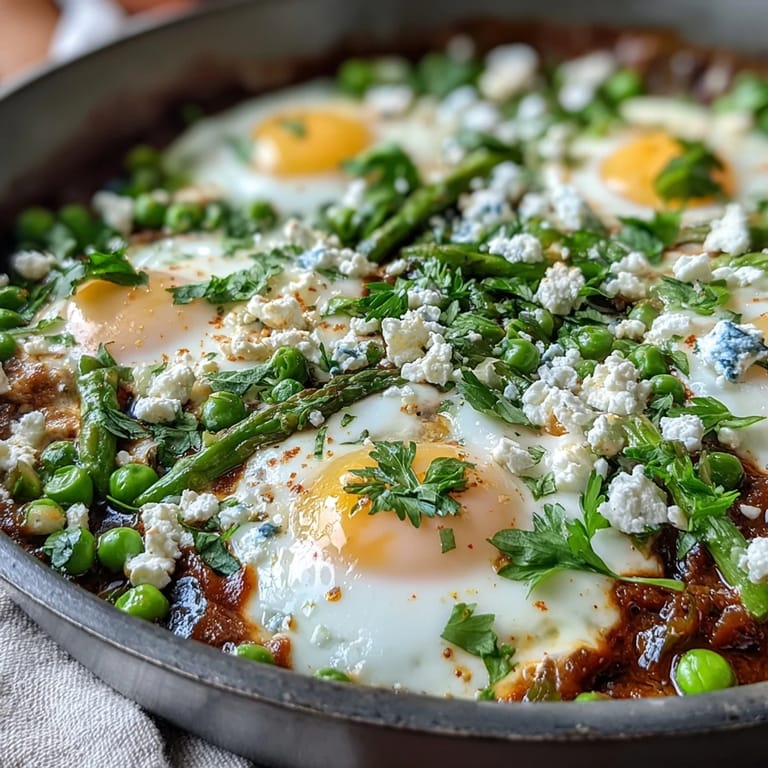
 Spring arrived late that year, and I was standing in the farmers market practically vibrating with impatience for fresh peas. When I finally spotted them, I grabbed a bunch along with asparagus so tender it practically bent itself, and something clicked—why not layer all these green treasures into a shakshuka? The result was this glowing, spiced tomato sauce cradling vegetables at their absolute peak, with eggs nestled in like they belonged there all along.
I made this for my neighbor one evening when she'd mentioned feeling stuck in a cooking rut, and watching her fork through that first bite—the way her whole face changed—reminded me that food doesn't have to be complicated to matter. She asked for the recipe before she'd even finished eating, which felt like the highest compliment.
Ingredients
- Fresh or frozen peas: Use frozen if fresh aren't available; they're picked at peak ripeness and honestly just as good, sometimes better for consistency.
- Broad beans: Fresh ones need double-podding (removing both the pod and the papery skin around each bean), which feels fussy but transforms the texture into something silky.
- Asparagus: Cut into 2-inch pieces so they cook evenly without turning mushy, and trim those woody ends without guilt.
- Medium onion: Finely chopped means it melts into the sauce rather than announcing itself in every bite.
- Red bell pepper: Diced small so it softens quickly and releases its sweetness into the tomato base.
- Garlic cloves: Mince them fine and add them after the onions soften, or they'll turn bitter and ruin the whole moment.
- Canned chopped tomatoes: San Marzano if you can find them, but any quality brand works; avoid the ones labeled with added sugar.
- Tomato paste: This is the flavor anchor, so don't skip it or dilute it—let it caramelize slightly in the oil.
- Ground cumin: Toast it mentally as you add it; this spice is what makes people ask what makes this taste so good.
- Smoked paprika: The smoke is essential—regular paprika feels flat by comparison.
- Ground coriander: A whisper of this adds complexity without announcing itself.
- Chili flakes: Optional but I never skip them; even a quarter teaspoon changes the whole vibe.
- Large eggs: Room temperature if you remember, but cold ones work too; you're looking for that barely-set white with a liquid center.
- Crumbled feta: The sharp saltiness cuts through the vegetables like it was always meant to be there.
- Fresh parsley or mint: Mint feels more spring-like here, but parsley is reliable and doesn't compete for attention.
- Extra virgin olive oil: A generous drizzle at the end isn't indulgent—it's necessary.
Tired of Takeout? 🥡
Get 10 meals you can make faster than delivery arrives. Seriously.
One email. No spam. Unsubscribe anytime.
Instructions
- Get your vegetables ready:
- Boil salted water in a pot and blanch the peas and broad beans for just 2 minutes—they should still have resistance. Shock them in ice water immediately, which stops the cooking and keeps them bright green and almost sweet.
- Build your flavor base:
- Heat olive oil in your deepest skillet over medium heat, then add the chopped onion and red bell pepper. Let them soften for 5 minutes, stirring occasionally, until they lose their rawness and the onion turns translucent.
- Bloom the spices:
- Stir in the minced garlic along with cumin, smoked paprika, coriander, and chili flakes if using. Cook for just 1 minute—you'll smell the transformation as the spices wake up in the hot oil. Don't let this moment pass or they'll burn.
- Create the sauce:
- Add tomato paste first and let it cook for 30 seconds, stirring constantly so it darkens slightly and concentrates. Then pour in the canned tomatoes with all their juice, stirring well to combine everything evenly.
- Let it simmer and thicken:
- Reduce heat to medium-low and let the sauce bubble gently for about 10 minutes, stirring occasionally. You're looking for it to thicken just enough that it coats the back of a spoon, with the flavors melding into something deeper than the sum of its parts.
- Add the vegetables back in:
- Stir the blanched peas and broad beans into the sauce along with the asparagus pieces. Season generously with salt and black pepper, then let everything simmer together for 5 to 7 minutes until the asparagus is tender but not limp.
- Make your wells and cradle the eggs:
- Using the back of a spoon, create four small indentations in the vegetable mixture, spacing them so they won't touch as they cook. Crack one egg into each well, trying to keep the yolk intact, then cover the pan and reduce heat to low.
- Cook the eggs gently:
- Set a timer for 7 to 10 minutes—this is where patience matters. You want the whites just set and opaque while the yolk stays liquid gold in the center. Peek after 7 minutes rather than guessing.
- Finish and serve:
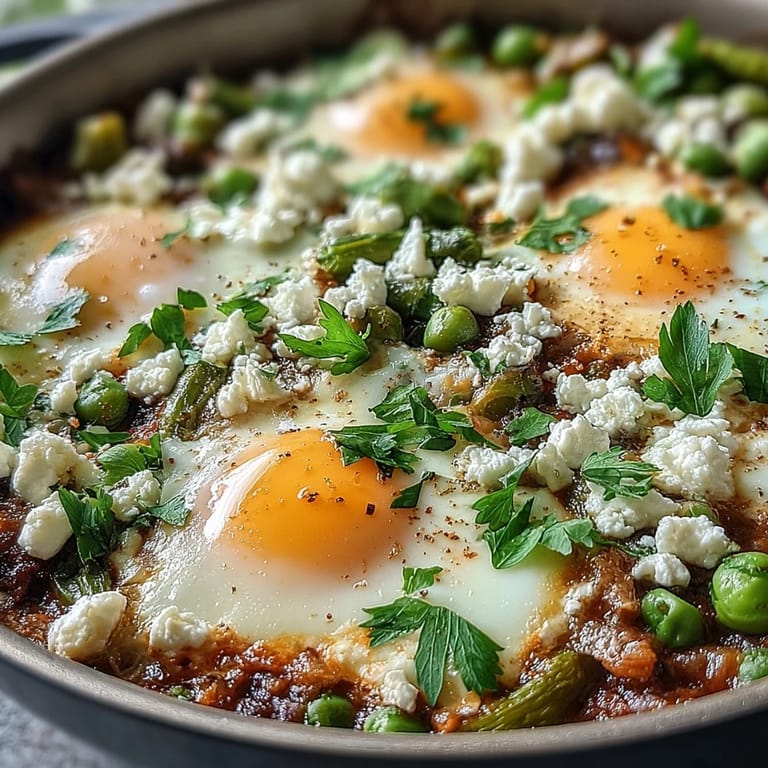
- Remove from heat, scatter crumbled feta and fresh herbs across the top, then drizzle with a generous glug of olive oil. Serve directly from the pan with crusty bread or flatbreads for soaking up every last bit of yolk and sauce.
 Save to Pinterest
 The first time I served this, my daughter asked why the egg yolk was moving around in the sauce like that, and it made me realize she'd never really understood why shakshuka feels like an event. There's something about that molten center breaking into the spiced tomatoes that turns a meal into a moment everyone leans in for.
Why Spring Vegetables Matter Here
This dish hinges entirely on using vegetables that actually taste like something. Peas in winter are a pale memory of themselves, and asparagus shipped halfway around the world loses that tender snap. When you make this in season—that narrow window in spring when everything arrived at the market within days—the vegetables do most of the heavy lifting. The sauce becomes almost secondary, just there to carry all that fresh green flavor to your mouth.
The Egg as Sauce Philosophy
What makes shakshuka different from just vegetables in tomato sauce is understanding that the egg isn't a topping—it's the final ingredient that transforms everything. That runny yolk breaks into the warm sauce, creating richness and creaminess without any cream. I learned this the hard way when I first tried this with fully cooked eggs, thinking I was being more cautious. Never again.
Beyond the Recipe
Once you understand how this comes together, you can improvise endlessly. I've made versions with roasted zucchini in summer, or swapped the asparagus for tender kale. The framework stays the same—spiced tomato sauce, briefly cooked vegetables, eggs nested in at the end. Each version tastes completely different because the vegetables carry the story.
- For a vegan version, skip the eggs entirely and add a can of chickpeas for protein and texture that satisfies just as much.
- If you want more heat, drizzle with harissa or chili oil after serving instead of trying to build fire into the base sauce.
- This pairs beautifully with a crisp white wine or even sparkling water with lemon if you're keeping things light.
 Save to Pinterest
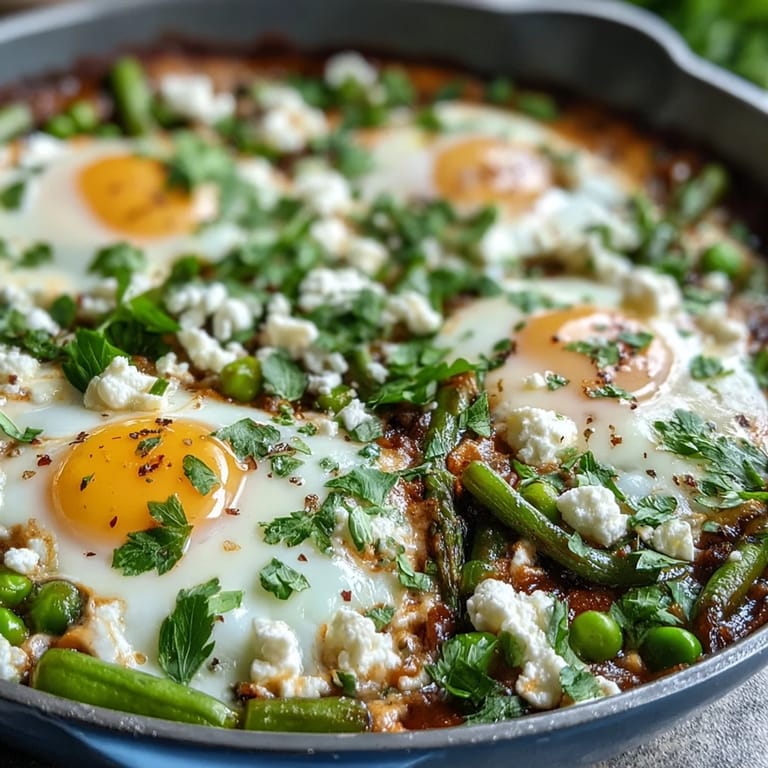
 This shakshuka has become my answer to the question of what to cook when you want something that feels nourishing and special without disappearing into the kitchen for hours. Serve it straight from the pan and watch people eat like they're discovering food for the first time.
Recipe FAQs
- → Can I use frozen peas and broad beans?
Yes, frozen peas and broad beans work perfectly in this dish. Simply blanch them briefly in boiling water before adding to the tomato sauce, then proceed with the recipe as written.
- → How do I know when the eggs are done?
The eggs are ready when the whites are completely set but the yolks still feel soft when gently touched. This usually takes 7-10 minutes over low heat with the lid on.
- → Can I make this dish ahead of time?
Prepare the vegetable sauce up to a day in advance and reheat gently before adding the eggs. The eggs should always be cooked just before serving for the best texture.
- → What can I substitute for feta cheese?
Try crumbled goat cheese, halloumi, or dairy-free alternatives. For a vegan version, omit the cheese entirely or use nutritional yeast for a savory boost.
- → How can I add more protein?
Chickpeas make an excellent addition, especially for a vegan version. Cannellini beans or white beans also work well and complement the spring vegetables beautifully.
- → What bread works best for serving?
Crusty sourdough, warm pita, or flatbread are ideal for soaking up the spiced tomato sauce. Choose something sturdy enough to scoop up generous portions.