 Save to Pinterest
 My grandmother's kitchen smelled like cinnamon and cardamom the day she taught me maklouba, standing beside her as she carefully layered rice and golden cauliflower in that enormous pot she'd owned for decades. She never wrote anything down, just moved through each step with the kind of certainty that comes from making the same dish hundreds of times. When she flipped that pot onto the platter and the whole thing tumbled out perfectly intact, her face lit up like she'd just revealed a magic trick. I've been chasing that same magic ever since, and this version is as close as I've gotten to capturing what she taught me without the benefit of her hands guiding mine.
I made this for a friend who'd just moved to the city and was homesick for Palestinian food, and watching her take that first bite was something I'll never forget. She closed her eyes, and I realized this dish carries so much more than taste—it's memory and comfort and a whole story layered into rice and spices. That's when I understood maklouba really is a showstopper, not just because of the flip, but because it takes people back somewhere.
Ingredients
- Bone-in chicken pieces (1.2 kg): Use legs and thighs if you can; they stay juicier than breast meat and give the broth better flavor as they cook down.
- Basmati rice (2 cups): The soaking step isn't just tradition—it keeps each grain separate and prevents mushiness when the dish sits over steam.
- Cauliflower florets: Cut them fairly uniform so they fry at the same rate, and don't skip the frying; it creates a crispy exterior that holds up during the inversion.
- Potatoes (2 medium): Sliced thin and fried until golden, they form a structural base that keeps everything from sliding around when you flip.
- Onion (1 large): Sautéing it first builds the flavor foundation; translucent means the spices will bloom properly in the oil.
- Spice blend (cumin, coriander, cinnamon, turmeric, allspice, cardamom, bay leaves): Each one matters—this isn't a dish where you can skip components; together they create that warm, complex depth that makes people ask for the recipe.
- Chicken stock or water (5 cups): Stock is richer, but water works if that's what you have; the spices and chicken will season it as it cooks.
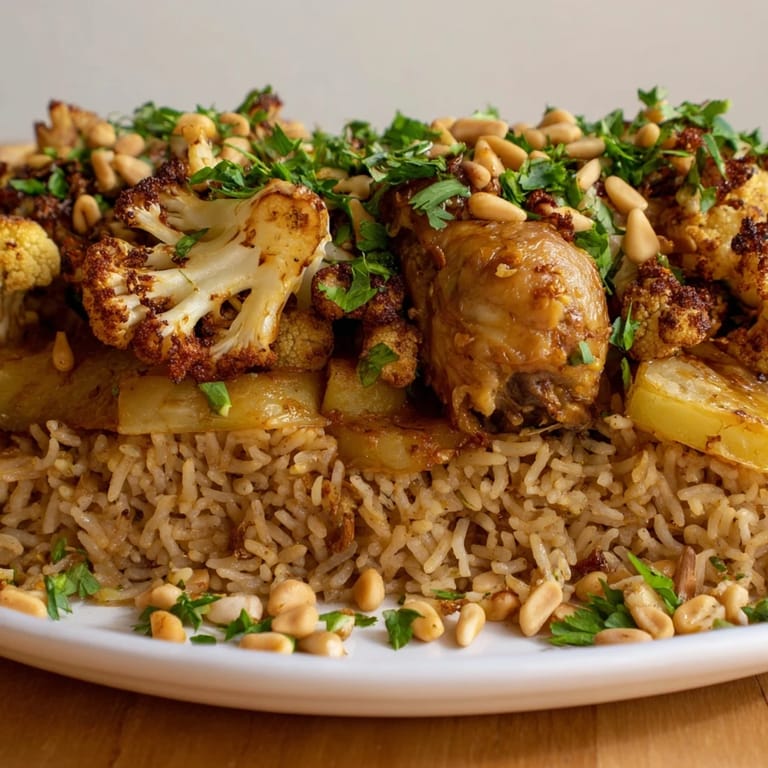
- Pine nuts or almonds (¼ cup, toasted): Toast them yourself if possible; store-bought sometimes taste a bit stale, and the smell of nuts toasting in a dry pan is one of those kitchen moments that makes the whole house feel festive.
Tired of Takeout? 🥡
Get 10 meals you can make faster than delivery arrives. Seriously.
One email. No spam. Unsubscribe anytime.
Instructions
- Prepare the rice:
- Rinse it under cold water until the water runs clear, then soak in salted water for 30 minutes. This washes off excess starch so your finished dish won't be gummy.
- Brown the chicken:
- Heat olive oil in your largest pot until it shimmers, season the chicken generously, and let it sit undisturbed for a few minutes per side until it's golden. You're not cooking it through—just creating flavor and color.
- Build the spice base:
- In that same pot with the chicken drippings, soften the onion until it's pale and sweet, then add all your spices at once and stir constantly for about a minute. The aroma that fills your kitchen at this point is the entire soul of the dish.
- Simmer the chicken:
- Return the chicken to the pot, pour in stock, bring it to a boil, then immediately lower to a gentle simmer for 20 minutes. The chicken will finish cooking during the final stage, so don't overdo it here.
- Fry the vegetables:
- While the chicken simmers, heat vegetable oil in a deep pan until it's hot enough that a potato slice sizzles immediately. Working in batches so you don't crowd the pan, fry potatoes and cauliflower until deeply golden, transferring each batch to paper towels to drain.
- Layer and assemble:
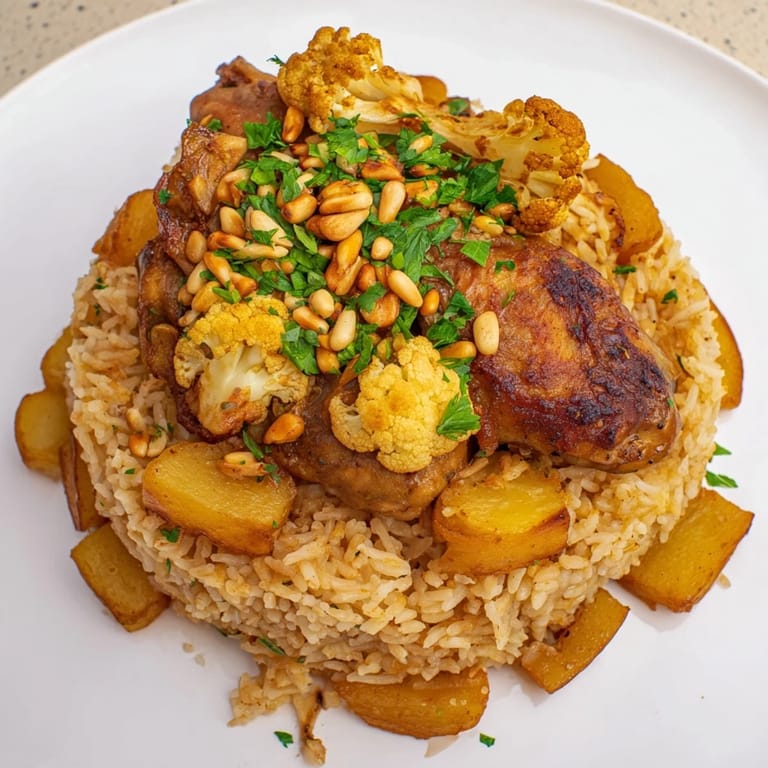
- This is where it gets architectural. In your heavy pot, arrange potato slices on the bottom as a platform, then chicken pieces, then cauliflower, then your drained rice on top. Press down gently—firm but not aggressive.
- Steam the maklouba:
- Pour broth until it just covers the rice (you need about 4–5 cups total). Once liquid bubbles at the edges, drop the heat to low, cover tightly, and do not look inside for 35–40 minutes. This is hard because you'll be curious, but lifting that lid lets steam escape and ruins the texture.
- Rest and invert:
- After 10–15 minutes of rest off the heat, place your serving platter over the pot, take a breath, and quickly flip the whole thing. The first time you do this, your heart will be in your throat.
 Save to Pinterest
 There's a moment right before you invert the pot where everything feels suspended—you're holding your breath, the platter is in position, and you're committing to either perfect layered beauty or a golden scramble. Every single time I've made this, that moment matters more than the recipe itself.
The Magic of Layering
What makes maklouba special isn't any single ingredient but the way everything cooks together in those layers. The potatoes on the bottom catch all the deepest, most concentrated flavors and turn almost creamy from the broth. The cauliflower stays distinct enough that you taste its earthiness, while the rice absorbs everything—the spices, the chicken fat, the essence of every layer beneath it. When you invert it, that golden rice dome is actually a cross-section of all those flavors unified, which is why the first bite is always the most honest one.
Variations Worth Trying
I've experimented with adding eggplant slices fried alongside the cauliflower, and they add a subtle richness that makes the dish feel even more substantial. Some families layer in carrots, which brighten the palette with natural sweetness. A pinch of saffron in the broth is a luxury that isn't necessary but transforms the experience into something that feels special. The beauty is that the base technique is forgiving enough that you can play with vegetables without breaking the essential structure.
Serving and Storage Wisdom
Maklouba is best served immediately after that dramatic flip, while the rice is still steaming and the layers haven't begun to collapse into themselves. Plain yogurt or a crisp Arabic salad cuts through the richness perfectly and makes the whole meal feel balanced rather than heavy. Leftovers reheat beautifully in a covered pot over low heat; the flavors actually deepen overnight as everything continues to meld.
- Toast your own pine nuts in a dry pan just before serving; the smell will make everyone suddenly very hungry.
- If you're making this for a crowd, assemble and cook two smaller pots instead of trying to flip one enormous one.
- The dish tastes better when you're not stressed about the flip, so practice that part mentally first.
 Save to Pinterest
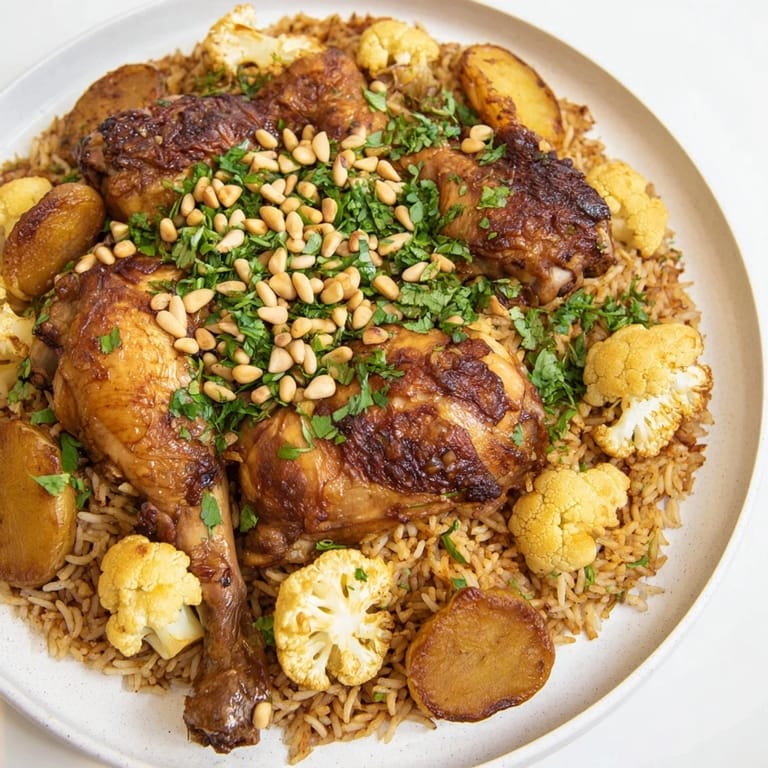
 Making maklouba is less about following a recipe and more about understanding the conversation between layered ingredients cooking down together. Once you've flipped it once and seen that golden dome emerge, you'll understand why this dish has survived generations and traveled across continents—it's simply unforgettable.
Recipe FAQs
- → How do I achieve the perfect layering for Maklouba?
Start by lining the pot with fried potatoes, then layer browned chicken pieces, fried cauliflower, and finally the soaked rice. Press gently and add broth carefully to ensure even cooking and easy unmolding.
- → What spices are essential to create authentic flavor?
Key spices include ground cumin, coriander, cinnamon, turmeric, allspice, cardamom, and bay leaves, which combine to build the dish’s warm and aromatic profile.
- → Can Maklouba be made vegetarian?
Yes, by omitting the chicken and using vegetable broth, you can enjoy a flavorful vegetarian version with the same layered vegetable goodness.
- → Why is the dish flipped before serving?
Flipping the pot releases the layered ingredients, showcasing a visually impressive presentation where the golden potatoes form the base on the serving platter.
- → What garnishes complement this dish best?
Toasted pine nuts or almonds and freshly chopped parsley add texture and freshness, enhancing the overall flavor experience.