 Save to Pinterest
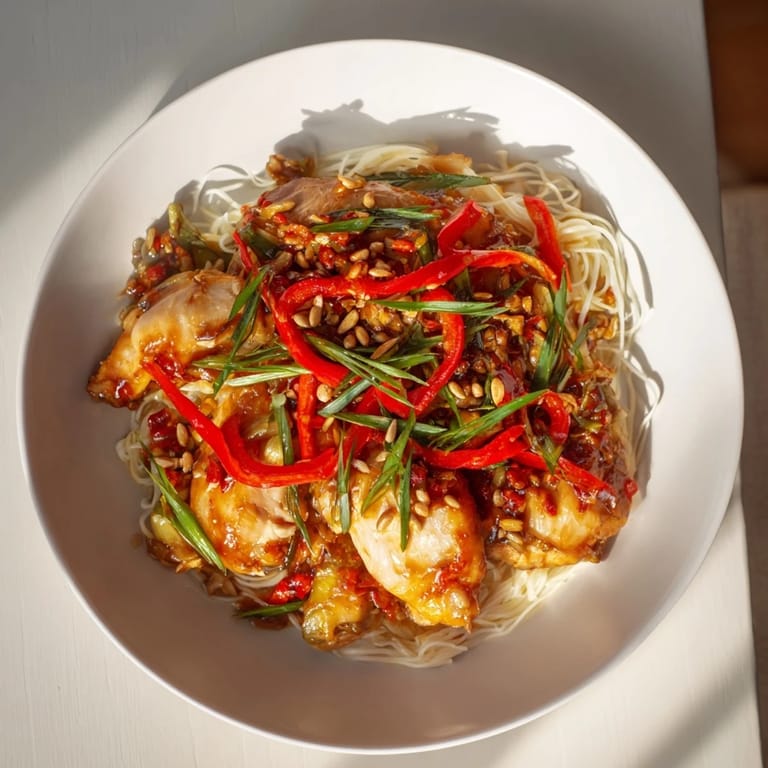
 I stumbled onto this dish on a rainy Wednesday when I had a container of leftover rice noodles in the fridge and chicken thighs that needed using. The kitchen smelled like ginger and garlic within minutes, and by the time I tossed everything together, I realized I'd accidentally made something my family asked for three nights in a row. It's become my go-to for those evenings when I want big flavor without the fuss.
The first time I made this for friends, I panicked because I thought I'd made the sauce too sweet. But once it hit the hot wok and reduced down, it balanced out perfectly with the soy sauce and vinegar. Everyone went quiet for a few minutes, which is always a good sign. One friend even scraped the bowl clean and asked if I had a restaurant background, which made me laugh because this was pure trial and error in my tiny apartment kitchen.
Ingredients
- Boneless, skinless chicken thighs or breasts: Thighs stay juicier and more forgiving if you overcook them slightly, but breasts work fine if sliced thin.
- Cornstarch: This is what gives the chicken that velvety coating and helps the sauce cling instead of pooling at the bottom of the bowl.
- Soy sauce: Use low-sodium if you're sensitive to salt, it gives you more control over the final flavor.
- Hoisin sauce: Adds a deep, slightly sweet complexity that makes the dish taste like you spent hours on it.
- Brown sugar: Balances the salty and tangy elements, start with less if you prefer a more savory profile.
- Rice vinegar: A splash of brightness that cuts through the richness and keeps everything lively.
- Oyster sauce: Optional but worth it for an extra layer of umami, skip it if you need to keep things shellfish-free.
- Sesame oil: Just a teaspoon makes the whole dish smell like your favorite Asian restaurant.
- Garlic and ginger: Fresh is best here, the aromatics bloom in the hot oil and set the tone for everything that follows.
- Red bell pepper and snap peas: They add color and crunch, and they cook fast so they stay crisp-tender.
- Spring onions: I use them twice, once in the stir-fry and again as garnish for a fresh pop.
- Rice noodles: They turn silky when tossed in the sauce, but leftover spaghetti or fettuccine works in a pinch.
- Neutral oil: Canola or sunflower oil handles high heat without smoking.
- Toasted sesame seeds: A quick sprinkle at the end adds texture and a nutty finish.
Tired of Takeout? 🥡
Get 10 meals you can make faster than delivery arrives. Seriously.
One email. No spam. Unsubscribe anytime.
Instructions
- Prep the noodles:
- If using dried rice noodles, cook them according to the package directions, then drain and rinse under cold water to stop the cooking. This keeps them from turning mushy when you toss them in the wok later.
- Coat the chicken:
- Toss the sliced chicken with cornstarch, salt, and pepper in a bowl until every piece is lightly dusted. The cornstarch creates a thin barrier that locks in moisture and helps the sauce stick.
- Mix the sauce:
- Whisk together soy sauce, hoisin, brown sugar, water, rice vinegar, oyster sauce, sesame oil, minced garlic, minced ginger, and red pepper flakes if you like a little heat. Set this aside so it's ready to pour when things start moving fast.
- Sear the chicken:
- Heat one tablespoon of oil in a large wok or skillet over medium-high heat, then add the chicken in a single layer. Let it sear undisturbed for a minute or two before stirring, this gives you those golden edges that add so much flavor.
- Stir-fry the vegetables:
- Remove the chicken and add the remaining oil, then toss in the bell pepper and snap peas. Stir-fry for two to three minutes until they're just tender but still have a bite.
- Bring it all together:
- Return the chicken to the pan, add the sliced spring onions, and pour in the sauce. Stir everything together and let it simmer for a minute or two until the sauce thickens and coats the chicken and vegetables.
- Toss with noodles:
- Add the cooked rice noodles or leftover pasta to the pan and toss well to combine, making sure every strand is coated in that glossy sauce. Heat everything through for another minute.
- Garnish and serve:
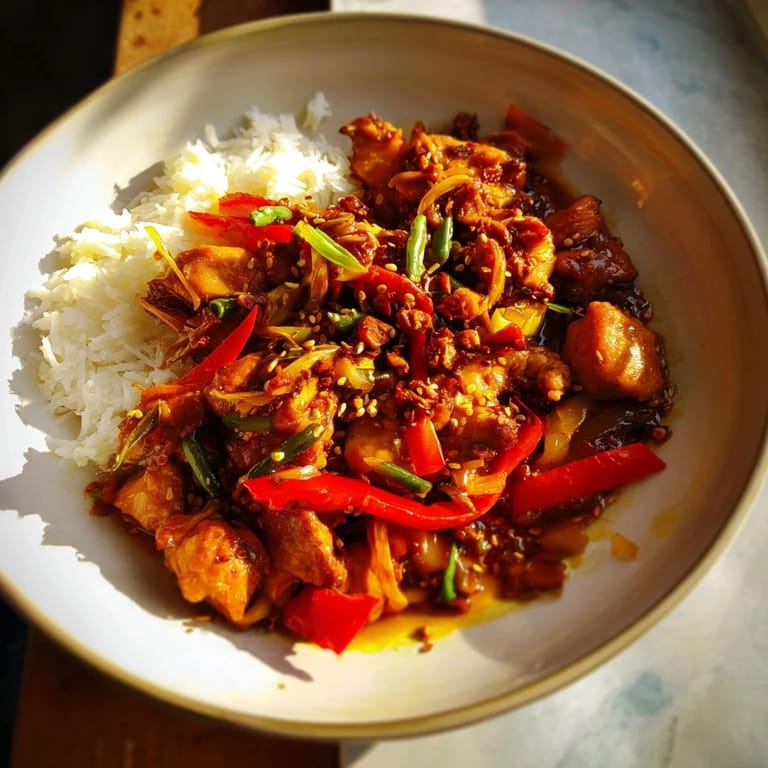
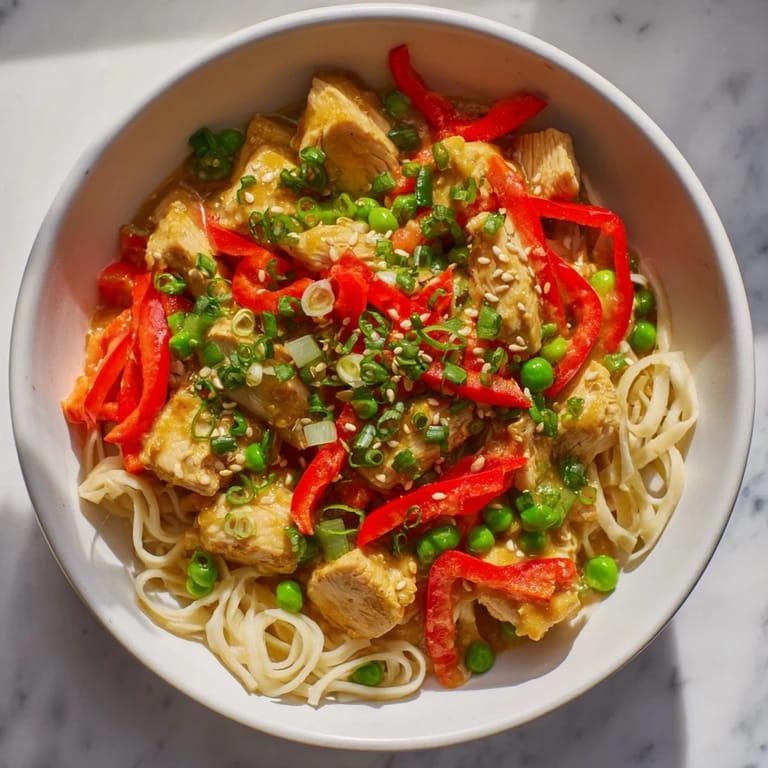
- Transfer to a serving bowl or individual plates, then sprinkle with extra spring onions and toasted sesame seeds. Serve immediately while everything is hot and fragrant.
 Save to Pinterest
 One night my partner came home exhausted, and I had this waiting on the table with a cold glass of Riesling. We ate in comfortable silence, twirling noodles and passing the serving spoon back and forth. It wasn't fancy, but it felt like the kind of meal that says I care without needing to say anything at all.
Protein Swaps That Work
I've made this with firm tofu pressed and cubed, and it soaks up the sauce like a dream. Shrimp works beautifully too, just cook them for two minutes per side and remove them before they turn rubbery. If you're using tofu, add an extra minute or two to get the edges crispy and golden.
Adjusting the Flavor
If you prefer things less sweet, cut the brown sugar in half and add a splash more rice vinegar for tang. I once forgot the hoisin and compensated with an extra tablespoon of soy sauce and a teaspoon of honey, and it still turned out great. This recipe is forgiving, so trust your palate and adjust as you go.
Making It Ahead and Storing Leftovers
You can prep the chicken, chop the vegetables, and mix the sauce a few hours in advance, then everything cooks in under fifteen minutes when you're ready. Leftovers keep in an airtight container in the fridge for up to three days. Reheat gently in a skillet with a splash of water to loosen the sauce, the microwave works but the wok gives you back that just-cooked texture.
- Store the noodles and sauce mixture together so the flavors meld overnight.
- Add a squeeze of lime or a drizzle of sesame oil when reheating to perk up the flavors.
- If the noodles absorbed too much sauce, toss in a tablespoon of water or broth while reheating.
 Save to Pinterest
 This dish has earned a permanent spot in my weeknight rotation, and I hope it finds a place in yours too. It's proof that a handful of pantry staples and a little heat can turn into something you'll crave again and again.
Recipe FAQs
- → Can I substitute chicken with other proteins?
Yes, tofu or shrimp can be used instead of chicken for different textures and flavors.
- → How do I cook the rice noodles properly?
Follow package instructions closely, then rinse with cold water to prevent sticking before adding to the stir-fry.
- → What gives the sauce its characteristic flavor?
A combination of soy sauce, hoisin, brown sugar, garlic, and ginger creates the sweet-savory Mongolian-style sauce.
- → How can I adjust the spice level?
Modify the amount of crushed red pepper flakes to increase or reduce heat according to your preference.
- → What oils are best for stir-frying this dish?
Neutral oils like canola or sunflower oil work well for stir-frying without overpowering the sauce flavors.