 Save to Pinterest
 One afternoon, I was standing in my kitchen with a pile of farmers market vegetables and absolutely no plan. The sweet potatoes caught my eye—golden and promising—and somehow I ended up roasting them alongside everything else, then drizzling it all with a sauce I threw together on instinct. That bowl changed how I think about lunch: suddenly, eating well didn't feel like a chore anymore. It felt like self-care wrapped in a coconut bowl.
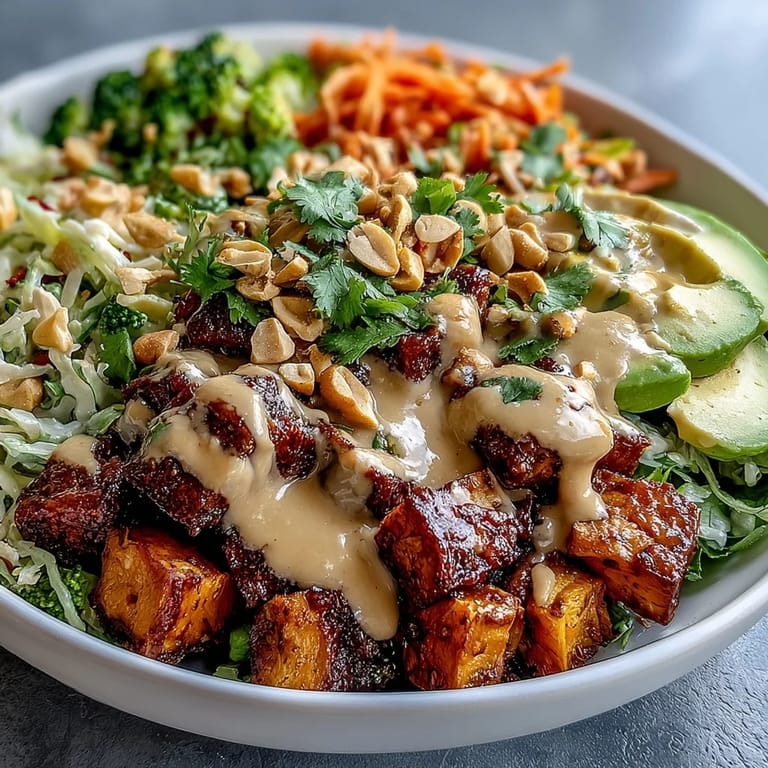
I made this for my partner on a Tuesday night when we were both running on fumes, and watching them light up over a bowl of roasted vegetables felt like a small victory. The colors alone seemed to lift the mood in the kitchen—all those purples and oranges and greens stacked together like edible art.
Ingredients
- Sweet potatoes, medium, diced (4): The foundation of this bowl—they caramelize beautifully at high heat and turn creamy inside, giving you that satisfying heartiness.
- Olive oil (2 tablespoons): Just enough to help them crisp without drowning out their natural sweetness.
- Salt and pepper: Don't skip seasoning the potatoes directly; it builds flavor from the ground up.
- Broccoli florets (2 cups): Raw broccoli adds a pleasant bite that contrasts with the soft potatoes.
- Shredded cabbage, red or green (2 cups): Cabbage stays crunchy and soaks up the sauce beautifully without turning soggy.
- Grated carrots (1 cup): They add natural sweetness and bright color without needing any cooking.
- Avocado, medium, sliced (1): The creamy element that makes each bite feel luxurious; add just before serving so it doesn't brown.
- Peanut butter (1/2 cup): Full-fat, creamy peanut butter works best—those natural oils are what make the sauce velvety.
- Soy sauce (2 tablespoons): The umami backbone that ties everything together; use tamari if you need gluten-free.
- Maple syrup (2 tablespoons): A touch of sweetness that balances the salty and tangy notes without being cloying.
- Lime juice (2 tablespoons): Fresh lime is non-negotiable here; it brightens the entire bowl and wakes up your palate.
- Sesame oil (1 tablespoon): A small amount adds nuttiness and depth; resist the urge to add more or it overpowers everything.
- Fresh cilantro, chopped (1/4 cup): Herbaceous and fresh, it's the final flourish that makes this feel intentional.
- Chopped peanuts (1/4 cup): Adds texture and a punch of protein; toast them lightly first if you want them to taste even better.
Tired of Takeout? 🥡
Get 10 meals you can make faster than delivery arrives. Seriously.
One email. No spam. Unsubscribe anytime.
Instructions
- Heat your oven properly:
- Preheat to 400°F (200°C) while you prep everything else. A hot oven is what gives sweet potatoes those caramelized edges that make this whole dish sing.
- Prepare the sweet potatoes for roasting:
- Toss your diced sweet potatoes with olive oil, salt, and pepper until every piece is coated. Spread them on a baking sheet in a single layer and let them have space to breathe.
- Roast with intention:
- Slide them into the oven for 25–30 minutes, stirring halfway through so they brown evenly on all sides. You'll know they're done when the edges turn crispy and golden.
- Prepare your vegetables while they roast:
- Set out your broccoli florets, shredded cabbage, grated carrots, and sliced avocado on a cutting board or in separate bowls. Having everything ready means you can move quickly once the potatoes are done.
- Make the peanut sauce:
- In a mixing bowl, whisk together peanut butter, soy sauce, maple syrup, lime juice, and sesame oil until smooth and creamy. If it feels too thick, add warm water one tablespoon at a time until you reach a drizzle-able consistency.
- Assemble your bowls:
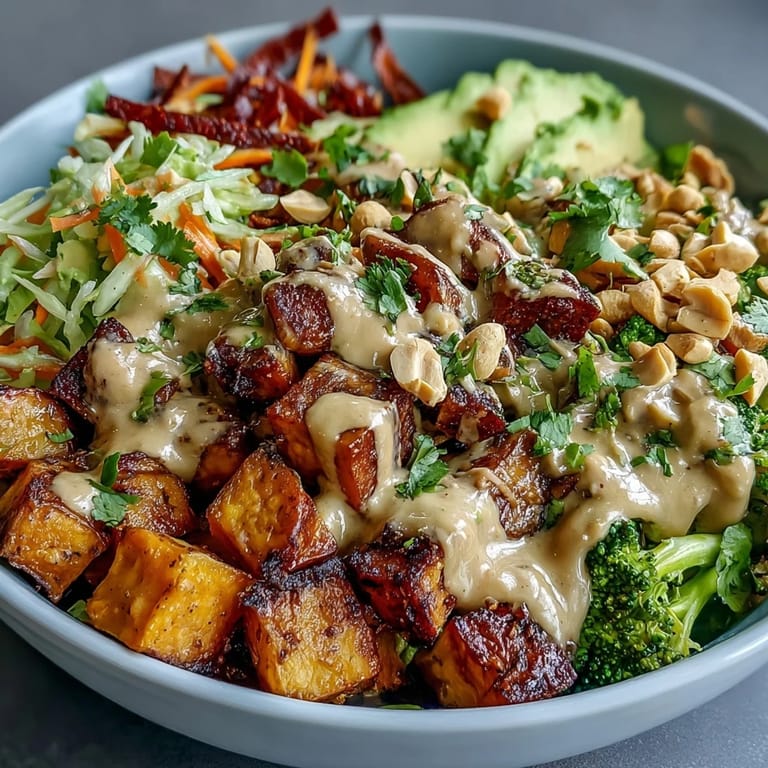
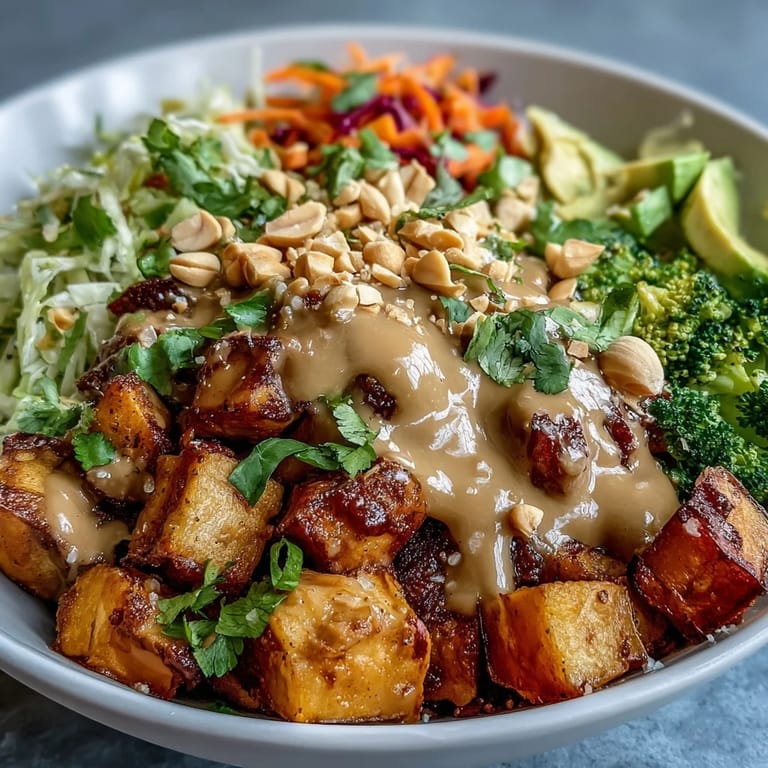
- Divide the warm roasted sweet potatoes among four bowls, then arrange the raw vegetables around them in any pattern that makes you happy. Drizzle generously with the peanut sauce, letting it pool in the center.
- Finish with flourish:
- Top each bowl with fresh cilantro and chopped peanuts, then serve immediately while the potatoes are still warm and everything is at its peak.
 Save to Pinterest
 There was a moment when my friend tasted this and said, 'This is what health food should taste like,' and I realized the real magic isn't in being restrictive or perfect—it's in making something delicious enough that you actually want to eat it. That's when food stops being about obligation and becomes about joy.
Why This Bowl Works
The genius of a Buddha bowl lies in balance: warm and cool, crunchy and soft, savory and sweet all in one place. The roasted sweet potatoes provide earthiness, the raw vegetables keep things fresh and bright, and that peanut sauce ties it all together like a warm hug. Every spoonful gives you multiple textures and flavors, which is why eating it never feels boring—even on your third bowl that week.
Storage and Meal Prep
This is where the bowl truly shines for weekday lunches. You can roast the sweet potatoes the night before and store them in the fridge; the vegetables can be prepped and kept separately in containers so they stay crisp. The peanut sauce actually tastes better after it sits overnight, the flavors melding together. Just assemble when you're ready to eat, and the whole thing comes together faster than ordering takeout.
Customizing for Your Kitchen
This recipe is genuinely flexible, which is why it works in so many different kitchens and for so many different dietary needs. Swap the vegetables based on what's in season or what you have on hand—roasted cauliflower, raw spinach, cucumber, bell peppers, all work beautifully. You can build protein however serves you: add baked tofu, chickpeas, tempeh, or even a fried egg. The base stays the same, but your version will be uniquely yours.
- Add cooked quinoa or brown rice to make it even more filling and grounding.
- Make the peanut sauce with sunflower seed butter and omit the sesame oil if you're cooking for someone with allergies.
- Double the sauce recipe because you'll want it for everything all week long.
 Save to Pinterest
 This bowl became a regular in my rotation because it proved that eating well doesn't require complicated techniques or hard-to-find ingredients. It just requires showing up for yourself with intention.
Recipe FAQs
- → Can I make this bowl nut-free?
Yes, substitute peanut butter with sunflower seed butter, omit sesame oil, and use sunflower seeds instead of peanuts for garnish.
- → What can I use to add extra protein?
Adding baked tofu or chickpeas is a great way to boost the protein content of this dish.
- → Is this dish gluten-free?
Use tamari instead of soy sauce to make this bowl gluten-free without compromising flavor.
- → Can I swap the vegetables?
Absolutely, broccoli can be replaced with cauliflower and carrots with radishes according to preference.
- → How should I prepare the peanut sauce consistency?
If the sauce is too thick, thin it with 1–2 tablespoons of warm water until smooth and pourable.