 Save to Pinterest
 There's something about autumn that makes me crave the simplicity of a good salad, especially when apples are at their sweetest. I was standing at the farmers market one crisp Saturday morning, surrounded by bushels of Galas and Granny Smiths, when an older woman next to me casually mentioned she'd been making the same apple and walnut salad for forty years. That stuck with me—not because of nostalgia, but because it made me wonder what I could be missing in my own kitchen. I went home, pulled together what I had, mixed up a tangy cider vinaigrette on a whim, and realized sometimes the best meals don't require much fuss, just intention.
I made this for a potluck once where I was the last to arrive, nervous about whether my salad would hold up in a crowded fridge with all the heavier casseroles and baked goods. What surprised me was that people kept coming back to it between bites of other dishes—something about the combination felt both familiar and a little unexpected. By the end of the evening, I'd promised the recipe to three different people, all of whom claimed they'd never thought to put apples and walnuts together that way.
Ingredients
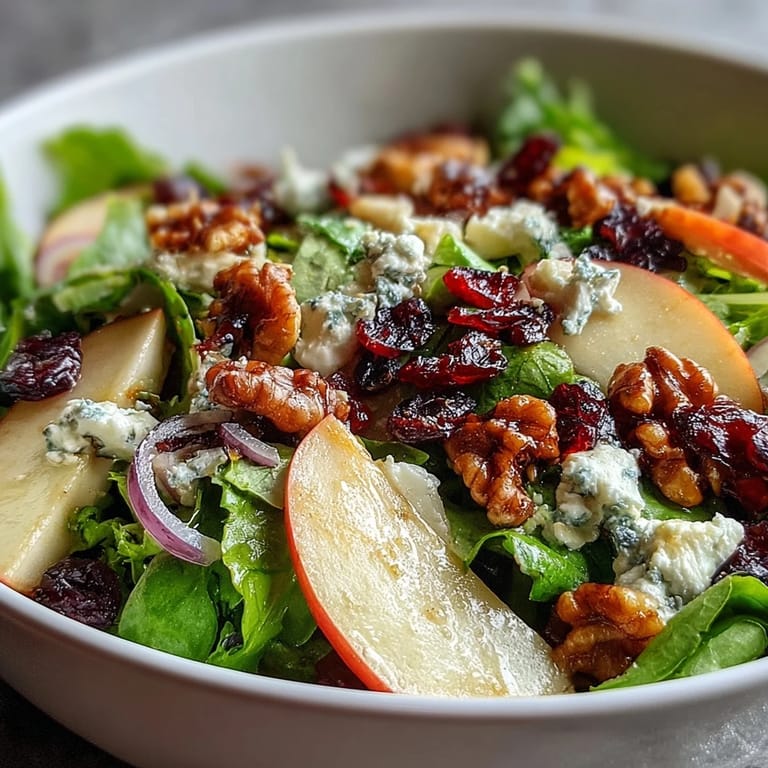
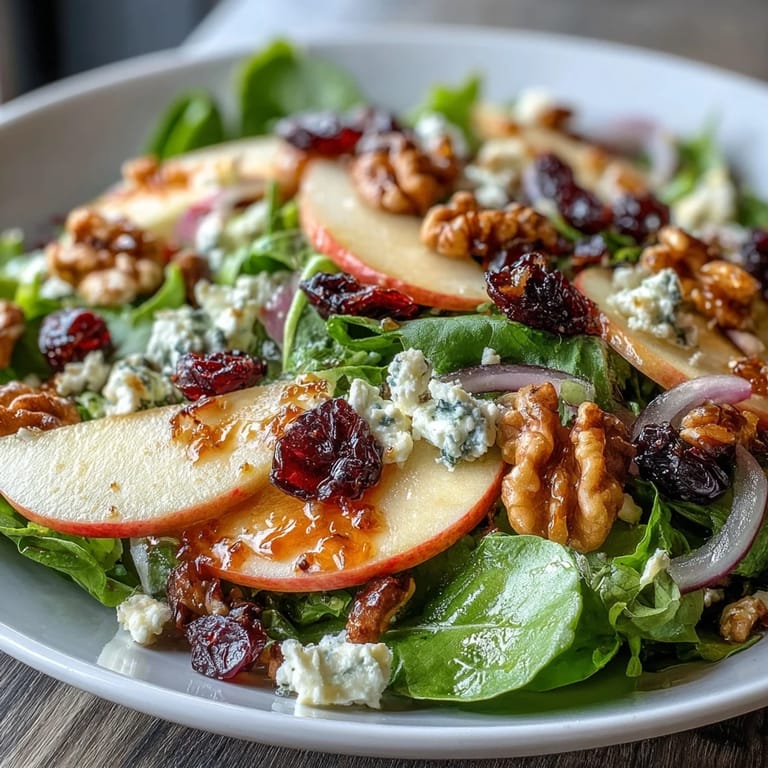
- Mixed salad greens: Six cups might sound like a lot, but it wilts down slightly once dressed, and the variety of textures keeps things interesting—I usually go for a blend of arugula's peppery bite and spinach's mild sweetness.
- Apples: Gala or Granny Smith both work beautifully; Gala is sweeter and slightly softer, while Granny Smith holds its crunch longer, so pick based on whether you're eating this immediately or prepping ahead.
- Walnuts: Toast them lightly in a dry skillet for a minute or two to deepen their flavor, though raw works perfectly fine if you're short on time.
- Goat cheese or feta: The creaminess cuts through the acidity of the vinaigrette; I've learned that crumbling it directly into the bowl rather than over the top prevents it from clumping.
- Red onion: I keep this optional because raw onion can be fierce, but a thin slice adds a sharp note that balances the sweetness of the apples and honey.
- Dried cranberries: Another optional player, but they add tiny bursts of tart sweetness that feel almost like flavor pockets throughout each bite.
- Apple cider vinegar: The backbone of the dressing; make sure it's actual apple cider vinegar and not the cleaning kind.
- Honey or maple syrup: This rounds out the vinegar's sharp edges; maple syrup gives a deeper, earthier tone while honey stays bright and clean.
- Dijon mustard: One teaspoon might seem small, but it acts as an emulsifier and adds a subtle complexity that keeps the dressing from tasting one-dimensional.
- Extra virgin olive oil: Don't use the cheap stuff here—the oil's quality becomes noticeable once it's the star of a simple vinaigrette.
Tired of Takeout? 🥡
Get 10 meals you can make faster than delivery arrives. Seriously.
One email. No spam. Unsubscribe anytime.
Instructions
- Whisk the dressing base:
- In a small bowl or jar, combine the apple cider vinegar, honey, Dijon mustard, salt, and pepper, whisking until the honey dissolves and everything smells bright and alive. Gradually drizzle in the olive oil while whisking constantly, watching as the mixture transforms from separated and slick to creamy and unified.
- Build your salad:
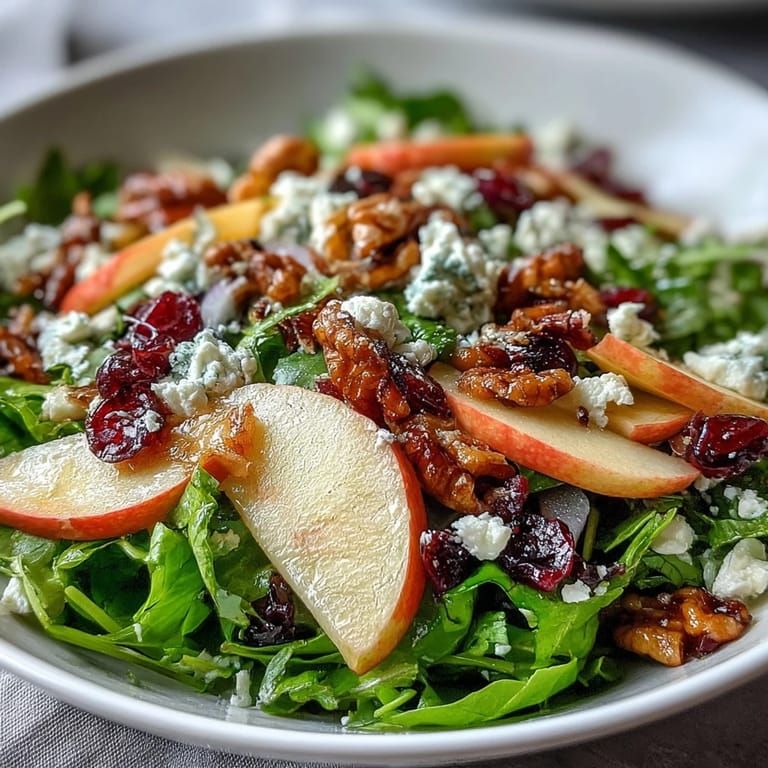
- Pour the greens into a large bowl and add the apple slices, walnuts, cheese, red onion, and cranberries if you're using them—don't stress about arranging them perfectly because the tossing will do that. This is the moment where you can taste a walnut or an apple slice to make sure everything feels fresh and ready.
- Dress and toss gently:
- Drizzle the vinaigrette over the salad just before serving, then toss with your hands or two large spoons using a gentle lifting motion rather than aggressive stirring. The goal is to coat everything evenly without bruising the delicate greens or breaking apart the cheese.
- Serve right away:
- The longer a salad sits dressed, the more the greens will soften and the apples will brown, so bring it straight to the table and eat it at its peak. If you're meal prepping, keep the greens, toppings, and dressing separate and only combine them when you're ready to eat.
 Save to Pinterest
 My colleague brought this salad to a lunch meeting one day, and the whole conference room paused mid-conversation when she opened the container—not because it looked fancy, but because it smelled like fall and comfort and something homemade. We all ended up eating it while discussing strategy, and somehow the meal made the meeting feel less corporate and more collaborative, like we were solving problems together over something real instead of takeout containers.
Why This Salad Works Across Seasons
Spring versions swap the apples for fresh strawberries and add tender peas or radishes for crunch. Summer brings stone fruits like peaches or nectarines, and you can lighten the oil slightly for heat. Winter is where the original truly shines—Granny Smiths and storage apples are at their best, and the walnuts provide earthiness that feels grounding when the days are short. The vinaigrette stays constant, which is why this recipe has become my backbone for experimentation rather than a rigid formula.
Building Flavor Layers
One night I was making this for dinner and realized I'd run out of honey, so I used a splash of balsamic vinegar instead—the depth and slight sweetness changed the entire character of the dressing without breaking it. It taught me that the formula is flexible as long as you maintain the balance of acid, fat, and a touch of sweetness. I've since experimented with sherry vinegar for a softer approach and red wine vinegar when I want something bolder, and each one tells a slightly different story.
Make It Your Own
The beauty of this salad is that it's a starting point rather than a destination. I've made versions with roasted beets instead of cranberries, substituted blue cheese for goat cheese when I wanted richness, and added everything from crispy chickpeas to grilled chicken when I needed more substance. The core—greens, apples, walnuts, cheese, and that cider vinaigrette—stays recognizable even as you improvise around it.
- Toast your walnuts lightly in a dry skillet to bring out their natural oils and deepen their flavor.
- If making this ahead, pack the dressing separately and dress the salad just before eating to keep the greens from wilting.
- Taste your apples before slicing to make sure they're crisp and sweet; a dull apple will make the whole dish feel flat.
 Save to Pinterest
 This salad has become my answer to the question of what to bring when I want to feel like I've actually cooked something, even though I haven't turned on a stove. It's become proof that simple doesn't mean forgettable, and that sometimes the best meals are the ones you can make on a random Tuesday without any drama.
Recipe FAQs
- → What type of apples work best?
Gala and Granny Smith apples work beautifully. Gala offers natural sweetness while Granny Smith provides a crisp tartness that complements the tangy vinaigrette.
- → Can I make the dressing ahead?
Yes, whisk together the cider vinaigrette up to 5 days in advance. Store in an airtight container in the refrigerator and bring to room temperature before serving.
- → How do I prevent apples from browning?
Toss sliced apples in a little lemon juice immediately after cutting. This natural preservative keeps them fresh and crisp for several hours.
- → What nuts can I substitute for walnuts?
Pecans offer a buttery sweetness, while almonds provide a satisfying crunch. Both work wonderfully with the apple and cheese combination.
- → Is this suitable for meal prep?
Store components separately: keep the dressing in a small jar and layer greens, apples, and nuts in a container. Add cheese just before serving to maintain texture.