 Save to Pinterest
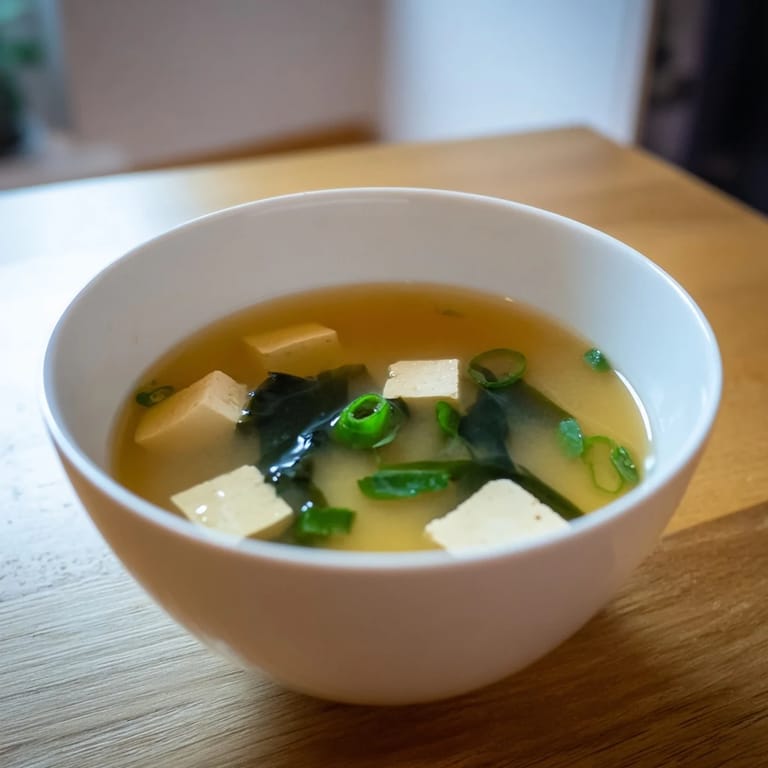
 My tiny apartment kitchen smelled like the ocean the first time I made miso soup, the wakame seaweed blooming in its bowl while I fumbled with a package of silken tofu that broke apart in my hands. I had discovered miso soup at a quiet Japanese restaurant near my office, where the steaming bowls arrived during lunch breaks that felt too short to savor anything. The broth tasted like comfort and simplicity, flavors I wanted to recreate in my own chaotic weeknight dinners. That initial attempt was clumsy, but something about the process felt meditative and right.
Last winter, my friend Mai came over and taught me the proper way to dissolve miso paste, her grandmother's technique of whisking it with hot broth in a separate bowl before adding it back to the soup. We sat at my kitchen table with steaming bowls while snow fell outside the window, and she told me about miso soup being her childhood breakfast. Now whenever I make it, I remember that afternoon and how something so simple can create such a moment of connection.
Ingredients
- 4 cups dashi stock: The foundation of authentic flavor, though vegetarian dashi works beautifully for plant based versions
- 3 tablespoons miso paste: White or yellow miso creates that mellow, slightly sweet profile that feels gentle on the palate
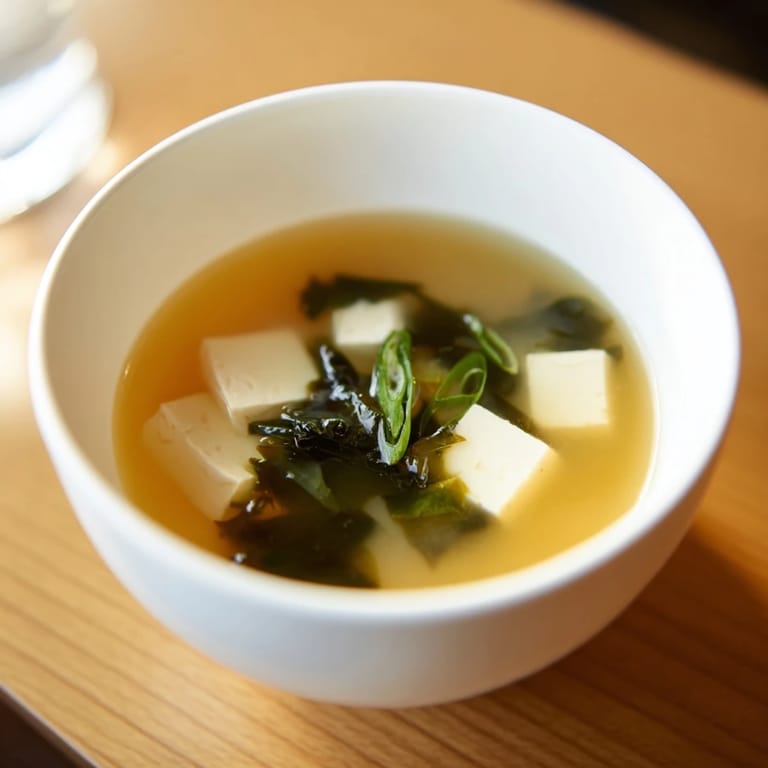
- 200 g silken tofu: Handle it carefully and it will reward you with creamy, delicate cubes that melt in your mouth
- 2 tablespoons dried wakame seaweed: A brief soak transforms these brittle flakes into tender, ocean kissed ribbons
- 2 scallions finely sliced: Fresh green onion adds a crisp bite and bright finish that cuts through the richness
Tired of Takeout? 🥡
Get 10 meals you can make faster than delivery arrives. Seriously.
One email. No spam. Unsubscribe anytime.
Instructions
- Warm the dashi stock:
- Bring your broth to a gentle simmer in a medium saucepan, watching for tiny bubbles around the edges
- Prepare the seaweed:
- While the stock heats, soak dried wakame in cold water for five minutes until it expands and softens
- Dissolve the miso paste:
- Whisk miso with a ladleful of hot dashi in a separate bowl until smooth and fully incorporated
- Add tofu and seaweed:
- Gently lower tofu cubes and drained wakame into the simmering broth, letting them warm through for two to three minutes
- Finish with miso:
- Remove the pan from heat entirely before stirring in the dissolved miso mixture to preserve its beneficial properties
- Serve immediately:
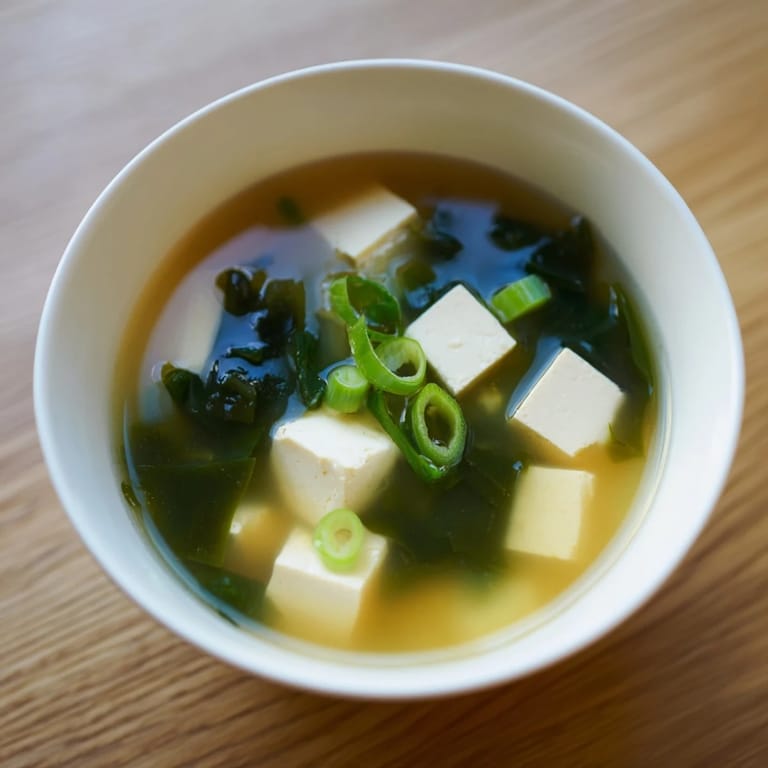
- Ladle the hot soup into bowls and scatter scallions across the top for that final touch of freshness
 Save to Pinterest
 This soup has become my go to remedy for days when nothing feels right, when I need something nourishing but not heavy. I've served it to sick friends who swear by its healing powers, and I've made it for myself on quiet Sunday mornings when the house is still and I want something gentle to start the day.
Building a Better Broth
Mixing white and red miso pastes creates layers of flavor that single variety miso cannot achieve alone. The white miso brings sweetness and lightness while red miso adds depth and a slightly fermented complexity. I keep both types in my refrigerator now, experimenting with different ratios until each batch feels exactly right for my mood.
Making It Your Own
Silken tofu is traditional, but extra firm tofu holds up beautifully if you prefer more substantial pieces. I have also added thin slices of shiitake mushrooms during the last few minutes of cooking, and baby spinach wilts perfectly into the hot broth. These additions transform the soup from a simple starter into a complete light meal.
Serving Suggestions
A steaming bowl pairs wonderfully with a short grain rice that absorbs the savory broth as you eat. Keep some extra scallions on the table for people who love that fresh onion bite. Sometimes I add a drizzle of sesame oil just before serving, which adds a nutty aroma and richness.
- Set out small bowls of extra miso paste so guests can adjust the seasoning to their taste
- Warm your serving bowls first with hot water so the soup stays piping hot
- Consider a side of pickled vegetables to balance the soup's subtle flavors
 Save to Pinterest
 There is something deeply grounding about making miso soup, a reminder that comfort often comes in the simplest forms. May each bowl bring you the same peace and warmth it has brought to my kitchen over the years.
Recipe FAQs
- → What type of miso works best?
White or yellow miso paste provides a milder, sweeter flavor that's ideal for beginners. Red miso has a stronger, more intense taste. You can also blend both varieties for added depth and complexity.
- → Why shouldn't I boil miso?
Boiling miso paste destroys the beneficial probiotics and enzymes that make it nutritious. Always remove the soup from heat before stirring in the dissolved miso to preserve its health benefits and delicate flavor.
- → Can I make this vegan?
Yes, use vegetarian dashi made from kombu seaweed and dried shiitake mushrooms instead of traditional bonito flakes. Most miso pastes are naturally vegan, but always check the label to confirm.
- → How do I store leftovers?
Store cooled soup in an airtight container in the refrigerator for up to 2 days. Reheat gently over low heat without boiling to preserve the miso's benefits. The tofu may soften slightly but remains delicious.
- → What can I add for variety?
Thinly sliced shiitake mushrooms, fresh spinach, bok choy, or grated carrots make excellent additions. You can also add cooked udon noodles or rice for a more substantial meal.