 Save to Pinterest
 The first time I made biryani properly, I wasn't aiming for perfection—I just wanted to recreate the smell that drifted through my neighbor's kitchen on Friday mornings. She'd laugh when I'd hover near her door around noon, drawn by those caramelized onions and saffron. One afternoon, she finally invited me in, and I watched her layer rice and meat with such certainty, like she was composing something sacred. Years later, I understood: biryani isn't just rice and meat trapped together in a pot. It's time spent honoring each ingredient, a ritual that somehow tastes like coming home.
I made this biryani for my friend's family dinner last winter, convinced something would go wrong. The oven was acting temperamental, the saffron seemed less golden than I'd hoped, but when I lifted that lid and let the steam escape, everyone went quiet. That silence before the chaos of compliments and second helpings—that's when I realized the magic isn't in perfection, it's in the way all those spices find each other under the foil and decide to become something together.
Ingredients
- Bone-in chicken or lamb (900g): The bones aren't laziness—they release gelatin that makes every grain of rice taste richer and more tender, like the meat's whisper is seasoning everything around it.
- Plain yogurt (1 cup): This is your tenderizer and flavor anchor; it keeps the meat moist while the spices cling to every surface.
- Ginger-garlic paste (1 tbsp): Fresh is non-negotiable here—store-bought paste tastes tired by comparison, and your meat deserves better.
- Spice blend (turmeric, cumin, coriander, chili powder, garam masala): Buy these whole when you can and toast them lightly; they bloom differently than their pre-ground cousins.
- Basmati rice (3 cups): Long-grain, fragrant, and worth buying from a proper grocer—it should smell like hay and promise before it even hits the water.
- Ghee or butter (5 tbsp total): Ghee is traditional and holds up better under heat, but if butter's what you have, it still sings.
- Whole spices for rice (cloves, cardamom, cinnamon, bay leaf): These steep into the rice like a quiet reminder that simple things—a stick of cinnamon, a green pod—do the heavy lifting.
- Onions (2 large, thinly sliced): Caramelizing them isn't extra work; it's the difference between good biryani and the kind people ask you to make again.
- Fresh herbs (coriander and mint, 1/2 cup and 1/4 cup): Chop them just before you need them so they stay alive and bright, not bruised and dull.
- Saffron threads (small pinch, soaked in milk): Expensive but not wasteful—a few threads color and perfume the whole dish, and that's a kind of magic.
- Nuts and raisins (optional but worthwhile): Toasted almonds add texture; raisins plump up in the steam and taste like tiny sweet surprises.
- Fried onions (1/4 cup for garnish): The final flourish that catches the light and reminds everyone this meal took intention.
Tired of Takeout? 🥡
Get 10 meals you can make faster than delivery arrives. Seriously.
One email. No spam. Unsubscribe anytime.
Instructions
- Build your marinade and season the meat:
- Whisk together yogurt, lemon juice, ginger-garlic paste, and all your spices until smooth, then coat the meat evenly and let it sit covered for at least an hour—overnight is better, when all that flavor has time to seep in. The longer it waits, the deeper it tastes.
- Prepare the rice properly:
- Rinse it three or four times under cold water until the water runs clear, then soak for 30 minutes to let each grain relax. This matters more than most people think; it's the difference between grains that stick together resentfully and ones that stay separate and tender.
- Parboil the rice with whole spices:
- Bring salted water to a boil, add cloves, cardamom pods, cinnamon, and bay leaf, then add your rice and cook for only 6 to 7 minutes until it's still slightly firm. You're not cooking it all the way—just waking it up. Drain it in a fine sieve and let it steam-dry for a moment.
- Preheat and caramelize onions:
- Heat ghee in your ovenproof pot over medium heat and add sliced onions, stirring occasionally until they turn deep golden and smell almost sweet, about 12 to 15 minutes. Remove half for garnish—these will be your final flourish.
- Sear and braise the meat:
- Add your marinated meat to the pot with the remaining onions and let it sear, undisturbed, for a few minutes until it catches some color. Lower the heat, cover, and let it cook gently—about 20 to 25 minutes for chicken, 35 to 40 for lamb—until just tender, adding water only if it looks too dry.
- Layer with intention:
- Scatter half your herbs, raisins, and toasted nuts over the meat, then arrange half the parboiled rice in an even layer. Repeat with the remaining herbs, nuts, and raisins, then top with the rest of the rice.
- Saffron and final touches:
- Drizzle your saffron milk (those precious threads steeped in warm milk) across the top layer of rice, and dot with small pieces of ghee or butter. This is where color and luxury settle in.
- Cover tightly and bake:
- Layer foil tightly over the pot, then place the lid on top to trap every bit of steam. Bake at 180°C (350°F) for 30 to 35 minutes—you'll hear a gentle sizzle if you listen closely, a sign everything's cooking in its own aromatic cloud.
- Rest and serve:
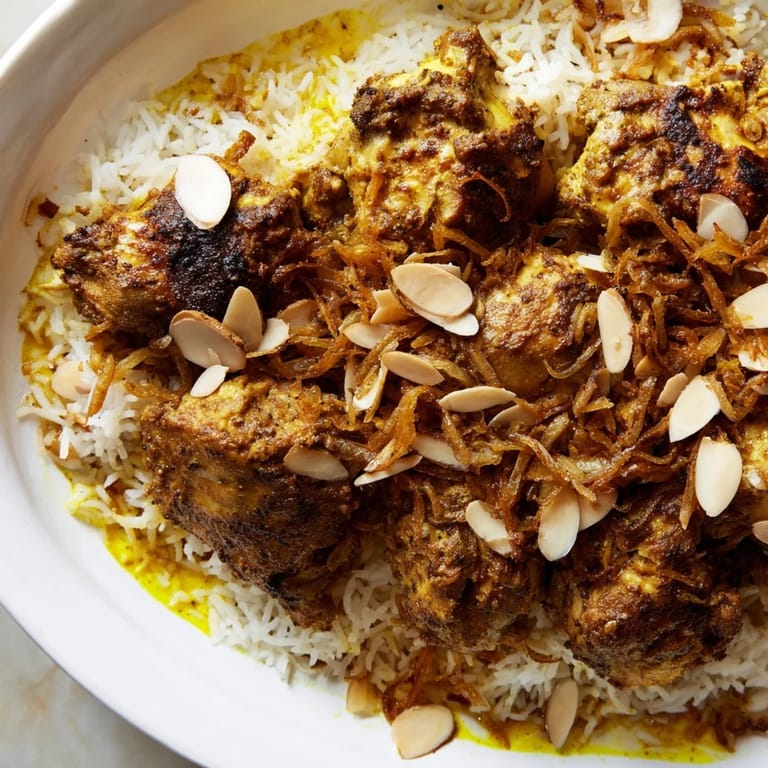
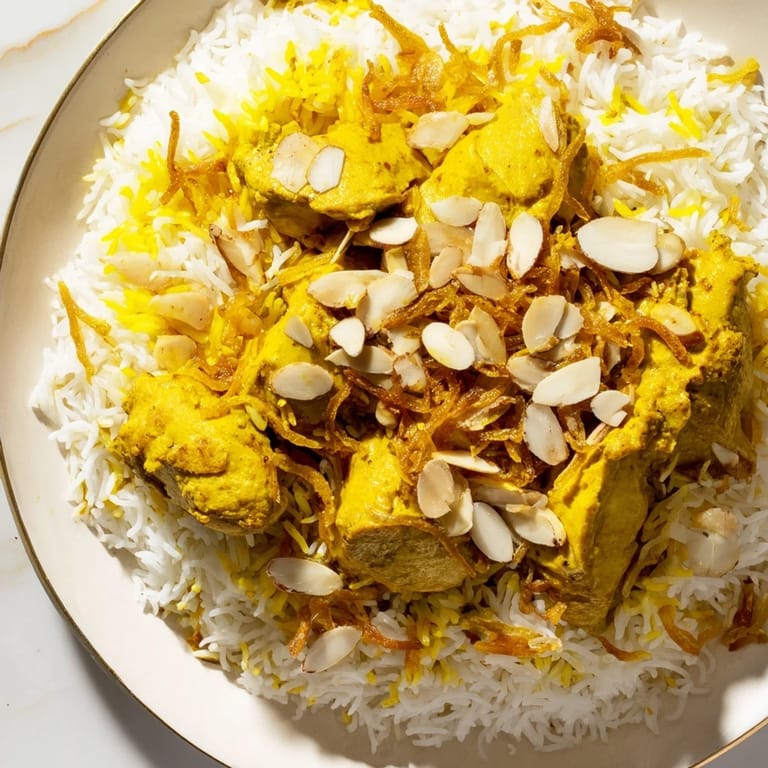
- Let it sit undisturbed for 10 minutes after you pull it from the oven, then fluff gently with a fork and crown it with fried onions and reserved caramelized onions. This resting time is where the biryani becomes itself.
 Save to Pinterest
 What caught me most was how my daughter watched the whole process, barely interested until I lifted that lid and the kitchen filled with steam and saffron. She asked if we could make it again next weekend, and I realized biryani had done what good food does best—it became a reason to gather, not just something to eat.
The Art of Perfect Layering
Layering biryani is less about following rules and more about understanding why each component matters. The meat and onions at the bottom create a flavorful foundation that the rice absorbs from below, while the herbs and nuts distribute brightness throughout. When you layer, you're not just stacking ingredients; you're building a conversation between flavors that will happen during the steam and heat. I learned this by watching someone who'd made biryani for fifty years—she didn't measure between layers, but she understood that balance meant every spoonful would taste complete, not like rice with meat on top of it.
Why Marinating Matters More Than You Think
Marinating the meat isn't just flavor—it's tenderizing. The yogurt's acidity and the spices' oils begin breaking down the meat's fibers the moment they touch, so by the time it hits the pot, it's ready to cook quickly without turning tough. The longer the marinade sits, especially overnight, the more the spices become part of the meat itself, not just a coating on top. I once tried rushing this step and made it work, but it tasted like marinated meat in rice instead of biryani, and I've never made that mistake again.
Customizing Your Biryani
The beauty of biryani is that it bends to what you have on hand and what you love. Some families add boiled potatoes for earthiness, others incorporate hard-boiled eggs for richness, and a few brave souls have turned it vegetarian with paneer or mixed vegetables that hold their shape under steam. The spice levels can shift based on your crowd—less chili powder for those who prefer warmth without heat, or a handful of extra green chilies for those who want fire. The core structure stays the same; everything else is your kitchen's conversation with tradition.
- For vegetarian versions, cube and marinate paneer or mixed vegetables (potatoes, cauliflower, peas) in the same yogurt-spice mixture, and follow the same layering.
- If you love richness, add a splash of rose water to the saffron milk for a floral note that feels both subtle and special.
- Serve alongside raita (yogurt with cucumber and spices) or a simple salad to cool the palate between bites.
 Save to Pinterest
 Biryani is the kind of dish that teaches patience without feeling like a lesson. Every time I make it, I understand a little more why it's celebrated across the Middle East and beyond—it's not complicated, just thoughtful, asking only that you pay attention and respect the ingredients. That's all it needs to become something people remember.
Recipe FAQs
- → What type of meat works best for this biryani?
Bone-in chicken or lamb pieces are ideal, as they absorb the marinade well and remain tender throughout the slow cooking process.
- → How is the rice prepared for layering?
The basmati rice is rinsed, soaked, and par-cooked with whole spices like cloves, cardamom, cinnamon, and bay leaf to infuse aroma before layering.
- → Why is saffron soaked in warm milk used?
Soaking saffron releases its unique color and fragrance, which adds a warm hue and delicate taste when drizzled over the rice layers.
- → Can the dish be made vegetarian-friendly?
Yes, substituting meat with marinated paneer or mixed vegetables while keeping the same spice and layering technique delivers a flavorful alternative.
- → What is the purpose of caramelized onions in the dish?
Caramelized onions provide sweetness, depth, and texture that complement the rich spices and tender meat in each layer.
- → How long should the biryani rest before serving?
Allowing it to stand for about 10 minutes after baking helps the flavors settle and makes fluffing the rice easier.