 Save to Pinterest
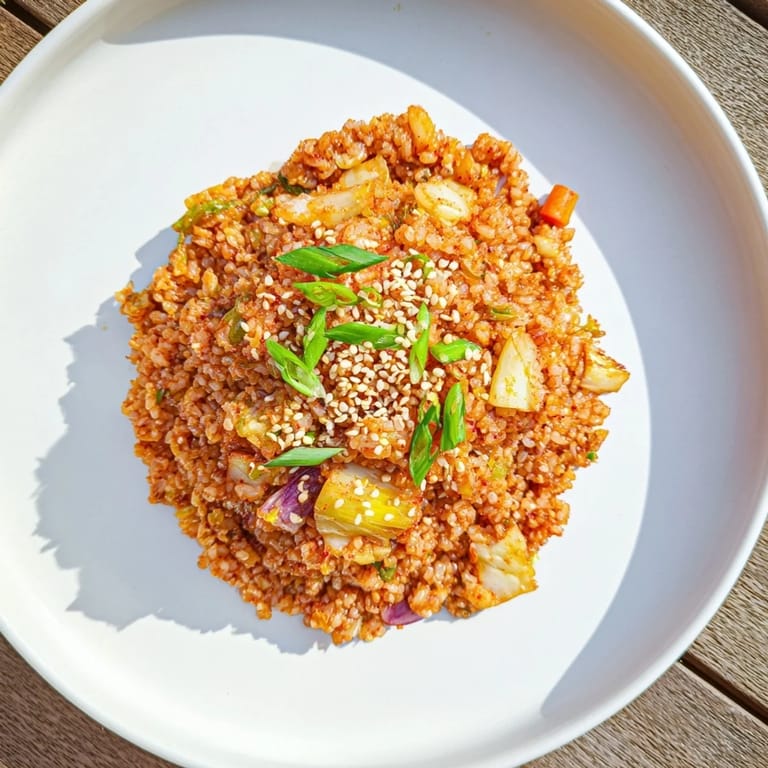
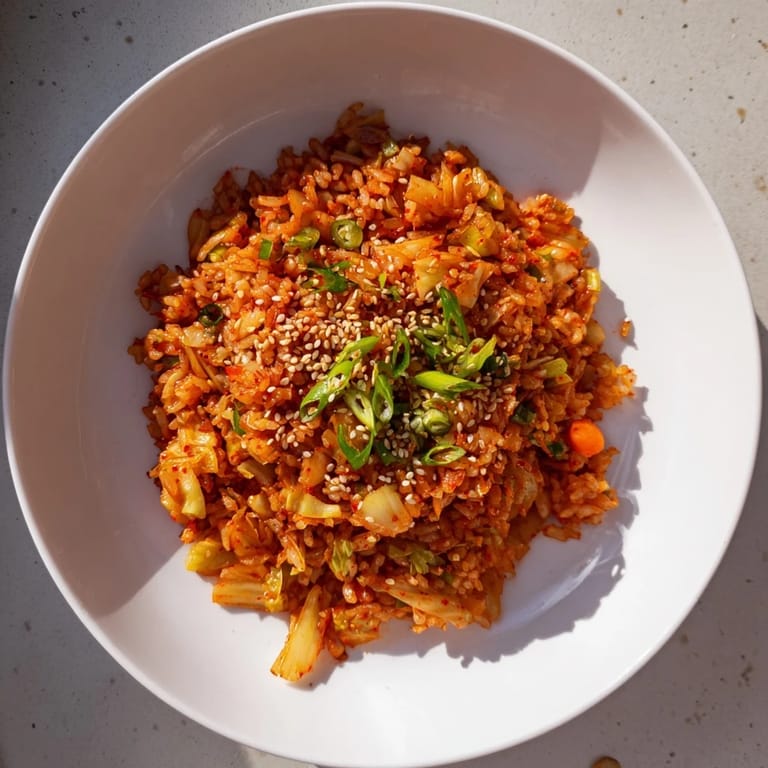
 The first time I made kimchi fried rice was on a rain-drenched Tuesday when I had nothing but leftovers and a half-empty jar of kimchi. The kitchen filled with that unmistakable fermented tang as the kimchi hit the hot pan. My roommate wandered in, following his nose, and we ended up sharing the pan between us, standing at the counter with steaming bowls. Something about the combination of spicy, funky kimchi with crispy rice edges made this dish an instant staple in my weeknight rotation.
Last winter during a snowstorm, I made this for my sister when she was stranded at my place overnight. The power flickered as we huddled by candlelight, spicy steam rising from our bowls, telling stories from childhood. The combination of warmth, spice, and comfort food made even a power outage feel like an adventure. She now requests it whenever she visits, calling it my signature storm dish.
Ingredients
- Day-old rice: Freshly cooked rice is too moist and sticky, but day-old rice from the fridge has dried out just enough to create those beautiful crispy edges when fried.
- Kimchi and kimchi juice: The star of the show that brings tangy funk, gentle heat, and incredible depth without much effort on your part.
- Gochujang: I once tried to substitute regular chili paste and regretted it immediately; this fermented Korean chili paste brings a unique sweet-spicy complexity nothing else can match.
- Toasted sesame oil: Just a teaspoon transforms the entire dish, bringing a nutty aroma that somehow makes everything taste more complete.
- Vegetables: The trinity of onions, carrots, and green onions provides just enough freshness and texture to balance the boldness of the kimchi.
Tired of Takeout? 🥡
Get 10 meals you can make faster than delivery arrives. Seriously.
One email. No spam. Unsubscribe anytime.
Instructions
- Saute the aromatics:
- Heat your wok until you can feel the warmth radiating when you hold your hand above it, then add the oil and watch it shimmer. Toss in the onion, carrot, and white parts of green onion, listening for that satisfying sizzle as they hit the hot surface.
- Add the kimchi magic:
- When the vegetables begin to soften and release their sweet aromas, throw in the chopped kimchi and let the edges caramelize slightly. Youll know its ready when your kitchen fills with that distinctive fermented fragrance that makes your mouth water.
- Build the flavor base:
- Stir in the gochujang, soy sauce, kimchi juice, sugar, and pepper, creating a vibrant red sauce that coats everything. Let it bubble gently for a moment, releasing all those complex flavors.
- Transform the rice:
- Add your day-old rice, breaking up any stubborn clumps with your spatula. Keep everything moving so the rice gets evenly coated with that gorgeous sauce, allowing some bits to crisp up against the hot pan.
- Finish with aromatics:
- Drizzle the sesame oil over everything like liquid gold, then scatter the green onion tops throughout. The residual heat will release their fresh flavor without wilting them completely.
- Top with an egg:
- If youre feeling indulgent, fry an egg until the whites are set but the yolk remains gloriously runny. When pierced, it creates a silky sauce that enriches every bite of the spicy rice beneath.
- Garnish and serve:
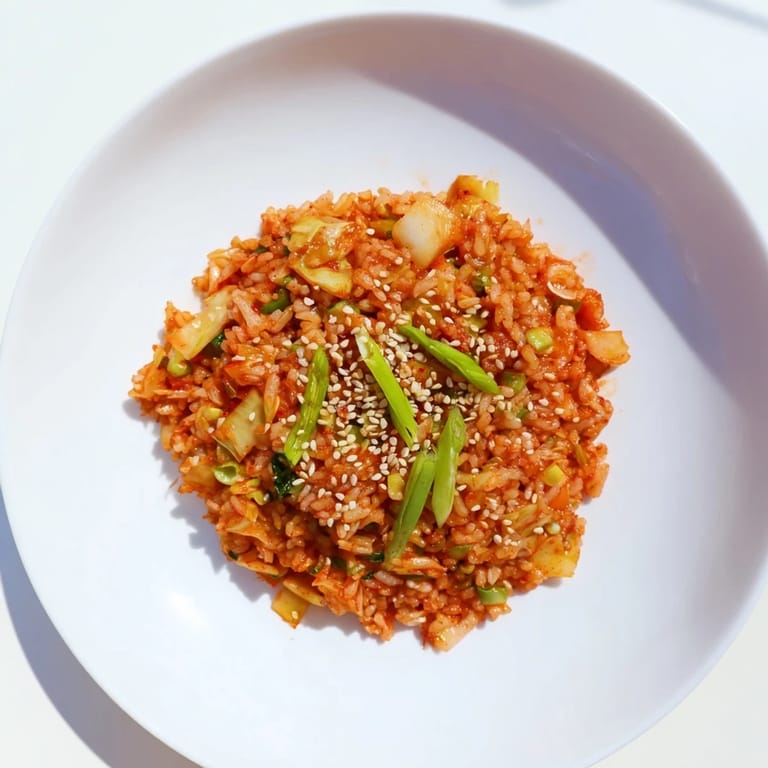
- Scatter sesame seeds over the top for a subtle crunch and nutty finish. Serve immediately while the rice still has those perfect textural contrasts between soft and crispy.
 Save to Pinterest
 One summer evening, I made this for a friend going through a tough breakup. We sat on my tiny balcony with steaming bowls as the sun set, and halfway through her second helping, she finally smiled for the first time that day. Something about the bold, unapologetic flavors seemed to match her mood, and by the end of the meal, she was already talking about tomorrow. Sometimes comfort food isnt subtle or delicate; sometimes it needs to wake up your senses.
Making It Your Own
The beauty of kimchi fried rice lies in its adaptability to whatever your refrigerator holds. Ive tossed in leftover rotisserie chicken, pan-seared tofu cubes, and even diced spam with equally delicious results. One memorable version featured mushrooms that had been sitting in my fridge a day too long, which caramelized beautifully and added an earthy dimension that paired surprisingly well with the fermented kimchi. The dish welcomes improvisation, forgiving those of us who cook by feeling rather than strictly following recipes.
Perfect Pairings
Theres something magical about the contrast between spicy kimchi fried rice and cooling accompaniments. I discovered this by accident when, desperate to tame the heat after being heavy-handed with the gochujang, I grabbed a cucumber from the fridge and quickly sliced it. The cool, crisp cucumber became the perfect counterpoint to the warm, spicy rice. Since then, Ive purposely served this dish with simple sides like quick-pickled vegetables, chilled silken tofu with a drizzle of soy sauce, or even just a simple side of thinly sliced avocado with a squeeze of lime.
Troubleshooting Tips
After making this dish dozens of times, Ive encountered nearly every possible pitfall and found simple solutions. The most common issue is rice that sticks together in gluey clumps instead of becoming individually coated with sauce. This happens when the rice is too fresh or wet, or when youre trying to cook too much in a pan thats not hot enough.
- If your rice is freshly cooked and you cant wait, spread it on a baking sheet and put it in the freezer for 15 minutes to quickly dry the surface.
- Work in batches if youre doubling the recipe, as overcrowding the pan lowers the temperature and steams rather than fries the rice.
- If your kimchi isnt very juicy, add a splash of rice vinegar to achieve that signature tang.
 Save to Pinterest
 Every time I make this kimchi fried rice, I fall in love with cooking all over again. Its a reminder that extraordinary flavor can come from ordinary ingredients and a few minutes at a hot stove.
Recipe FAQs
- → Why is day-old rice better for fried rice?
Day-old rice has less moisture content and firmer texture, preventing it from becoming mushy when stir-fried. The dried grains separate easily and develop better caramelization, creating the ideal chewy texture characteristic of great fried rice.
- → Can I adjust the spice level?
Absolutely. Reduce the gochujang to half a tablespoon for milder heat, or increase it for more kick. You can also control spiciness by choosing mild or extra-spicy kimchi varieties and adjusting the amount of kimchi juice added.
- → What type of kimchi works best?
Napa cabbage kimchi is traditional and ideal for this dish. Choose well-fermented kimchi that's been aged for at least a week for deeper, more complex flavors. The tangier the kimchi, the more authentic the taste.
- → How do I prevent the rice from sticking?
Use a well-seasoned wok or non-stick skillet with adequate oil. Ensure your rice is cold and broken into individual grains before adding. Cook over medium-high heat and keep the rice moving with constant stirring and tossing motions.
- → What proteins pair well with this dish?
A fried egg is classic, but you can add diced tofu, Korean-style marinated beef, cooked shrimp, or leftover chicken. Add protein-rich ingredients during the vegetable sauté stage, or serve them on top for presentation.
- → Can I make this ahead of time?
While best served fresh, you can prepare the components separately. Cook the kimchi-vegetable mixture ahead and refrigerate, then quickly stir-fry with rice when ready to serve. Fried eggs should always be prepared fresh for optimal texture.