 Save to Pinterest
 I discovered this dish by accident while reorganizing my produce drawer on a spring morning, surrounded by bundles of asparagus and chives that seemed to mock my lack of inspiration. Instead of wilting them into a forgotten side, I thought: what if I treated vegetables like they were as precious as flowers? That afternoon, I spent an hour weaving green stalks together, and when I nestled berries into the openings, something clicked—suddenly I had created something that looked like edible art.
I remember making this for my sister's engagement brunch when she was between jobs and discouraged, and watching her face light up when the platter arrived felt like the whole point of cooking—turning simple vegetables into a moment of joy. She took three photos before eating anything, which made me laugh because honestly, that's when I knew the recipe had worked.
Ingredients
- Asparagus stalks (16 medium, trimmed): These are your structure and main flavor, so choose firm stalks without soft spots or wrinkles.
- Fresh chives (16 long stems): They'll soften with heat and become nature's twine, binding your lattice with subtle onion notes.
- Mixed berries (blueberries, raspberries, strawberries, golden berries, 2 cups total): Pick varieties that hold their shape; the tartness balances the earthiness of the vegetables.
- Extra virgin olive oil (1 tablespoon): Use one you actually enjoy tasting, because it's the final note you'll notice.
- Flaky sea salt and freshly ground black pepper: These are your finishing touches, applied at the very last moment to preserve the vegetables' brightness.
Tired of Takeout? 🥡
Get 10 meals you can make faster than delivery arrives. Seriously.
One email. No spam. Unsubscribe anytime.
Instructions
- Blanch the asparagus to color:
- Boil salted water and add your asparagus for just 1-2 minutes—you're aiming for that bright green moment before it starts to go soft or dull. Shock it immediately in ice water, then pat each stalk dry so the chives will grip properly later.
- Soften the chives gently:
- A quick 5-second dip in hot water makes them pliable without cooking them into mush, then ice water stops the process so they hold their structure.
- Build your lattice foundation:
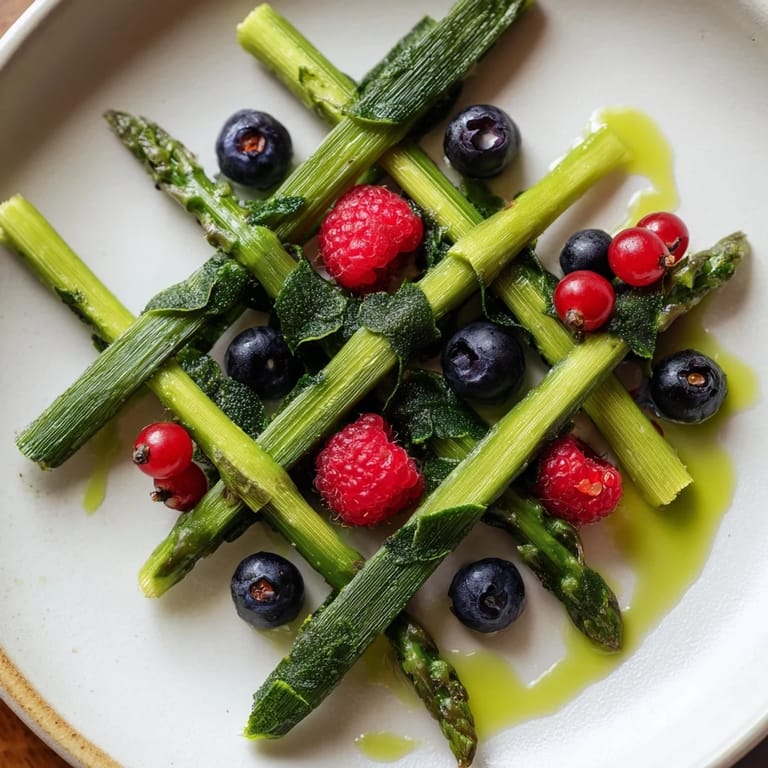
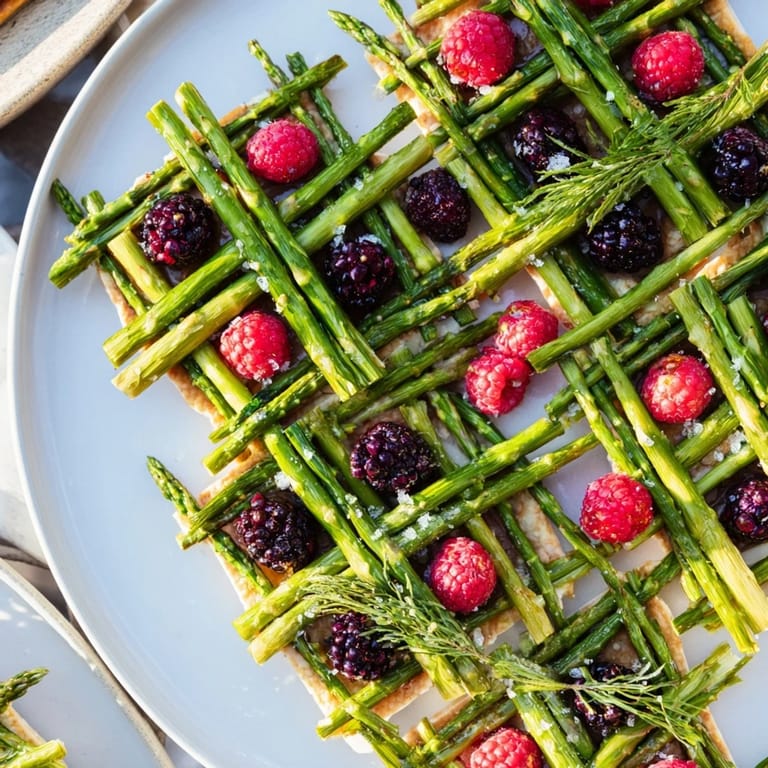
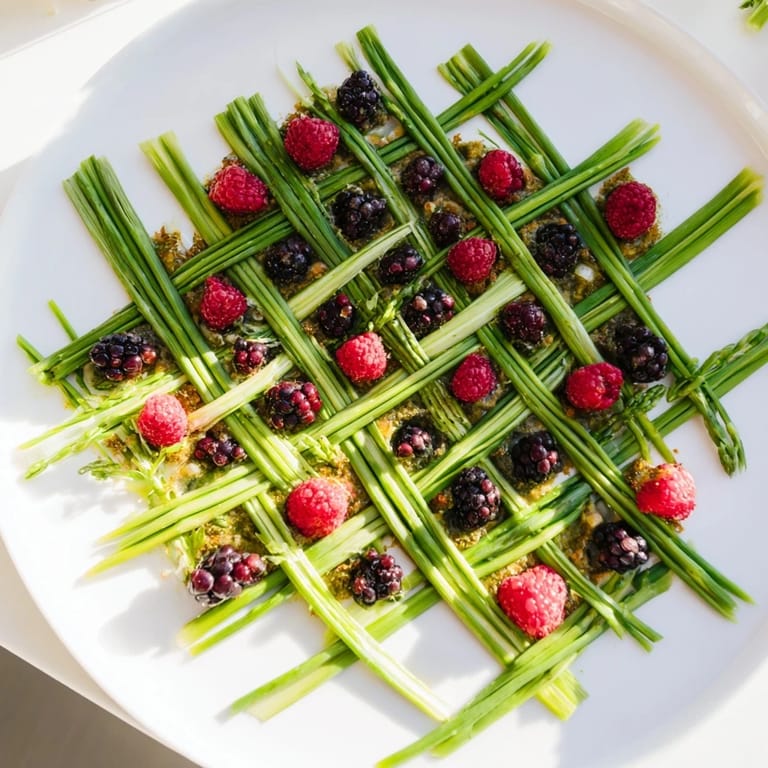
- Lay 8 asparagus stalks parallel on your serving surface, leaving even gaps between them, then weave the remaining 8 perpendicular through—this is meditative work, and going slowly prevents breaks.
- Tie the grid together with chive bonds:
- This is the magic step: gently wind a chive around each intersection point to anchor everything, creating visual lines that echo the structure underneath.
- Fill and arrange berries:
- Nestle your mixed berries into the open squares, mixing colors so each square has contrast and visual interest.
- Finish with precision:
- Just before serving, drizzle the olive oil across the entire lattice, sprinkle salt evenly, and crack fresh pepper over it all—timing matters here because salt on wet berries dissolves too quickly.
 Save to Pinterest
 There's something quietly satisfying about creating something so visually structured by hand, knowing that in five minutes it will be disassembled and tasted and forgotten in the best way. This dish taught me that vegetables deserve to be celebrated not just for nutrition, but for their quiet beauty.
Fruit Substitutions That Work
You're not locked into these exact berries—blackberries, red currants, pomegranate seeds, or even thin apple slices work beautifully as long as they're small enough to nestle into the squares without dominating the pattern. I've experimented with everything from sliced kiwi to halved grapes, and each combination changes the personality of the dish while keeping the same visual impact.
Flavor Layers You Can Add
If you want to push this beyond simple elegance, a drizzle of aged balsamic glaze across the top adds a sophisticated depth that makes guests pause and wonder what they're tasting. Fresh mint leaves scattered between the berries bring a cooling brightness that plays beautifully against the earthiness of the asparagus, and it takes thirty seconds to make the dish feel even more thoughtfully composed.
Plating and Timing Wisdom
Serve this chilled if you have time—it actually tastes better cold, when all the flavors settle and the contrast between cool vegetables and bright berries becomes the whole experience. The lattice holds up for about two hours if you keep it refrigerated, but it's most beautiful in that first hour when everything is crisp and the berries haven't begun to soften.
- Chill your serving platter in the freezer for 10 minutes before arranging the lattice, because this tiny detail keeps everything fresher longer.
- If any asparagus stalk cracks during weaving, remove it quietly and use it as part of your tasting process—nobody needs to know about the imperfection you caught.
- Have your berries washed and dried well in advance, so the final assembly is just placement and finishing oil.
 Save to Pinterest
 This dish reminds me that the most stunning presentations often come from respecting each ingredient's own nature rather than fighting it. Make this when you want to slow down and enjoy the rhythm of building something beautiful.
Recipe FAQs
- → How do I soften chives for weaving?
Briefly dip chive stems in hot water for about 5 seconds, then cool immediately in ice water. This process softens them for easy weaving.
- → What is the best way to blanch asparagus?
Boil asparagus in salted water for 1-2 minutes until bright green and just tender, then place in an ice bath to stop cooking and preserve crispness.
- → Can I substitute different fruits in the lattice?
Yes, small firm fruits like blackberries, red currants, or pomegranate seeds work well for similar bursts of sweetness and texture.
- → How should I serve the assembled lattice?
Drizzle with olive oil, sprinkle sea salt and freshly ground black pepper just before serving. This dish is best enjoyed chilled or at room temperature.
- → Is this dish suitable for special diets?
Yes, this creation is vegetarian, gluten-free, and contains no common allergens, making it suitable for various dietary needs.