 Save to Pinterest
 I still remember the afternoon I discovered that the best entertaining doesn't require hours in the kitchen. A friend was hosting her book club, and she asked if I could help her put together something impressive but manageable. That's when I realized that a thoughtfully arranged platter could become the star of the gathering, sparking conversations as easily as the wine itself. This Book Club Pairing Platter was born from that moment, and it's been my secret weapon ever since for making guests feel celebrated without the stress.
I'll never forget watching a quiet book club corner transform into a lively gathering the moment this platter hit the table. People who had been sitting separately suddenly clustered around, discovering new cheese combinations and debating which wine pairing was their favorite. It became less about the food and more about the connection, which is exactly what entertaining should feel like.
Ingredients
- Triple-cream brie: This melts on your tongue and pairs beautifully with white wines. I learned to slice it just before serving so it stays at its creamiest, most elegant best.
- Gruyère cheese: It brings a subtle nuttiness that makes people pause and appreciate quality. Cubing it gives guests easy grabbing opportunities.
- Green grapes: They provide a refreshing burst that cleanses the palate between sips of Chardonnay and remind everyone why fresh fruit matters on a charcuterie board.
- Crisp apple: Slice it just before serving and it stays crisp and bright. The slight tartness is exactly what Chardonnay loves.
- Marcona almonds: These are buttery and almost addictive compared to regular almonds. Toast them lightly if you can find them raw, or buy them roasted for that luxe factor.
- Aged cheddar: This is the hearty base for the red wine section. Its sharpness stands up beautifully to Pinot Noir's subtle complexity.
- Smoked gouda: The smokiness creates a bridge between the cheese and cured meats, creating layers of flavor that wine-lovers recognize immediately.
- Prosciutto: Drape it casually across the board. It's salty, delicate, and adds elegance with minimal effort.
- Salami: I always choose one with good marbling and visible spices. It's the rustic counterpoint to the refined cheeses.
- Cherry tomatoes: They add brightness and acidity that both Pinot Noir and the food components need. Leave them whole so guests feel like they're picking something fresh and alive.
- Herbed goat cheese: Form it into a small log and it becomes a edible sculpture. The herbs whisper across your palate, preparing your mouth perfectly for sparkling wine.
- Dried apricots: Their natural sweetness and slight chew make them irresistible. They're sophisticated without trying too hard.
- Roasted pistachios: The green color adds visual pop, and their subtle earthiness complements the brightness of sparkling wine.
- Mixed olives: Choose a variety if possible. Each one tells a different story and keeps people reaching back for more.
- Cucumber: Sliced thin and crisp, it's the refreshing punctuation mark in the sparkling wine section, cutting through richness beautifully.
- Baguette and crackers: These are the canvas. I prefer a mix because some guests love structure and others prefer the rusticity of torn bread.
- Fresh rosemary sprigs: These are more than decoration. They naturally divide your sections while releasing their essential oils into the air, creating an invisible welcome sign for your guests.
- Honey or fig jam: Just a small drizzle transforms everything around it, especially for those moments when someone discovers a pairing they didn't expect to love.
Tired of Takeout? 🥡
Get 10 meals you can make faster than delivery arrives. Seriously.
One email. No spam. Unsubscribe anytime.
Instructions
- Set your stage:
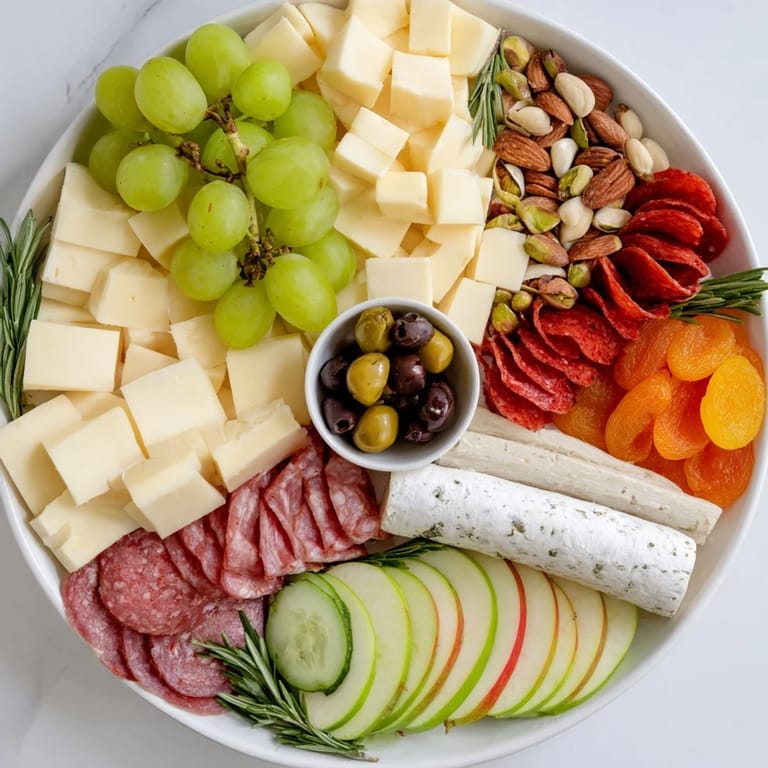
- Place your large platter or board in front of you and take a breath. This is less about precision and more about flow. Lay down your rosemary sprigs in a way that naturally divides your board into three distinct zones, creating invisible boundaries that feel intentional but not rigid.
- Build the white wine section:
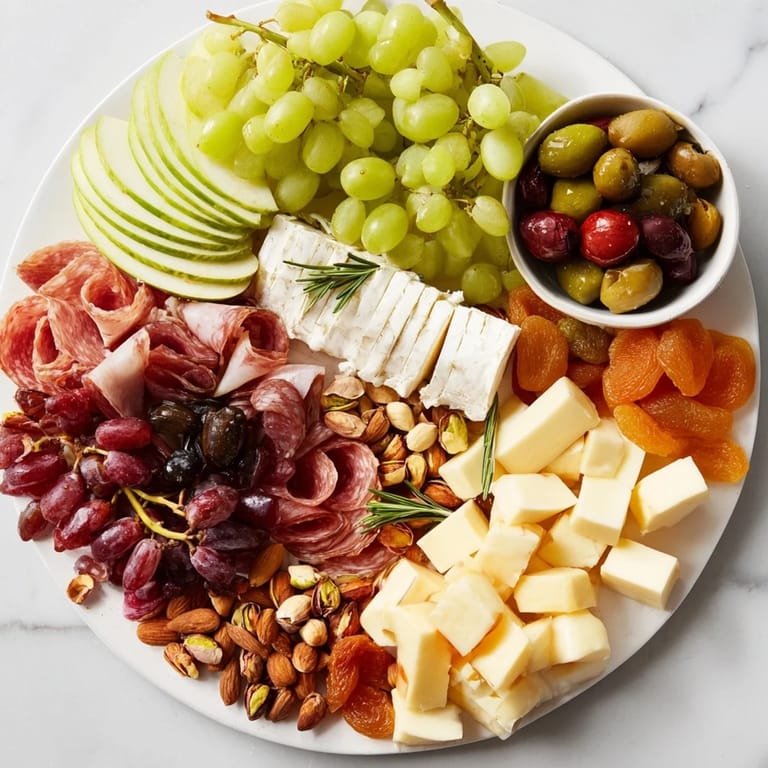
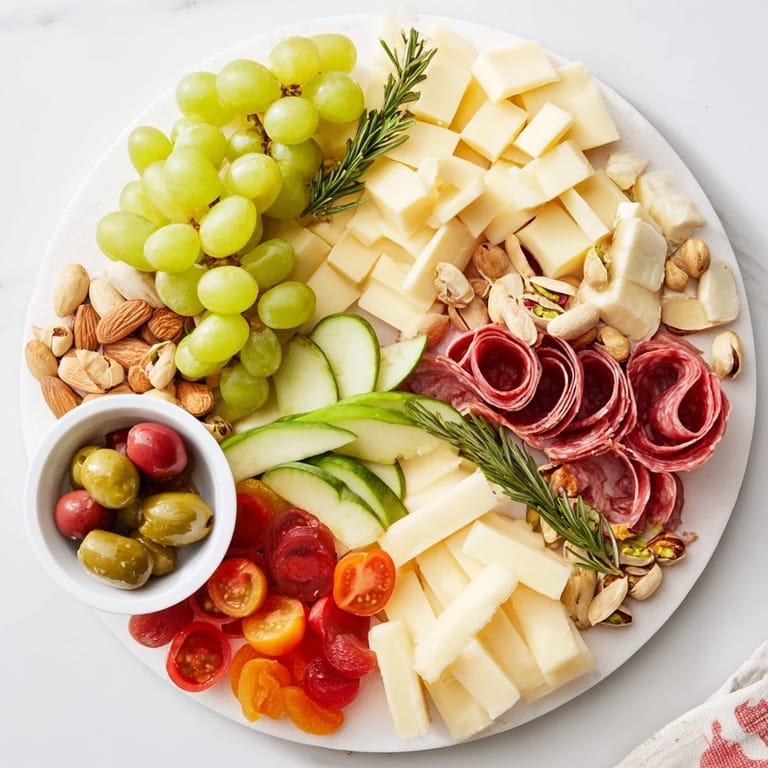
- Start with Section 1, arranging your creamy brie and nutty Gruyère so they have breathing room. Scatter green grapes around them like little jewels, then fan your apple slices in a graceful arc. Finish with the Marcona almonds nestled into the curves. Step back and notice how the colors start to tell a story of refinement and lightness.
- Create the red wine moment:
- Move to Section 2 and lay your foundation with cubed aged cheddar and smoked gouda. Here's where I drape the prosciutto with a light hand, letting it fall naturally across the cheeses. Slice your salami and fan it slightly so each piece can be grabbed easily. Scatter cherry tomatoes throughout like little flavor punctuation marks. This section should feel rustic yet sophisticated.
- Compose the sparkling section:
- In Section 3, place your goat cheese log as the anchor point, letting it be the star. Arrange dried apricots and pistachios around it in clusters, creating visual pockets of color and texture. Add your olives to small bowls or nestle them directly on the board, and arrange cucumber slices in a gentle overlap. This section should feel light, bright, and celebratory.
- Fill the spaces with intention:
- Now comes the fun part. Arrange your baguette slices and crackers in the negative space around all three sections, tucking them in so they're easily accessible but not overwhelming. Think of them as the supporting cast that helps everything shine.
- Add the finishing touches:
- Place small bowls of honey or fig jam in strategic spots, or drizzle them directly on the board if you're feeling confident. These golden accents catch the light and promise something special.
- Present with presence:
- Step back and look at your creation. The rosemary dividers should be clearly visible, each section distinct yet part of a beautiful whole. Now bring it to your gathering and watch people discover their own favorite corners of the board.
 Save to Pinterest
 There was a moment during one book club gathering when someone who claimed to hate cheddar took a piece from the Pinot Noir section, paired it with a sip of wine, and actually closed their eyes. That's when I understood that this platter isn't just about ingredients, it's about creating permission for people to slow down and really taste their food.
The Art of Wine Pairing at Home
Pairing wine with food doesn't require fancy education or expensive bottles. The trick I've learned is thinking about balance. Chardonnay's richness meets the creaminess of brie in a dance where each one makes the other taste better. Pinot Noir's earthy notes find a home with aged cheddar's complexity. Sparkling wine's acidity cuts through richness like a palate-cleansing friend. When you arrange food this way, you're not just serving snacks, you're teaching people to taste more intentionally.
Building Your Platter with Confidence
The most important thing I've discovered is that there's no single right way to arrange a cheese board. Some people think in geometric patterns, others prefer organic chaos. The only rule that matters is that your guests can access everything easily and the platter looks like you cared enough to think about it. Choose your cheeses, choose your accoutrements, then trust your eye. If it looks good to you, it will look good to them.
Making It Your Own
This platter is a framework, not a prison. I've made it with different cheeses depending on what my local shop recommended that week. I've swapped salami for prosciutto when one was fresher. I've added roasted vegetables for vegetarian guests and extra nuts because they disappeared so fast. The joy of this recipe is that it teaches you principles rather than rigid rules, which means every time you make it, you can make it better and more personal than the last.
- Consider your guests' preferences and dietary needs when selecting your cheeses and meats, but always keep the structure of three sections intact
- Buy ingredients the day before and prep everything the morning of your gathering so you're calm and present when people arrive
- The beauty of this platter is that it scales effortlessly, whether you're feeding six people or a room full of book lovers
 Save to Pinterest
 Every time I bring this platter to a gathering, I'm reminded that good food is really just an excuse to gather around something beautiful and share a moment together. That's the real recipe here.
Recipe FAQs
- → How do rosemary sprigs enhance the platter?
Rosemary sprigs act as natural dividers between sections, releasing a pleasant aroma while enhancing the platter’s visual appeal.
- → What cheeses are included in the pairing sections?
The platter features triple-cream brie, Gruyère, aged cheddar, smoked gouda, and herbed goat cheese for variety and complementary flavors.
- → Can this platter accommodate vegetarian preferences?
Yes, cured meats can be omitted and replaced with extra nuts or roasted vegetables to maintain balance and flavor diversity.
- → What fruits and nuts are used for flavor contrast?
Green grapes, apples, dried apricots, Marcona almonds, and roasted pistachios provide sweetness and crunch to balance savory items.
- → Are there any suggested pairings for beverages?
Each section is designed to complement different wines: Chardonnay with section one, Pinot Noir with section two, and sparkling wine or rosé with section three.
- → How is the platter finished for serving?
It is arranged on a large board with fresh rosemary divisions, filled with baguette slices and crackers, and optionally accompanied by honey or fig jam.