 Save to Pinterest
 There's something about the sizzle of chicken hitting hot oil that makes me forget about everything else in the kitchen. One Tuesday evening, running late and hungry, I spiralized some zucchini on a whim and tossed it with leftover rotisserie chicken, soy sauce, and whatever vegetables were lurking in my crisper drawer. What emerged was bright, quick, and so satisfying that I've been refining it ever since, always chasing that perfect balance between crisp vegetables and silky noodles.
I made this for my sister last spring when she was experimenting with cutting carbs, and watching her face light up when she realized zucchini noodles could taste this good felt like a small victory. She texted me the recipe request three times that week alone, which is honestly the highest compliment I've ever received in my kitchen.
Ingredients
- Chicken breast, thinly sliced: The thinner you cut it, the faster it cooks and the more tender it becomes, so take your time with that knife or use the freezer trick of partial-freezing for easier slicing.
- Zucchini noodles: Spiralize them right before cooking to prevent them from releasing water, and honestly, a good spiralizer is worth every penny you spend on it.
- Red bell pepper and carrots: The color here isn't just pretty, it's a signal that you're getting different nutrients, and their natural sweetness balances the savory sauce beautifully.
- Red onion and green onions: Red onion adds a subtle bite during cooking while green onions finish the dish with fresh, peppery brightness.
- Garlic and ginger: Mince them fine and add them early so they perfume the entire pan before anything else joins the party.
- Soy sauce or tamari: Low-sodium matters here because you're going to taste every layer, and tamari is your friend if gluten is a concern.
- Sesame oil: Use it sparingly, it's potent in the best way, and a quality bottle makes all the difference in the final flavor.
- Rice vinegar and honey: These two create a gentle sweetness that rounds out the savory elements without making the dish cloying.
- Chili flakes: Optional but honestly essential if you like a little heat sneaking up on you as you eat.
Tired of Takeout? 🥡
Get 10 meals you can make faster than delivery arrives. Seriously.
One email. No spam. Unsubscribe anytime.
Instructions
- Mix your sauce first:
- Whisk soy sauce, sesame oil, rice vinegar, honey, cornstarch if you're using it, and chili flakes together in a small bowl and set it aside. This way you're not hunting for ingredients once the heat is on and things are moving fast.
- Get the chicken golden:
- Heat oil in your skillet or wok over medium-high heat until it shimmers, then add the sliced chicken seasoned lightly with salt and pepper. Let it sit for a moment before stirring so it gets those golden edges, about four to five minutes total, then transfer it to a clean plate.
- Build the aromatic base:
- In that same pan with all the flavorful chicken bits stuck to the bottom, add minced garlic, grated ginger, and sliced onion. Stir constantly for about a minute until the kitchen smells incredible and the onion starts to soften.
- Add the heartier vegetables:
- Throw in carrots and bell pepper and keep stirring for two to three minutes until they're just tender with a little snap still left in them. This is where patience pays off because you want them cooked enough to be sweet but not so soft they disappear.
- Introduce the zucchini noodles:
- Add the spiralized zucchini and toss gently for just one to two minutes, stirring constantly. The moment they start to soften is the moment to stop, because overcooked zucchini noodles turn into sad little strands of regret.
- Bring it all together:
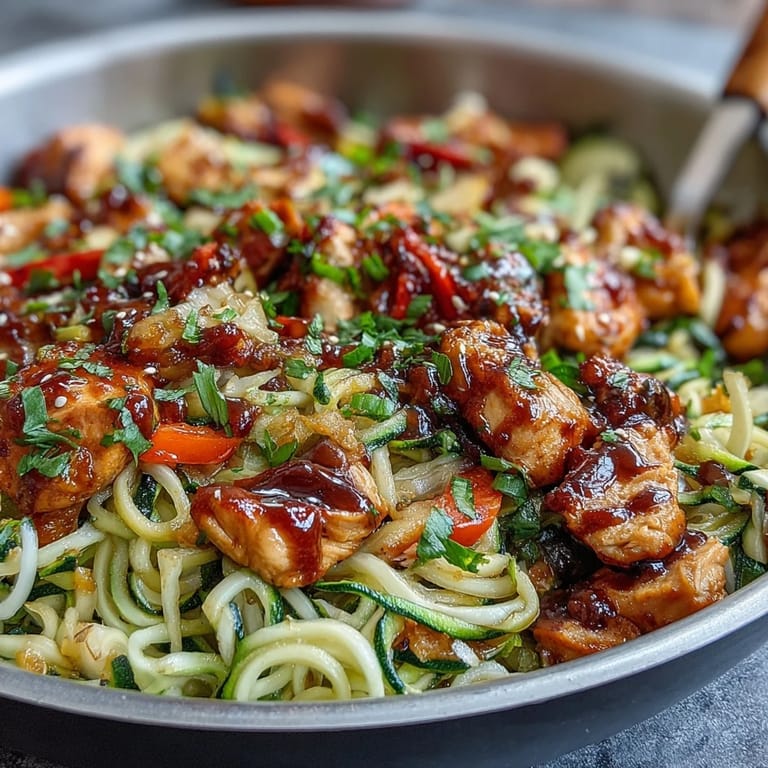
- Return the chicken to the pan, pour in that sauce you made earlier, and toss everything for another minute or two so the sauce coats every piece and thickens slightly. Taste as you go and adjust seasoning if it needs a pinch more salt or heat.
- Plate and finish:
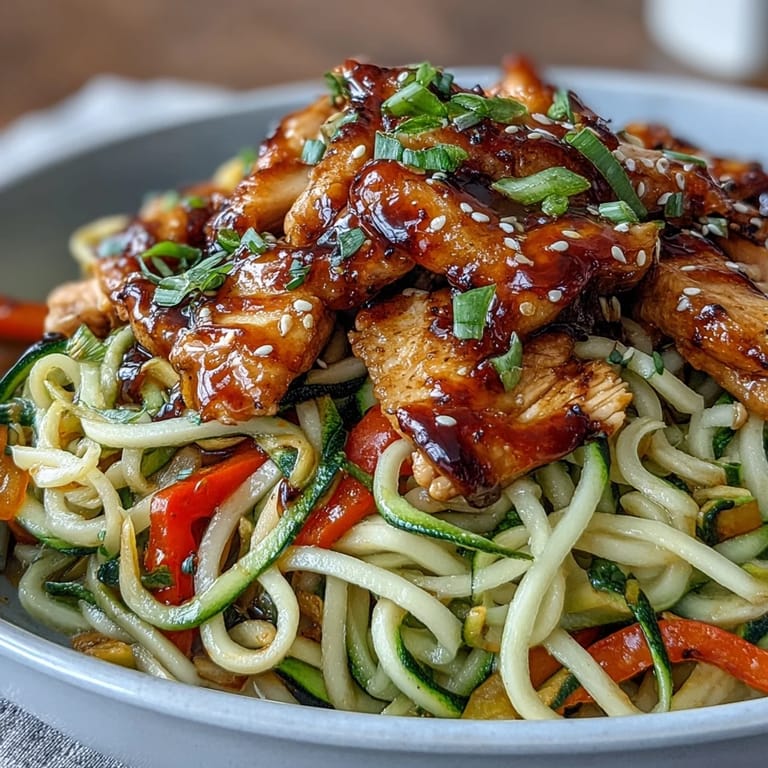
- Serve immediately while everything is still warm and has that glossy, just-cooked look, and scatter green onions and any optional garnishes over the top.
 Save to Pinterest
 I remember cooking this for myself on a Sunday morning when nothing in my life felt quite right, and somehow the act of slicing vegetables with care and watching them transform in the pan reminded me that small, good things still existed. That's the quiet magic of food that nourishes you both physically and otherwise.
The Magic of the Wok
If you've got a wok, use it, because its sloped sides and high heat capacity mean you're not just cooking vegetables, you're creating a little wind tunnel of flavor. Everything moves faster, the heat distributes more evenly, and there's something about the rhythm of tossing food in a wok that makes you feel like you actually know what you're doing. A large skillet works perfectly fine too, but if you're someone who cooks stir-fries regularly, investing in a good wok is worth the counter space.
Playing with Heat and Flavor
The beauty of this dish is how forgiving it is when it comes to adjusting to your taste. If your sauce tastes too acidic, add a touch more honey; too flat, add more soy sauce or a pinch more ginger; too mild, definitely add those chili flakes or even a tiny drizzle of chili oil at the end. Once you've made it once and understand how the flavors balance, you can start playing, and that's when cooking becomes less about following instructions and more about trusting your palate.
Simple Swaps and Extensions
This dish is built on a foundation that welcomes variations without complaint. Tofu works beautifully if you're going vegetarian, mushrooms add an earthy depth, snap peas bring a crunch that lingers, and honestly even broccoli florets fit right in. The sauce itself is adaptable too, and if you want to lean into a slightly different profile, swap the rice vinegar for lime juice or add a splash of coconut aminos for a subtly different note. Some nights I finish with a sprinkle of toasted sesame seeds, other nights cilantro, and once I even added a handful of cashews for richness.
- Try it with shrimp instead of chicken if you want something lighter and faster-cooking.
- Swap zucchini noodles for regular pasta or rice if you're not following a low-carb approach, the sauce works just as well.
- Fresh basil or mint at the end adds an unexpected brightness that makes people ask what you did differently.
 Save to Pinterest
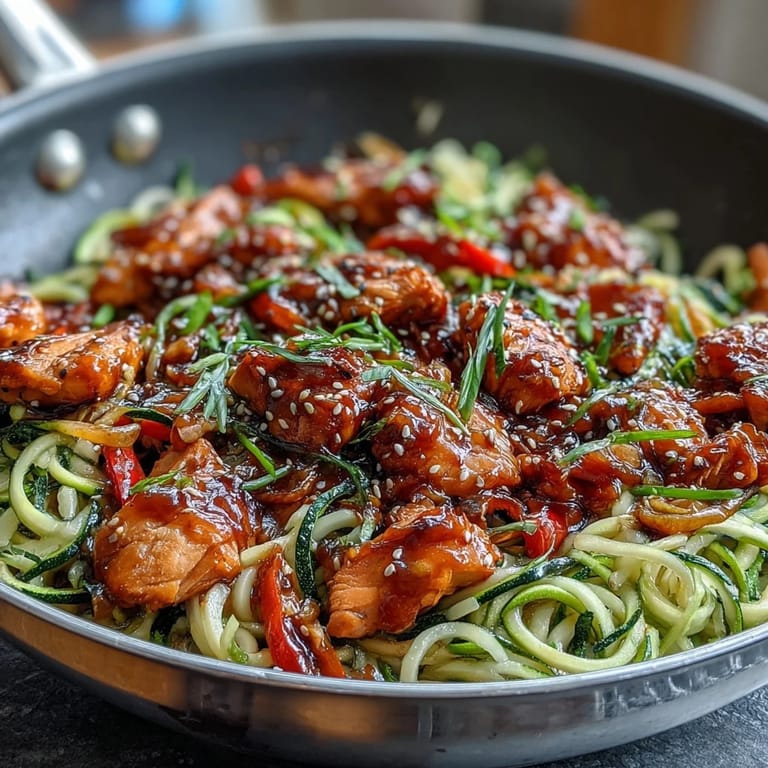
 This stir-fry has become my answer to the 'what's for dinner' question on nights when I want something vibrant, healthy, and ready before the sun sets. Make it once and you'll understand why it keeps coming back to the table.
Recipe FAQs
- → How do I prevent zucchini noodles from becoming soggy?
Stir-fry the zucchini noodles briefly for 1–2 minutes to soften slightly but avoid overcooking, which leads to sogginess.
- → Can I substitute chicken with another protein?
Yes, tofu works well as a vegetarian alternative, absorbing the sauce flavors nicely when cooked similarly.
- → What is the role of cornstarch in the sauce?
Cornstarch acts as a thickener, giving the sauce a slightly glossy and thicker texture; it’s optional based on preference.
- → Is this dish gluten-free?
Using tamari instead of soy sauce makes this dish gluten-free, while keeping the savory taste intact.
- → What spices enhance the flavor profile?
Fresh ginger, garlic, and chili flakes add warmth, aroma, and a subtle spicy kick to balance the sweetness and saltiness.