 Save to Pinterest
 The earthy aroma of black garlic changed my kitchen forever on a rainy Tuesday when I was experimenting with ways to elevate leftover rice. Standing there crushing those soft, sticky cloves between my fingers, I watched the deep molasses-colored paste melt into the rice. That first bite—sweet, umami-rich, and complex—stopped my usual dinner chatter mid-sentence. Sometimes the most remarkable recipes emerge not from grand plans but from simple curiosity.
Last autumn, when my cousins visited from out of town, I made this black garlic fried rice as a casual lunch offering. My usually food-indifferent teenage nephew actually put down his phone, asked for seconds, and later messaged asking how to make it in his dorm room. The rest of the afternoon, conversations flowed more easily, punctuated by little murmurs of appreciation as everyone kept sneaking back to the kitchen for just one more spoonful.
Ingredients
- Day-old jasmine rice: The refrigeration transforms the starches, creating those perfect separate grains that absorb flavor without turning mushy.
- Black garlic: These fermented cloves are actually just regular garlic that's been aged in controlled heat and humidity, developing a balsamic-sweet profile that makes people wonder what your secret ingredient might be.
- Scallions: Using the whites during cooking and saving the greens for garnish isn't just for looks—the whites can stand up to heat while the greens provide that fresh contrast at the end.
- Sesame oil: I learned to add this at the very end of cooking rather than as a cooking medium—it preserves that distinctive nutty aroma that dissipates with too much heat.
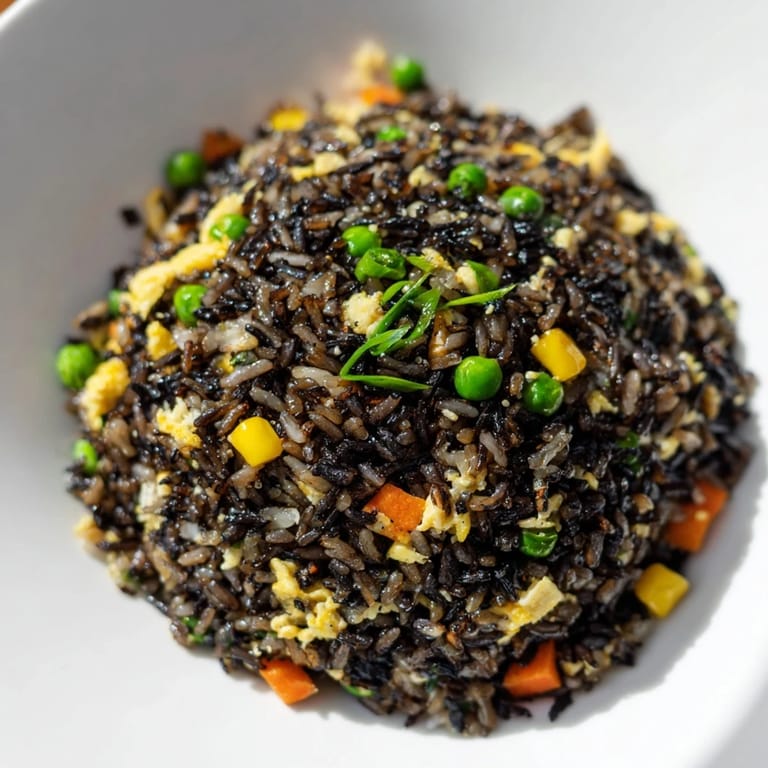
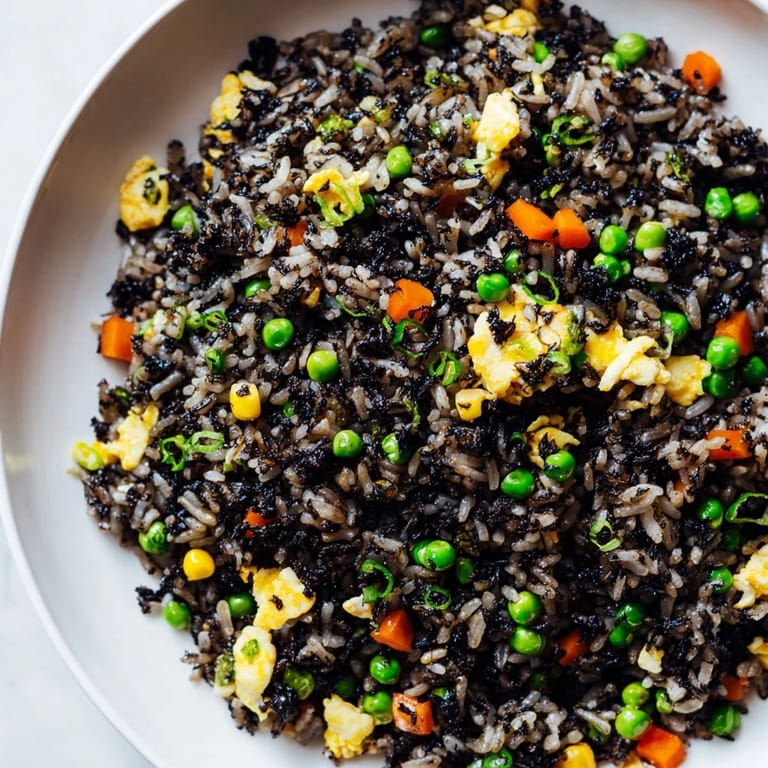
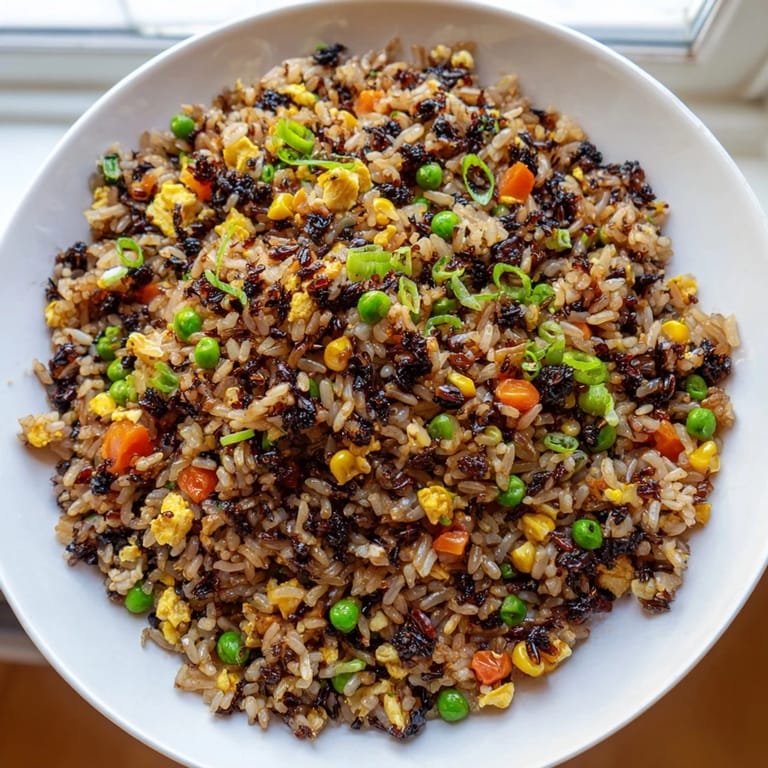
- Mixed vegetables: The colorful dice of carrots, peas and corn create little jewels throughout the rice that make each bite slightly different from the last.
Tired of Takeout? 🥡
Get 10 meals you can make faster than delivery arrives. Seriously.
One email. No spam. Unsubscribe anytime.
Instructions
- Start with the egg foundation:
- Heat your wok until you can feel the warmth radiating from above, then add the oil and swirl to coat the surface. When the beaten eggs hit the hot surface, they should sizzle immediately—keep them moving constantly so they form delicate, soft curds rather than a firm pancake.
- Build your flavor base:
- As the onions and white scallion parts hit the hot oil, take a moment to appreciate how they begin to perfume your kitchen. When you add the regular and black garlic, press the black cloves gently with your spatula—they'll smear slightly, distributing their sticky sweetness throughout the dish.
- Master the rice separation:
- Cold rice will initially resist your spatula, coming in stubborn clumps. Use a pressing and separating motion rather than stirring—I find a slight chopping motion with the edge of the spatula works wonders to create individual grains.
- Create the sauce harmony:
- Rather than dumping all the sauces in one spot, drizzle them in concentric circles over the rice. This helps distribute the flavors more evenly before you start tossing everything together.
- Finish with fragrant sesame:
- The moment the sesame oil hits the hot rice, step back and inhale—that nutty aroma is your signal that you're seconds away from a perfect finish. Give everything one final gentle toss, letting the oil lightly coat each grain.
 Save to Pinterest
 During a particularly chaotic dinner party last spring, I realized Id completely forgotten to plan a side dish for my main course. With guests already arriving, I frantically made this black garlic fried rice in under 15 minutes. What started as a panic-induced solution ended up stealing the spotlight completely—my friend Elaine actually asked if she could take the leftovers home instead of the dessert Id spent hours on. Sometimes our best culinary moments come from necessity rather than careful planning.
Finding Black Garlic
Black garlic might seem exotic, but its becoming increasingly available in Asian markets, specialty food stores, and even some regular supermarkets in the international section. The first time I went hunting for it, I mistakenly looked in the produce section next to regular garlic. After a confused conversation with a store employee, I discovered it packaged in small containers near the specialty ingredients. If you cant find it locally, its readily available online and has an impressively long shelf life.
Make-Ahead Options
This dish reheats beautifully, making it perfect for meal prep or busy weeknights. I often make a double batch on Sunday evenings, portioning it into containers for quick lunches throughout the week. The flavors actually develop and intensify after a day in the refrigerator, though the texture is best if you add a tiny splash of water when reheating to restore some moisture. Just a minute or two in the microwave transforms day-old fried rice back to its original glory.
Customization Ideas
This recipe functions as a perfect template for endless variations based on whatever happens to be in your refrigerator. One memorable night when my vegetable drawer was nearly empty, I substituted diced kimchi for the mixed vegetables and added a sprinkle of gochugaru—the spicy, tangy result has become a regular rotation in my kitchen.
- For a protein boost, add cubes of firm tofu marinated briefly in soy sauce before cooking, or leftover shredded rotisserie chicken folded in at the last minute.
- Transform it into a complete one-dish meal by adding a handful of thinly sliced mushrooms when cooking the vegetables.
- For a delightful textural contrast, sprinkle toasted sesame seeds or crushed peanuts over the finished dish just before serving.
 Save to Pinterest
 The beauty of this black garlic fried rice lies in how it transforms humble ingredients into something that feels special enough for company yet simple enough for a weeknight. Each time you make it, youll find yourself adding little tweaks that make it uniquely yours.
Recipe FAQs
- → Can I use fresh rice instead of day-old rice?
Day-old rice is recommended because it's drier and less sticky, which helps achieve the ideal fried rice texture. Fresh rice tends to clump and become mushy. If using fresh rice, spread it on a baking sheet and refrigerate for 1-2 hours to dry it out before cooking.
- → What does black garlic taste like?
Black garlic has a sweet, mellow, and deeply umami flavor with hints of balsamic and molasses. Unlike raw garlic, it's not pungent or sharp. The fermentation process transforms it into a soft, slightly chewy clove with complex savory-sweet notes that add incredible depth to dishes.
- → Can I make this dish vegan?
Yes, simply omit the eggs and use vegetarian oyster sauce or mushroom-based sauce instead of regular oyster sauce. All other ingredients are naturally plant-based. You can add diced tofu for extra protein while keeping it completely vegan.
- → Where can I buy black garlic?
Black garlic is available at Asian grocery stores, specialty food markets, and online retailers. Some larger supermarkets also stock it in the international or gourmet sections. You can also make your own by fermenting regular garlic bulbs in a rice cooker or slow cooker for 2-3 weeks.
- → What vegetables work best in this dish?
Classic choices include peas, carrots, and corn, but feel free to customize. Bell peppers, snap peas, mushrooms, broccoli, or edamame all work wonderfully. Cut vegetables into small, uniform pieces for even cooking and aim for about 1 cup total to maintain the right rice-to-vegetable ratio.
- → How do I prevent the rice from sticking to the pan?
Use high heat and a well-seasoned wok or nonstick pan. Ensure your rice is cold and broken into individual grains before adding. Don't overcrowd the pan—cook in batches if necessary. Keep the rice moving with constant stirring, and add oil as needed to prevent sticking.