 Save to Pinterest
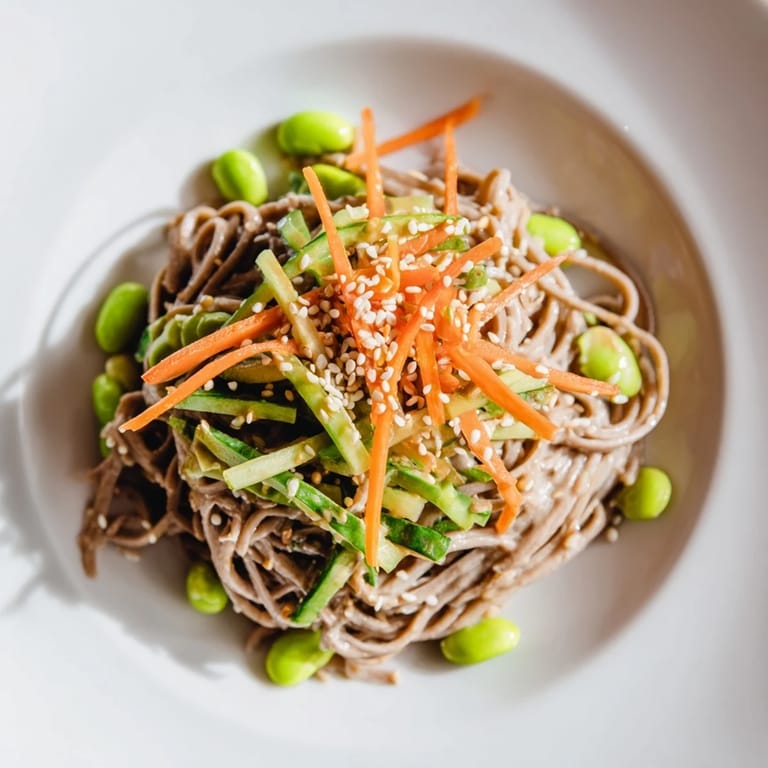
 There's something about standing in a humid kitchen during late summer, holding a bundle of fresh ginger, when you realize that the simplest dishes often become your most-reached-for meals. A friend brought over a container of sesame noodles to a crowded dinner party once, and somehow it disappeared faster than anything else on the table—not because it was fancy, but because it felt alive. This Asian sesame noodle salad became my version of that moment, something I could throw together on a Tuesday when the heat made me want nothing but cool, nutty, honest food.
I made this for a potluck where someone had forgotten to bring the dessert, and somehow the noodle salad ended up being what people asked for the recipe for instead. My neighbor mentioned she'd been craving something that didn't feel heavy, and this hit that exact mark—refreshing without being forgettable, hearty enough to stand alone but flexible enough to share a table with anything.
Ingredients
- Soba noodles or thin spaghetti (250 g): Soba has a delicate, slightly nutty flavor that plays beautifully with sesame, but thin spaghetti works just as well if that's what you have on hand.
- Cucumber, julienned (1 medium): The crispness matters—use a vegetable peeler or mandoline if you have one, and keep it cold so it stays snappy.
- Carrots, julienned (2 medium): Raw carrots add subtle sweetness and a satisfying crunch that keeps this from feeling too soft.
- Shelled edamame (1 cup, cooked and cooled): These little green beans are doing serious work here—they're your protein, your pop of color, and a small pocket of earthiness in every bite.
- Spring onions, thinly sliced (2): Don't skip this; the allium sharpness wakes up everything else.
- Toasted sesame seeds (2 tbsp): Toast them yourself if you can—the difference is the smell alone, but also depth.
- Tahini or toasted sesame paste (3 tbsp): Tahini is milder and more forgiving; sesame paste is bolder and more assertive—either one works depending on your mood.
- Soy sauce (2 tbsp): Use tamari if gluten matters to you; it's just as salty and slightly smoother.
- Rice vinegar (1 tbsp): This is gentler than white vinegar and lets the sesame speak.
- Toasted sesame oil (1 tbsp): A small amount goes far—this is where the magic lives.
- Honey or maple syrup (1 tbsp): Just enough sweetness to balance the salt and acid without making this taste like dessert.
- Fresh ginger, grated (1 tsp): Fresh ginger adds warmth and a subtle spicy edge that keeps things lively.
- Garlic, minced (1 clove): One clove is enough; more and it becomes a garlic salad.
Tired of Takeout? 🥡
Get 10 meals you can make faster than delivery arrives. Seriously.
One email. No spam. Unsubscribe anytime.
Instructions
- Cook and Cool the Noodles:
- Bring a pot of salted water to a boil and cook your noodles until they're tender but not mushy—check the package timing, then taste a minute or two early. Drain and rinse under cold running water, tossing gently until they're completely cool and stop sticking together.
- Build the Dressing:
- In a large bowl, whisk together tahini, soy sauce, rice vinegar, sesame oil, honey, ginger, and minced garlic until smooth. Add 2 tablespoons of water and keep whisking—the dressing will loosen up and become creamy and pourable, almost silky.
- Bring It All Together:
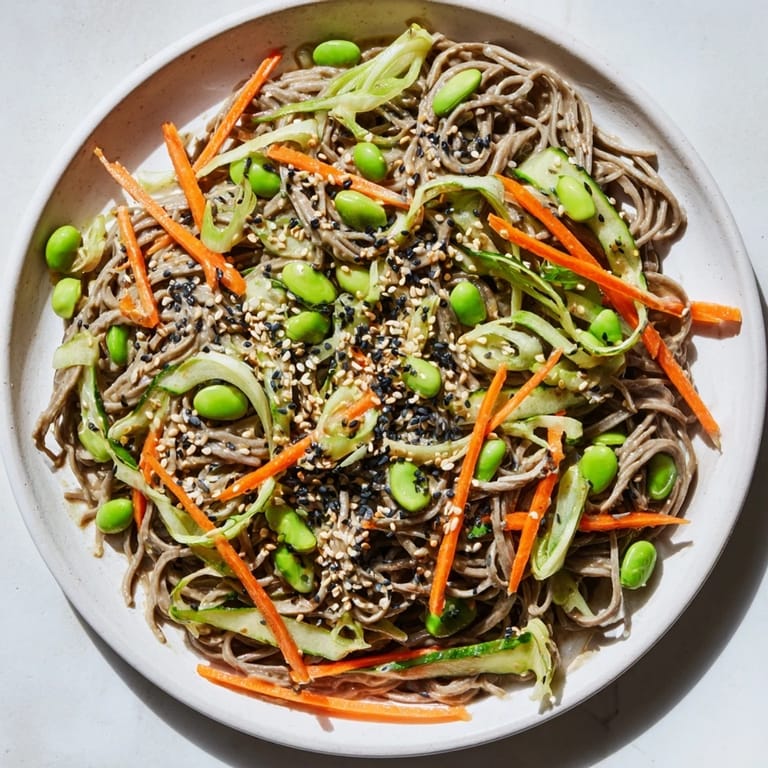
- Add the cooled noodles, cucumber, carrots, and edamame to the dressing and toss gently but thoroughly, making sure every strand gets coated. If the dressing seems thick, splash in another tablespoon or two of water.
- Finish and Rest:
- Scatter spring onions and toasted sesame seeds over the top, add any garnishes you're using, then refrigerate for at least 10 minutes. The flavors need that quiet time together to really settle.
 Save to Pinterest
 I remember my dad trying this and being surprised by how much ginger and sesame oil made him taste something he didn't expect, something that felt almost indulgent in its simplicity. That's when I understood this wasn't just a practical lunch—it became the thing I reached for when I wanted to feel a little bit taken care of, even if I was just taking care of myself.
Why This Dressing Works
Sesame dressing sits in a beautiful middle ground between creamy and bright, rich and light. The tahini gives body without heaviness, the sesame oil adds toasted depth, and the rice vinegar cuts through everything with a gentle hand. It's a dressing that tastes intentional but doesn't announce itself loudly—it lets the vegetables and noodles be themselves while making them taste better.
How to Make It Your Own
This is one of those recipes that invites you to rearrange things. Add shredded chicken or crispy tofu if you want it heavier, swap in whatever vegetables are in season, or throw in some sliced radishes for extra bite. The structure stays the same, but your version will be different from mine, and that's entirely the point.
Storage and Serving
This salad is best eaten the day you make it, while the vegetables still have snap and the noodles haven't absorbed too much liquid. That said, it travels well in a container and actually tastes fine cold from the fridge the next day, though you might need to loosen it up with another splash of water. If you're bringing it somewhere, pack the garnishes separately and add them just before serving.
- Make this a few hours ahead if you're meal prepping, but wait to add the garnishes until you're ready to eat.
- If leftovers get a bit dry, whisk in a splash of water or a drizzle more sesame oil to revive them.
- This pairs quietly well with grilled fish or chicken if you want to make it part of a bigger meal.
 Save to Pinterest
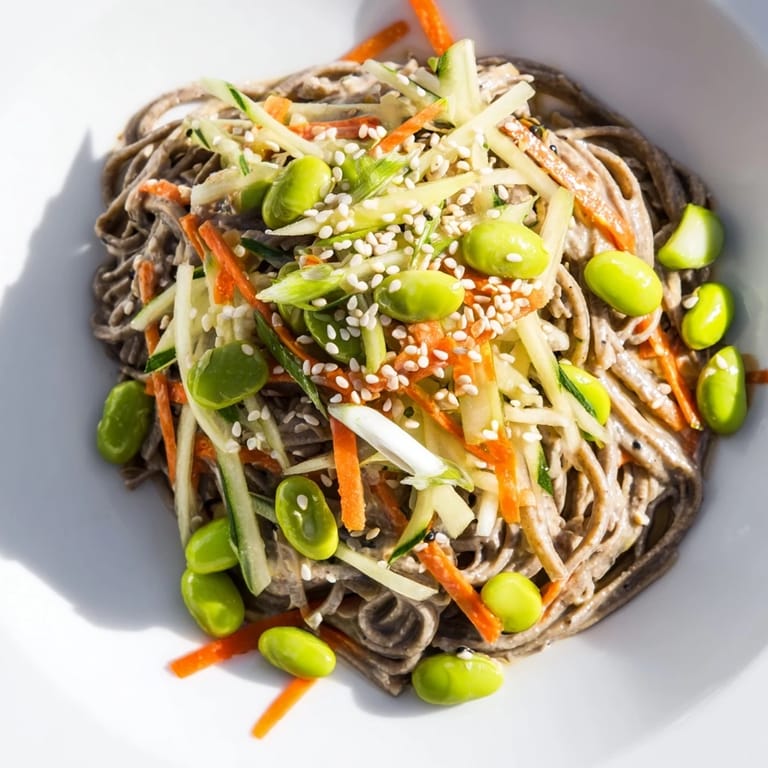
 This is the kind of food that quietly becomes a favorite because it asks nothing of you but delivers something generous in return. Make it once and you'll find yourself reaching for it again.
Recipe FAQs
- → What type of noodles work best?
Soba noodles or thin spaghetti provide a great texture, but rice noodles can be used for a gluten-free option.
- → How should the sesame dressing be prepared?
Whisk tahini with soy sauce, rice vinegar, toasted sesame oil, honey, ginger, garlic, and water until smooth and pourable.
- → Can I add protein to this dish?
Protein-rich edamame is included, but cooked chicken or tofu can be added for extra protein.
- → How to serve and store the dish?
Chill for at least 10 minutes before serving to enhance flavors. Store leftovers refrigerated and consume within 2 days.
- → Are there any common allergens to note?
This dish contains soy and sesame; nut garnishes add potential allergens. Use gluten-free soy sauce to avoid gluten.