 Save to Pinterest
 The first time I tasted muhammara, I was sitting in a Damascus kitchen watching my friend's grandmother char red peppers over an open flame, the smell so thick and sweet it seemed to coat everything. She worked with the kind of ease that only comes from making the same dish a hundred times, her hands moving through roasting and peeling and blending like it was muscle memory. What struck me most wasn't just how good it tasted—that complex tangle of smoky, tangy, nutty, and bright—but how she described it as the dip that brings people together, the one that never leaves the table.
I remember bringing a batch to a dinner party where someone had just announced they were trying veganism, and the moment they tasted it, their whole face changed—like they'd just discovered that eating plants could actually be exciting. That's when I realized muhammara isn't just food, it's a conversation starter, a small edible proof that flavor and ethics don't have to be at odds.
Ingredients
- Red bell peppers, 3 large: These are the backbone of muhammara, and roasting them until their skins blister unlocks a sweetness and depth that raw peppers could never give you.
- Walnuts, 1 cup toasted: Lightly toasting them first gives them a warmer, more complex character than using them raw—it's a small step that changes everything.
- Garlic cloves, 2: Just enough to add a subtle bite without overpowering the delicate sweetness of the roasted peppers.
- Breadcrumbs, 2 tbsp: These act as a binder and give the dip its signature slightly grainy texture that feels authentic and intentional.
- Ground cumin, 1 tsp: The warm spice that ties everything together and whispers of the Levantine kitchen.
- Smoked paprika, 1/2 tsp: This is your secret weapon for depth—it echoes the smokiness of the roasted peppers and makes everything taste more layered.
- Aleppo pepper, 1/2 tsp: Use this if you can find it; it has a fruity heat that's more sophisticated than standard chili flakes, though you can substitute if needed.
- Pomegranate molasses, 2 tbsp: The tangy-sweet element that makes muhammara sing, cutting through richness and adding brightness.
- Extra virgin olive oil, 2 tbsp plus more for drizzling: Choose a good one—you'll taste it directly.
- Lemon juice, 1 to 2 tbsp: This is your flavor adjuster; start with less and add more until it tastes right to you.
- Toasted sesame seeds, 1 tbsp optional: A finishing touch that adds nuttiness and a little visual appeal.
Tired of Takeout? 🥡
Get 10 meals you can make faster than delivery arrives. Seriously.
One email. No spam. Unsubscribe anytime.
Instructions
- Roast the peppers until they blister:
- Heat your oven to 220°C (425°F) and lay the whole red peppers on a baking tray, turning them every 5 minutes or so as they roast. You want the skins to blacken and blister all over—this takes about 20 to 25 minutes and your kitchen will smell absolutely incredible. Don't rush this step; the char is where the flavor lives.
- Steam them to loosen the skin:
- Drop the hot peppers into a bowl, cover it with plastic wrap or a plate, and let them sit for 10 minutes. The steam does the hard work for you, making the charred skin slip off almost effortlessly once they've cooled enough to handle.
- Build the base in the food processor:
- Add the skinned peppers, toasted walnuts, garlic, breadcrumbs, cumin, smoked paprika, Aleppo pepper, salt, and black pepper to your food processor and pulse until you have a coarse, chunky mixture with no large pieces left. This should take just a handful of pulses—you're building texture, not making a paste.
- Bring it together with the finishing flavors:
- Pour in the pomegranate molasses, olive oil, and lemon juice, then process until everything is smooth but still has some pleasant graininess to it. Taste as you go, adjusting the tanginess, heat, and salt until it tastes like home to you.
- Finish and serve:
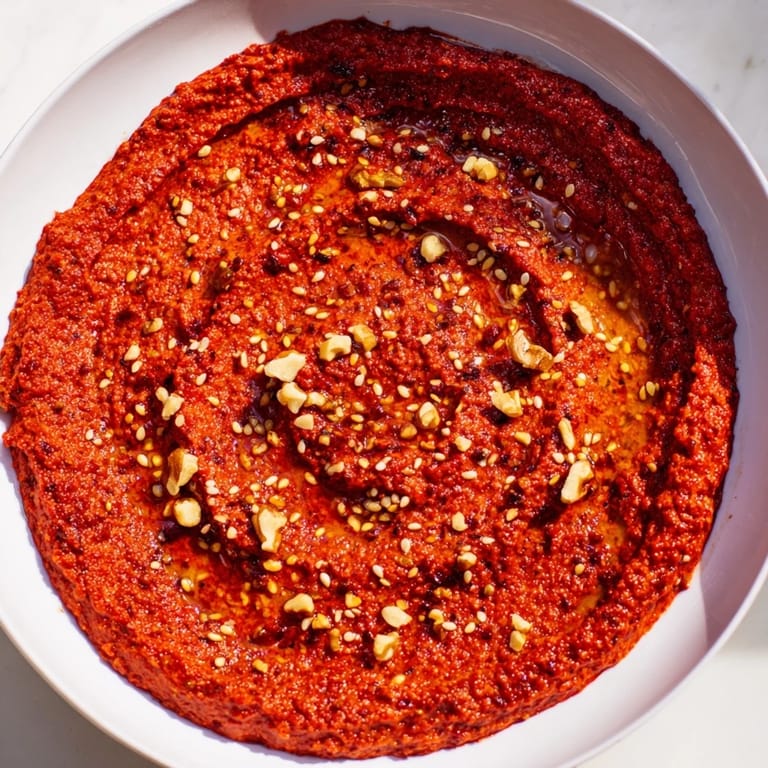
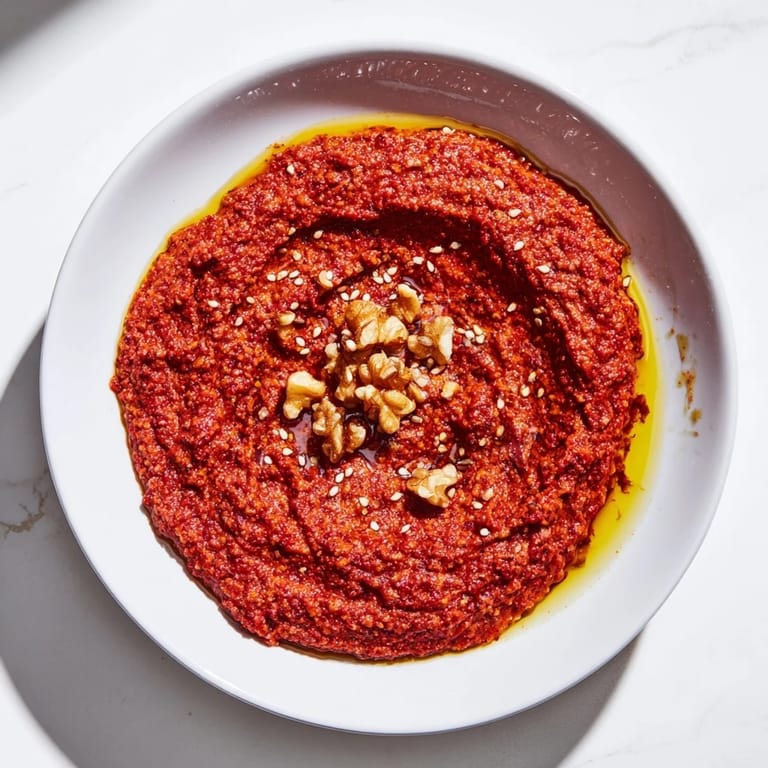
- Spoon the muhammara into a shallow bowl, drizzle generously with olive oil, and scatter the toasted sesame seeds across the top if you're using them. Serve it with warm pita bread, crackers, or fresh vegetables for dipping.
 Save to Pinterest
 What I love most about muhammara is that it exists in the space between dip and spread, humble but somehow elegant. It taught me that the best foods are often the simplest ones, made with intent and real ingredients, and shared generously with anyone who walks through your door.
The Magic of Charring
There's something transformative that happens when you expose peppers to high heat—the natural sugars caramelize, the flesh softens into velvet, and a subtle smoke flavor develops that can't be rushed or faked. I've learned that this is where muhammara gets its soul, and it's why grilling the peppers over an open flame, if you have the chance, produces an even more complex dip than oven roasting.
Adjusting the Heat and Flavor
The beauty of this recipe is how forgiving it is—it bends to your preferences without losing its identity. Start with less Aleppo pepper and taste before adding more; the heat builds as the flavors meld, and what seemed mild on day one might taste spicier by day three after the peppers have had time to sit together in the fridge.
Serving and Storing
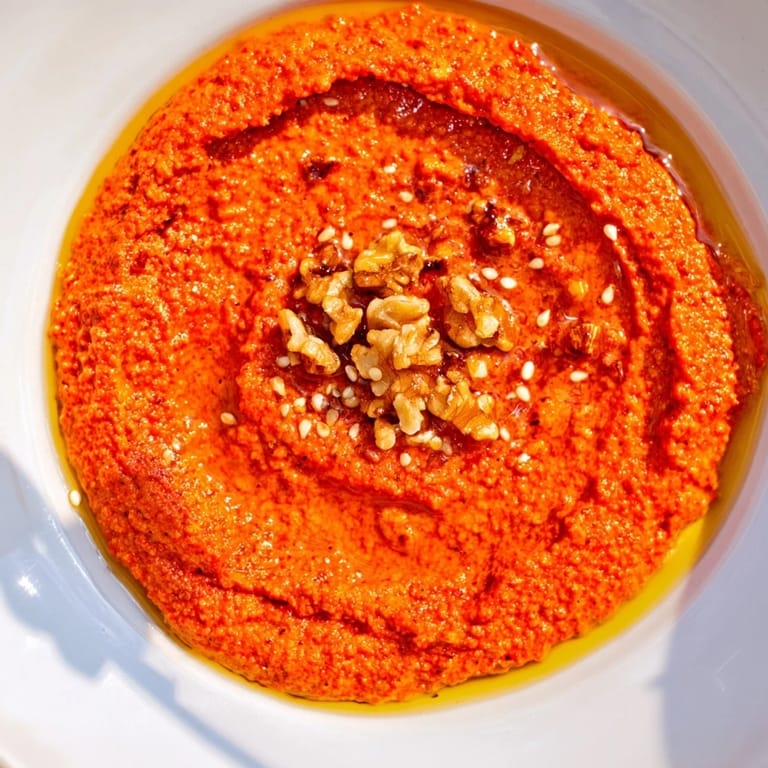
Muhammara is best served at room temperature, when all the flavors can shine through clearly and the texture is at its most appealing. It keeps refrigerated for up to five days, and honestly, it often tastes even better the next day once everything has had time to get to know each other.
- Serve it as the star of a mezze platter alongside hummus, baba ghanoush, olives, and plenty of bread.
- Use it as a sandwich spread or even as a dip for grilled vegetables if you're thinking beyond the traditional appetizer moment.
- If it thickens up in the fridge, let it come to room temperature or loosen it with a splash of olive oil before serving.
 Save to Pinterest
 Muhammara is the kind of recipe that reminds you why cooking matters—it brings people to the table, sparks conversations, and tastes like home even if you've never been to Syria. Make it once, and it becomes your dip, your story, your way of feeding the people around you.
Recipe FAQs
- → What peppers are used in this dip?
Large red bell peppers are roasted until their skins are blistered and charred, providing a smoky sweetness.
- → How can I make the dip spicier?
Adjust the heat by adding more Aleppo pepper or red chili flakes according to taste preferences.
- → What nuts give this dip its flavor?
Lightly toasted walnuts add a rich, nutty depth complementing the roasted peppers and spices.
- → Can I prepare this dip ahead of time?
Yes, it keeps well refrigerated for up to 5 days and flavors meld nicely over time.
- → What dishes pair well with this dip?
Serve alongside fresh pita bread, crackers, or vegetable sticks as part of a mezze platter.