 Save to Pinterest
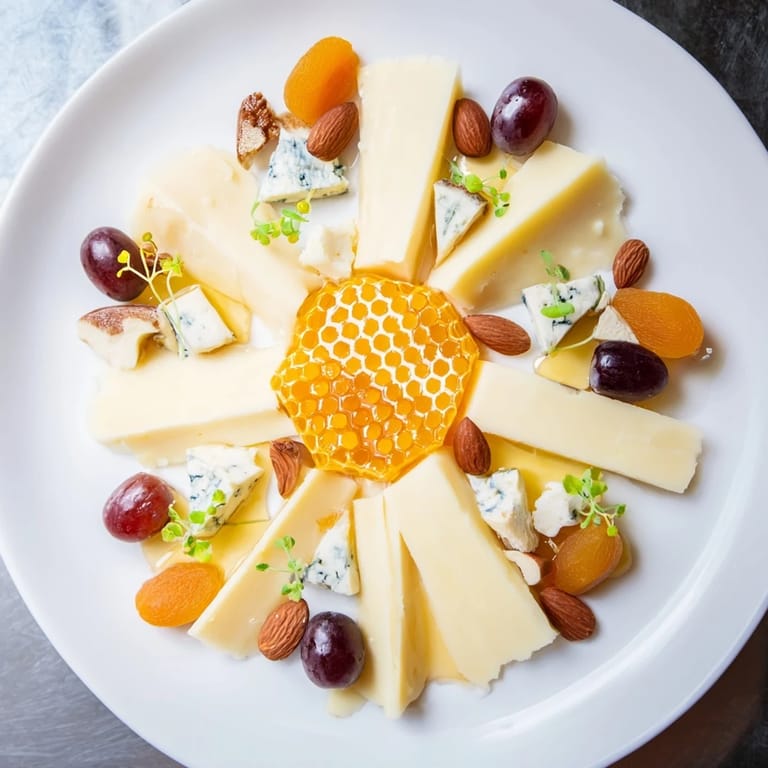
 I discovered the magic of hexagon cutters at a farmer's market last spring, watching a cheese monger arrange tiny golden shapes with theatrical precision. Something about the geometry of it captivated me—the way each piece seemed to echo a honeycomb's natural architecture. That afternoon, I bought a hexagon cutter on impulse and spent hours testing it on cheese scraps, laughing at how seriously I'd become about cutting things into six-sided shapes. The Gilded Hive was born from that playful obsession, and it's become my go-to when I want a board that stops conversations the moment it hits the table.
I made this for my sister's engagement party last summer, and watching thirty people gather around the board, photographing it from every angle, reminded me that food is as much about the experience as the taste. Someone asked if I'd studied design, which made me laugh—I was just having fun with a cookie cutter and cheese. By the end of the evening, only crumbs remained, and she told me it was the one detail everyone remembered.
Ingredients
- Manchego cheese: Brings a nutty, slightly salty foundation that grounds the board without overpowering the milder cheeses.
- Aged cheddar: Adds sharpness and a deep golden hue that photographs beautifully against the honeycomb.
- Gruyère: The workhorse cheese—creamy, complex, and it cuts cleanly into hexagons without crumbling.
- Brie: Soft luxury; chill it before cutting so the hexagons stay defined and elegant.
- Blue cheese: A daring pop of funk and color—it's the cheese that makes people say "oh, interesting choice."
- Goat cheese log: Sliced into hexagons, it's tangy and white, creating visual contrast that ties the whole board together.
- Whole wheat crackers: Sturdy enough to hold cheese without breaking mid-bite, and they look substantial in hexagon form.
- Seeded crackers: Add texture and visual interest with their speckled surface.
- Edible honeycomb: The centerpiece that justifies the whole concept—seek it out at specialty food stores or order online; it's worth the hunt.
- Runny honey: A glossy drizzle that catches light and whispers elegance.
- Marcona almonds: Buttery and refined, they fill gaps with purpose.
- Dried apricots: Sweet punctuation that balances sharp cheeses.
- Fresh grapes: Pop of juicy freshness and color.
- Edible flowers or microgreens: Optional but transformative—a final flourish that says you care.
Tired of Takeout? 🥡
Get 10 meals you can make faster than delivery arrives. Seriously.
One email. No spam. Unsubscribe anytime.
Instructions
- Gather your cutters and chill the soft cheeses:
- Set out your hexagon cutter and a clean towel. Pop the Brie and goat cheese in the fridge for 15 minutes so they hold their shape when cut—soft cheese at room temperature is a hexagon's worst enemy. This small step is the difference between clean edges and cheese smears.
- Cut cheeses into perfect hexagons:
- Press the cutter firmly through each cheese with a slight twist, then pop the hexagon out onto parchment. Wipe your cutter clean between cuts so you're not dragging old cheese fragments through fresh ones. Some pieces will break; set those aside for a tasting plate later.
- Transform your crackers:
- Work methodically through your crackers, cutting hexagons with the same tool. Square or rectangular crackers cut more evenly than round ones, which is why I specify them. Expect some breakage—that's just the cost of geometric snacking.
- Build the honeycomb center:
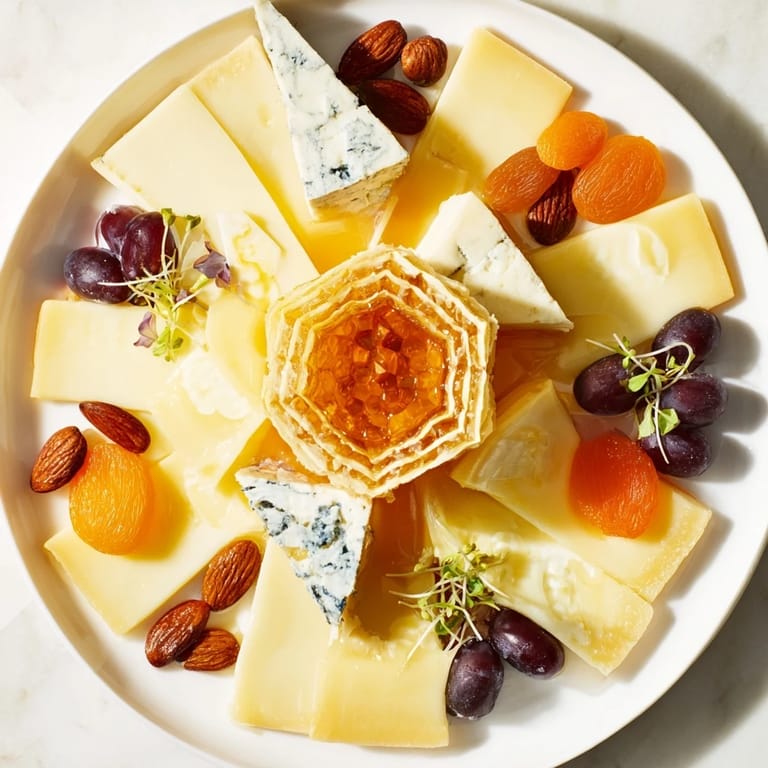
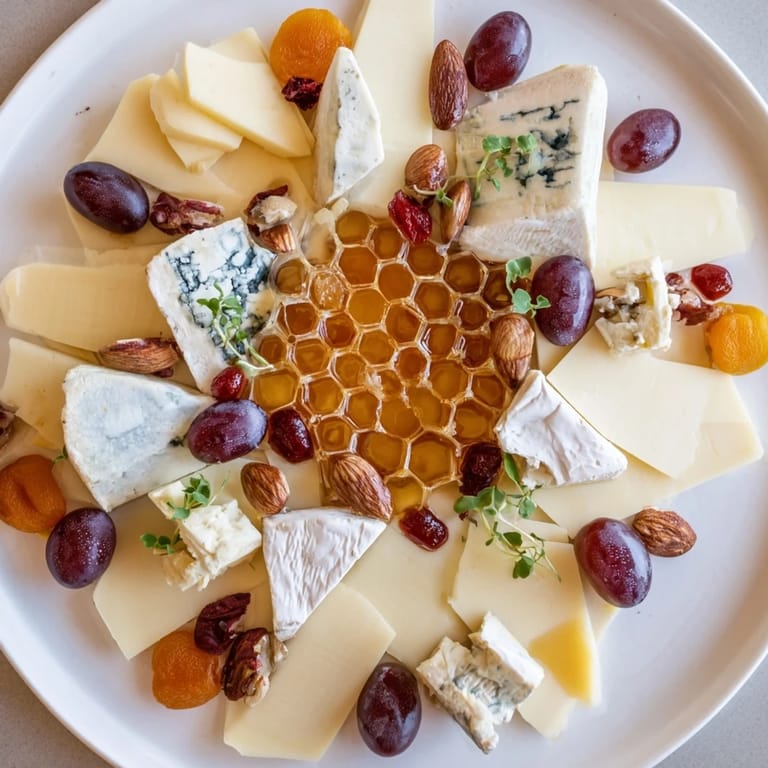
- Place your edible honeycomb dead center on your board. Step back and imagine radiating lines extending outward like sun rays. This mental map will guide everything that follows.
- Arrange cheese in radiating circles:
- Starting closest to the honeycomb, lay down your first ring of cheese, alternating types so no two similar cheeses sit beside each other. Move outward in concentric circles, thinking of it less as a recipe and more as a color story you're telling.
- Create cracker rays:
- Fill the space between cheese circles with hexagon crackers, creating visual momentum that pulls the eye outward. Don't worry about perfection; slight gaps add to the organic feel.
- Fill the gaps with finishing elements:
- Scatter Marcona almonds, dried apricots, and grapes into the spaces, creating little pockets of color and texture. Think of this step like seasoning—you're adding flavor and visual depth where the board felt bare.
- Drizzle and garnish:
- Warm the honey very gently so it's pourable but not hot, then drizzle thin lines from the honeycomb outward like spokes on a wheel. Finish with edible flowers or microgreens if you have them, scattering them so they catch light.
- Serve with style:
- Set the board on the table just before guests arrive, ideally with cheese knives or small spreaders nearby. The moment of reveal is part of the magic—don't bury it in the background.
 Save to Pinterest
 The real revelation came when I realized the board didn't need to be eaten quickly—it was meant to be admired first, nibbled slowly, returned to. That shift in perspective changed how I thought about entertaining: sometimes the point isn't efficiency, it's creating a moment people want to linger in.
The Hexagon Obsession
There's something almost meditative about cutting shapes over and over, the rhythmic press and twist becoming a kind of kitchen meditation. I've found that working with geometric patterns slows you down in the best way—you can't rush hexagons. The repetition becomes muscle memory, and by the time you're halfway through the cheeses, your cuts are cleaner and your mind is somewhere quieter.
Cheese Pairing Logic
I chose these six cheeses because they tell a complete flavor story: soft to firm, mild to bold, pale to deep golden. The Manchego and aged cheddar anchor the board with substance, the Gruyère and Brie offer creamy middle ground, and the blue cheese and goat cheese create memorable endpoints. When arranging, I alternate these personalities so every bite feels like a small conversation between flavors.
Board Building Wisdom
I've learned that the best boards feel curated but not overstuffed—there's breathing room between elements. The honeycomb center is your anchor; everything else radiates from that intention. Small gaps between pieces actually make the board feel more intentional, not less.
- Always place your honeycomb first and build outward from there, never the reverse.
- Keep extra crackers on a side plate for refills, because the hexagons go faster than you'd expect.
- If anything breaks while cutting, don't stress—those pieces are perfect for tasting as you work.
 Save to Pinterest
 This board taught me that presentation and flavor aren't separate things—they're partners. When food looks like it matters, people slow down and taste more carefully. That's when the real magic happens.
Recipe FAQs
- → How do I achieve perfect hexagon cuts on cheeses and crackers?
Use a sharp hexagon-shaped cutter about 2-3 inches wide. Chill softer cheeses briefly before cutting for cleaner edges and carefully trim crackers, selecting intact pieces for display.
- → What cheeses work best for this board?
A mix of Manchego, aged cheddar, Gruyère, Brie, blue cheese, and goat cheese log offers diverse flavors and textures ideal for this arrangement.
- → How should the honeycomb be presented?
Place a piece of edible honeycomb centrally on the board as the focal point, complementing the hexagon-cut cheeses and crackers arranged around it.
- → Can I customize the accompaniments?
Yes, add Marcona almonds, dried apricots, fresh grapes, and optionally edible flowers or microgreens for color and balance to suit your taste.
- → Any tips for serving and pairing?
Serve immediately to maintain texture and temperature. Pair with crisp white wines like Sauvignon Blanc or light sparkling wines for an elevated experience.