 Save to Pinterest
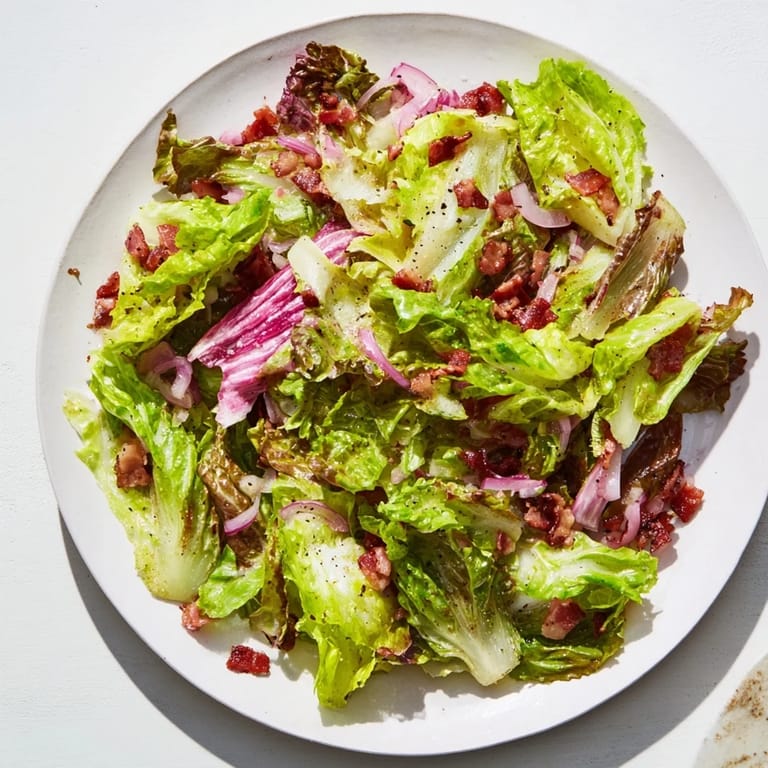
 There's something about the sizzle of bacon in a cast iron skillet that transforms a quiet kitchen into something alive. Years ago, I watched my neighbor toss a handful of bitter greens with warm bacon fat and thought she was making some kind of mistake—greens weren't supposed to be hot, were they? But one taste and I understood: the heat wilts them just enough to soften their sharp edges while keeping them bright and vital. Now this salad shows up on my table whenever I want something that feels both simple and undeniably grown-up.
My daughter asked one winter why salad had to be cold, and that question stuck with me. The next week I made this, and watching her fork into warm, wilted escarole studded with crispy bacon felt like discovering something together. She's still not a salad person, but this one gets eaten, and that's its own kind of victory.
Ingredients
- Mixed bitter greens (escarole, frisée, dandelion, radicchio, chicory): The variety matters—each green brings its own kind of bite, and together they create complexity that sweetness and fat can play against. Tear them by hand rather than cutting; the edges brown less easily.
- Red onion: Sliced thin, it becomes almost translucent when kissed by warmth, turning just slightly sweet without losing its sharp undertone.
- Thick-cut bacon: This isn't the time for thin slices. Thick bacon renders slowly and stays textured even after crisping, giving you real crunch.
- Red wine vinegar: Sharper than white vinegar and warm enough in flavor to stand up to the greens without flinching.
- Dijon mustard: A teaspoon does more than you'd think—it helps emulsify the dressing and adds a subtle backbone.
- Honey: Just enough to balance bitterness, but not so much that you taste sweetness first. This is a whisper, not an announcement.
- Extra-virgin olive oil: Finish the dressing with real oil, not the cooking kind. You'll taste the difference.
Tired of Takeout? 🥡
Get 10 meals you can make faster than delivery arrives. Seriously.
One email. No spam. Unsubscribe anytime.
Instructions
- Prepare the greens:
- Rinse and dry them thoroughly—moisture is the enemy of a good warm salad, since it dilutes the dressing. Spin them dry or pat them down with a clean kitchen towel, then tear into pieces and pile them into your largest bowl with the thinly sliced red onion.
- Cook the bacon:
- Dice it first, then lay it in a cold skillet before turning on the heat. This lets the fat render slowly, giving you meat that's crisp all over rather than charred on the edges. Watch it for about 7 to 9 minutes until it's the color of dark wood, then scoop it onto paper towels.
- Build the warm dressing:
- Pour off all but about 2 tablespoons of bacon fat—you want it, not a puddle. Over low heat, whisk in the vinegar, mustard, honey, pepper, and salt, scraping up any browned bits from the pan. Those bits are flavor you don't want to lose.
- Emulsify with oil:
- Slowly stream in the olive oil while whisking constantly. The dressing should come together into something silky and warm, not separated and greasy.
- Dress the salad:
- Pour the hot dressing directly over the greens and onions while it's still steaming. The heat will wilt the leaves just slightly—they'll soften and drink in the flavors without becoming a heap of slime. Toss in the bacon, then taste and adjust salt if needed.
- Serve immediately:
- This is a salad that demands eating while it's warm, before the greens cool down and the texture shifts. Plate it up, add eggs or nuts if you've got them, and eat it while it matters.
 Save to Pinterest
 There was a dinner party once where everything fell apart—the main course ran late, the wine was corked, nobody was having much fun. Then this salad came out warm and glistening, and something shifted. People slowed down. They ate. They actually talked to each other instead of checking their phones. A salad shouldn't carry that kind of weight, but sometimes the smallest things do.
Why Warm Salads Matter
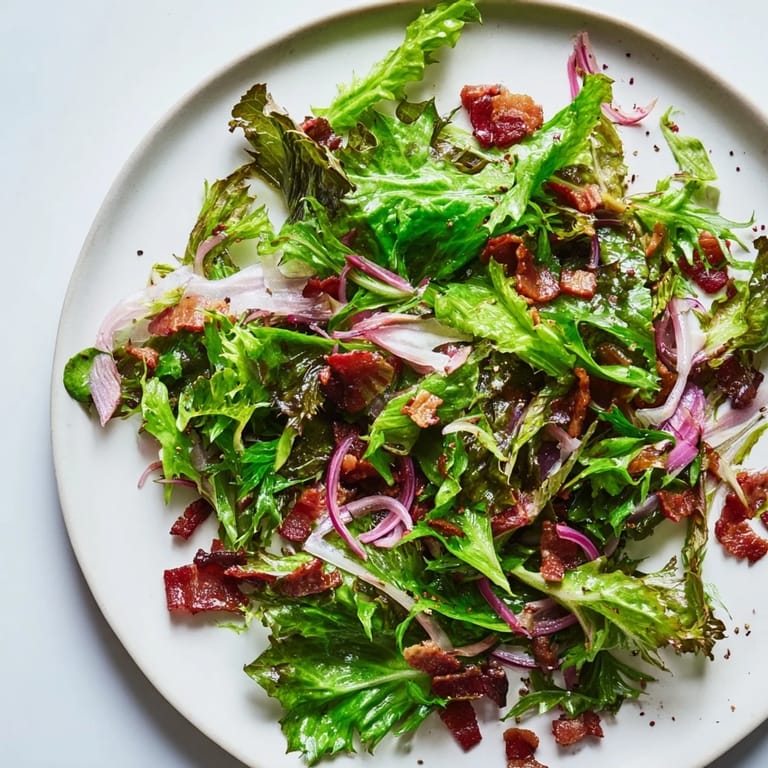
We're taught that salad belongs in the cold section of the menu, something refreshing and clean to cut through richness. But there's an older way of eating, and this salad taps into it—the European approach where greens get respect by being treated boldly. Heat doesn't destroy these leaves; it transforms them, making them taste more like themselves rather than less. Your guests will feel the difference even if they can't name it.
On Choosing Your Greens
The beauty of this salad is in its flexibility. Escarole is mild and tender. Frisée has delicate curls and a real bite. Dandelion greens are almost peppery. Radicchio brings sweetness hidden under bitterness, and chicory is just plain bold. Mix them, or pick one and stick with it. What matters is that you're working with greens that can stand up to heat and fat without wilting into submission—the kind that get sturdier as they warm, not softer. If your grocery store only has iceberg and romaine, make something else. These leaves deserve partners that match their strength.
Variations and Improvisation
The skeleton of this recipe is so simple that it practically invites tinkering. Some days I swap the red wine vinegar for sherry vinegar, which brings earthiness instead of sharpness. Other times I'll add a thin apple slice or a slice of pear to cut the richness, which sounds fancy but isn't—it's just fruit and greens, after all. You can absolutely go vegetarian by roasting thick mushroom slices until they're crispy at the edges, then using them instead of bacon. Use the extra olive oil to make up what you lose in bacon fat, and everything else stays the same.
- Try maple syrup instead of honey for a deeper, more woodsy sweetness.
- A handful of toasted walnuts or pecans adds texture and a little nuttiness that somehow makes the bitter greens taste better.
- Hard-boiled eggs make this a light main course instead of just a starter—aim for eggs that are cooked through but with still-soft centers.
 Save to Pinterest
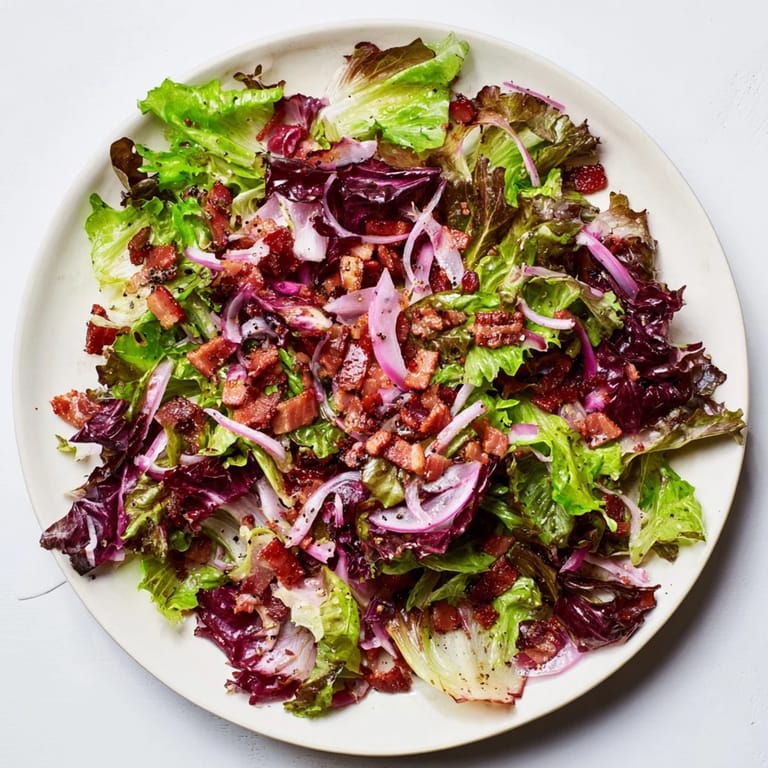
 This salad has never let me down, and that matters more than you might think. Some recipes surprise you; this one just quietly does what it promises.
Recipe FAQs
- → What greens work best for this salad?
A mix of hearty bitter greens like escarole, frisée, dandelion, radicchio, or chicory provides the ideal balance of flavors and textures.
- → How do you prepare the warm bacon dressing?
Cook diced thick-cut bacon until crisp, then use the rendered fat to whisk together red wine vinegar, Dijon mustard, honey, pepper, salt, and olive oil until emulsified and warmed.
- → Can I substitute bacon for a vegetarian option?
Yes, omit bacon and replace bacon fat with extra olive oil; sautéed mushrooms can add a similar umami depth.
- → What garnishes complement the salad?
Hard-boiled eggs and toasted walnuts or pecans add richness and crunchy texture to the greens.
- → How should the salad be served?
Serve immediately after tossing with warm dressing to enjoy the slightly wilted texture and blended flavors.